Europe
Ukraine Backs Multi-Tier Plan to Enforce Ceasefire

Ukraine and its Western partners have agreed on a multi-tier enforcement plan under which repeated Russian violations of any future ceasefire would trigger escalating responses, including European intervention backed by US military support.
According to the Financial Times, Ukrainian, European and American officials have reached agreement on a multi-tiered enforcement mechanism designed to deter and respond to Russian violations of any future ceasefire agreement.
The proposal, discussed repeatedly in December and January, outlines a graduated response ranging from diplomatic warnings to direct military intervention backed by the United States.

Three Phases of Response
Officials familiar with the discussions told the Financial Times that any Russian breach of a ceasefire would trigger action within 24 hours, starting with diplomatic warnings and Ukrainian military steps to halt localized violations.
If hostilities persist, a second phase would involve forces from a “coalition of the willing”, including many EU states as well as the UK, Norway, Iceland and Türkiye.
Should the breach escalate into a broader attack, a third phase would be activated within 72 hours, involving a coordinated military response by western-backed forces with direct US military support.
Security Talks and Diplomatic Push
The plan was discussed by Ukrainian, European and American officials in Paris in December, with follow-up talks held in Kyiv on January 3 among national security advisers from coalition countries.
Officials said Ukrainian President Volodymyr Zelenskyy also raised the issue of US commitments during a meeting with Donald Trump at Mar-a-Lago in December.
Meanwhile, envoys from Kyiv, Moscow and Washington are scheduled to meet again this week in Abu Dhabi for renewed efforts to end the war.
European Troop Commitments
The Financial Times reported that France and the UK have pledged to deploy troops and weapons to Ukraine as part of security guarantees supported by the US, under a proposed 20-point peace framework.
A European-led deterrence force would provide reassurance on land, at sea and in the air, supported by US intelligence and logistics, according to leaders of Kyiv’s key allies.
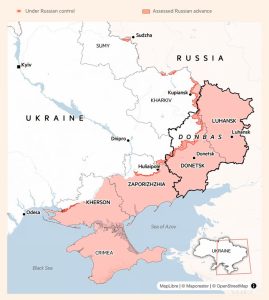
The US has also offered advanced monitoring technologies along the 1,400-kilometre front line to help detect violations.
Lessons From Failed Ceasefires
Ukraine’s insistence on robust enforcement stems from past experience. Russia breached multiple ceasefires following its initial 2014 incursion into eastern Ukraine’s Donetsk and Luhansk regions.
The Minsk agreements of 2014 and 2015 failed in part because international monitors lacked enforcement authority or western security guarantees, ultimately paving the way for Russia’s full-scale invasion in 2022.
Security Guarantees Still Conditional
Zelensky said in January that security guarantees negotiated with the US, with European input, were “100 per cent ready”, pending confirmation of a signing date.
Trump has proposed what Zelenskyy described as “Nato-like” guarantees, similar to Article 5, reportedly lasting 15 years — though Kyiv is seeking to extend them to 50 years.
Ukraine has also proposed maintaining an 800,000-strong army, supported by western weapons and training, as part of the security package.