Connect with us

Europe

Ukraine-Russia Talks in Abu Dhabi Stuck on Territorial Dispute

Published

on

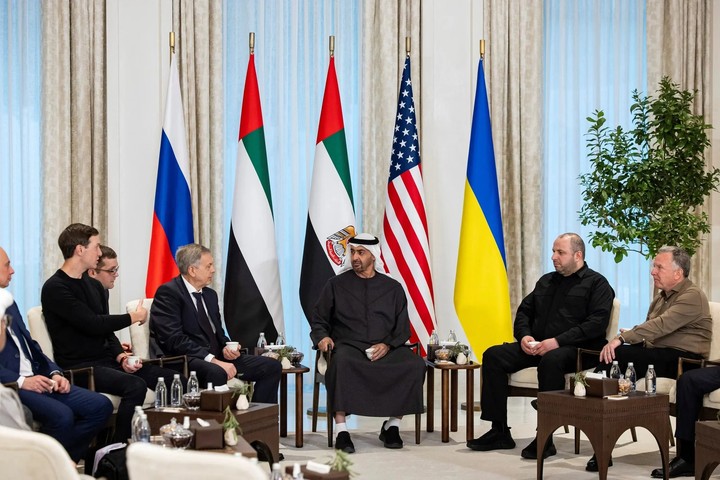
Ukraine, Russia, and the U.S. held talks in Abu Dhabi on Friday with territory as the central issue. Ukrainian President Volodymyr Zelensky said Russia must end the war it started as Washington pushes a deal to halt the nearly four-year conflict.

Ukrainian and Russian negotiators met publicly for the first time under a U.S.-backed framework aimed at ending a war now approaching its fourth year. Ukrainian President Volodymyr Zelensky framed the talks in stark terms, saying territorial disputes would be central but insisting that “the most important thing is that Russia should be ready to end this war, which it started.”

The UAE foreign ministry said discussions began Friday and would continue over two days, signaling a structured attempt to move beyond exploratory contacts toward defined political trade-offs.

The timing reflects intense diplomatic sequencing since the Abu Dhabi meeting followed Zelensky’s encounter with U.S. President Donald Trump at the World Economic Forum in Davos one day earlier, and came hours after U.S. envoy Steve Witkoff held nearly four hours of talks with Russian President Vladimir Putin in Moscow. Despite the compressed schedule, Russian officials made clear that movement hinges on geography, not process.

“A Very Important Condition”

Moscow’s position was restated bluntly. Kremlin spokesman Dmitry Peskov said Russia’s demand that Ukraine cede all of Donbas, including roughly 20 percent of Donetsk region still under Ukrainian control, was “a very important condition.” Kremlin adviser Yury Ushakov added that “reaching a long-term settlement can’t be expected without solving the territorial issue.”

Russia’s delegation in Abu Dhabi, led by Admiral Igor Kostyukov, was composed primarily of military officials, underscoring the security-first framing.

Russia continues to demand a Ukrainian military withdrawal from Donbas, a position Kyiv has rejected outright. Russian state media TASS said buffer zones and monitoring mechanisms were also discussed, suggesting Moscow is probing enforcement models without retreating from sovereignty claims.

De-Escalation Tracks and Energy Leverage

Alongside territorial talks, the U.S. and Ukraine have explored a limited energy ceasefire as a confidence-building step, according to the Financial Times. Under the proposal, Russia would halt strikes on Ukrainian power plants, heating systems, and water facilities in exchange for Ukraine stopping attacks on Russian oil refineries and Russia’s so-called shadow fleet of oil tankers. The idea reflects winter pressures: Ukrainians have faced widespread power outages, while Kyiv’s long-range drones have increasingly targeted Russian energy infrastructure, including facilities in the Black Sea and Mediterranean.

Both sides, however, see risks. The Kremlin views energy strikes as a key source of leverage, while Ukraine considers its drone campaign a rare asymmetric tool undermining Russia’s war financing. Turkish Foreign Minister Hakan Fidan summarized the impasse, saying that “as long as the territorial issue concerning Donbas is not resolved, the deadlock appears unlikely to be broken,” adding that ideas such as demilitarization or joint economic zones hinge on the unresolved question of sovereignty.

U.S. Pressure and Narrowed Scope

Similarly, Witkoff struck a cautiously optimistic tone, saying, “I believe we’ve narrowed it down to a single issue”, arguing the deadlock would be solved if both sides genuinely want to.

The U.S. delegation in Abu Dhabi included Witkoff, Trump adviser Jared Kushner, Army Secretary Dan Driscoll, and NATO’s top military officer, U.S. Air Force General Alexus Grynkewich. Ukraine’s team featured senior security figures, including Rustem Umerov and intelligence chief Kyrylo Budanov.

U.S. President Donald Trump, speaking on Jan. 21, framed the talks through a transactional lens, saying the U.S. had previously spent “$350 billion” on Ukraine and claiming a rare earths deal would “probably get most of that back.”

His comment highlighted how economic and territorial calculations are now entwined in Washington’s approach, even as fighting continues.

Ahead of the talks, Russian strikes killed seven civilians in eastern Ukraine, including a five year old, underscoring the gap between diplomatic momentum and battlefield realities.

Continue Reading
Click to comment

Leave a Reply

Your email address will not be published. Required fields are marked *

Europe

‘She Begged for a Photo’: Trump’s Mocking Comments Draw Meloni’s Ire

Published

on

A severe diplomatic rift has emerged between Washington and Rome after U.S. President Donald Trump mocked Italian Prime Minister Giorgia Meloni, prompting a sharp, public counterattack from Meloni and the cancellation of an official Italian ministerial visit.

U.S. President Donald Trump has triggered a diplomatic crisis with Rome after publicly mocking Italian Prime Minister Giorgia Meloni, claiming she begged for a photograph with him at the recent G7 summit.

The remarks prompted an immediate, furious response from Meloni on Friday, who described the statements as completely fabricated and expressed deep dismay over the U.S. leader’s behavior toward his global allies.

The escalating rhetorical feud marks a significant deterioration in relations between Washington and one of its key European partners, exposing deep vulnerabilities in transatlantic unity.

“She Begged for a Photo”

The confrontation began after Trump claimed that Meloni extensively pursued a personal interaction with him during the G7 summit in Evian.

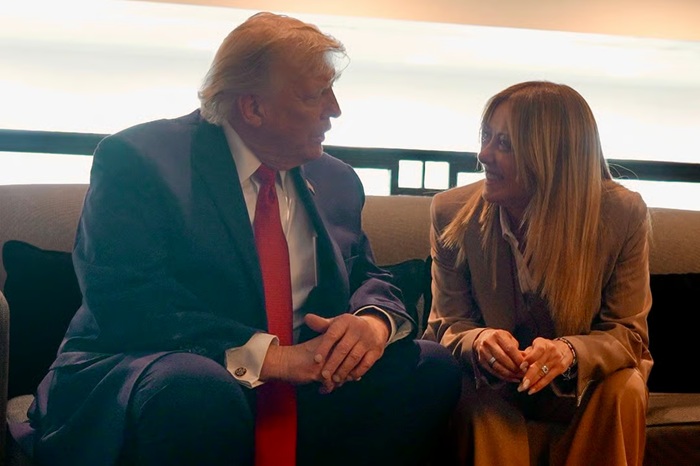
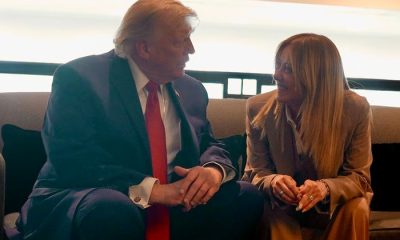
The U.S. president asserted that he merely indulged Meloni during a conversation at the summit in France. Video footage from the event showed the two leaders seated side by side on a small sofa.

“She begged me to take a photo with her,” Trump said, according to a transcript provided by Italian television channel La7. “She wanted a photo with me so much. I wouldn’t have even done it, but I felt sorry for her.”

Trump further disparaged the Italian prime minister by suggesting she should feel privileged to have received his attention.

“She’s probably happy that I spoke to her,” Trump stated. “I wasn’t obligated to speak to her.”

“Italy Does Not Beg”

Meloni issued a direct, sharp rebuttal to Trump’s public characterization of their summit interactions, stating that certain provocations required immediate pushback.

“Donald Trump’s statements are completely fabricated,” Meloni wrote on X. “I am frankly appalled. I don’t know why the President of the United States behaves this way towards his allies.”

The Italian prime minister contrasted Trump’s aggressive rhetoric toward European partners with his softer approach toward global adversaries.

She remarked that it was a pity Trump did not demonstrate the same assertiveness toward the enemies of the West and the United States, targeting leaders with whom she claimed Trump proved much more accommodating.

“But he must remember one thing: Italy and I never beg,” Meloni added.

Diplomatic Fallout

The diplomatic repercussions were immediate. Italian Foreign Minister Antonio Tajani announced the cancellation of a scheduled trip to the U.S. next week.

Tajani wrote on X that Trump’s offensive words insulted the entirety of Italy.

Giovanbattista Fazzolari, a senior official in the prime minister’s office, echoed the condemnation in an unusually public rebuke.

He questioned whether intent or ineptitude was driving Trump to wreck historical relations between Europe and the United States.

Fazzolari stated that Trump’s inappropriate outbursts are making the U.S. unpopular across Europe.

He warned that this damages not only Europe but also the United States.

Deteriorating Ties

Meloni was previously a vocal supporter of the U.S. president. She was the sole European leader to attend his inauguration in 2025.

Bilateral ties frayed earlier this year during disputes over the war with Iran. Meloni criticized Trump for lashing out at Pope Leo XIV regarding the pontiff’s condemnation of the conflict.

In response, the U.S. president accused the Italian leader of lacking courage.

The recent G7 summit had briefly shown signs of steadied relations before this latest exchange dismantled that progress.

Continue Reading

Europe

Another Scandal: UK Minister Helped Epstein Access Downing Street

Published

on

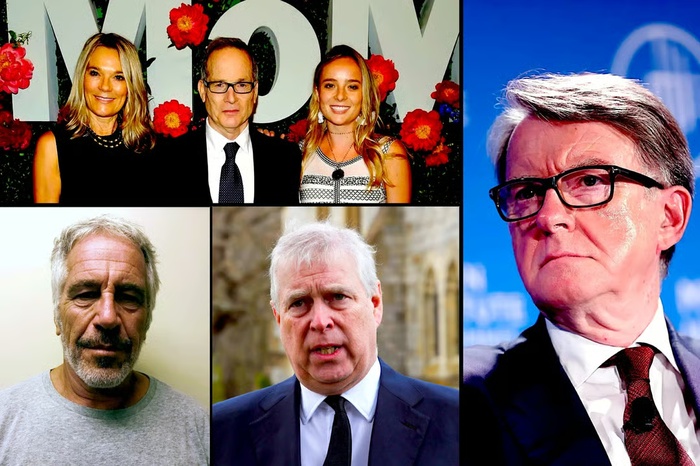
DoJ’s Epstein Emails show UK minister Peter Mandelson tried to arrange access to Downing Street for Epstein’s 15-year-old “goddaughter” from Dubin Family while Epstein was jailed, intensifying a political crisis already linked to investigations and prior disclosures.

An Al Jazeera Exclusive reveals that Epstein emails released by the U.S. Department of Justice deepen scrutiny of Peter Mandelson’s ties to Jeffrey Epstein, revealing attempts to facilitate access to senior UK institutions during a period when Epstein was serving an 18-month sentence for sex offenses involving a minor.

The correspondence shows Epstein seeking help from Mandelson in 2009 to arrange visits to 10 Downing Street and the House of Lords for a 15-year-old girl he described as his “goddaughter.”

Mandelson asked, “how old?”, to which Epstein replied “15,” adding that she would be accompanied by her parents. Mandelson responded: “Fine on all,” before later stating he was “trying my best to accommodate” the request.

The exchange occurred while Mandelson was serving in government under Gordon Brown and Epstein was in prison as a sex offender in Florida.

Subsequent emails suggest the visit coincided with access to Buckingham Palace. Glenn Dubin later wrote to Epstein: “Grt time in buck palace…. ….andrew was great. Thx! G.”

Epstein then wrote to Ghislaine Maxwell: “andrew had tea with the dubin kids and glenn.” The references appear to involve Prince Andrew, who later faced a 2021 lawsuit over allegations linked to Epstein, settled out of court.

The files indicate sustained contact between Mandelson and Epstein across multiple years, including after Epstein’s 2008 conviction. Mandelson wrote: “I think the world of you,” while also advising him: “You are fighting back so you need strategy.”

Financial records cited in the documents show payments of $25,000 in 2003 and June 2004 to accounts associated with Mandelson, while a 10,000-pound ($13,310) transfer was later made to his husband for course fees, structured as a loan to avoid tax implications.

The disclosures have intensified political pressure on Prime Minister Keir Starmer, who appointed Mandelson as US ambassador in 2024. Mandelson stepped down after the first tranche of files in September 2025.

A second release on January 30 alleged he passed sensitive information to Epstein, prompting a police investigation. Authorities conducted raids on Mandelson’s homes in February, and he was briefly arrested before being released on bail.

Officials had previously warned of “reputational risk” during vetting, but the appointment proceeded. The fallout has since forced the resignation of 2 senior aides and renewed calls for Starmer to step down.

Earlier emails from 2002 onward reveal a relationship blending personal, political, and financial ties. Mandelson referred to Epstein as his “best pal,” while Epstein facilitated introductions with senior figures including JPMorgan executives.

In one exchange, Mandelson told Epstein: “You are the only person that knows everything about me.” The correspondence continued until at least 2016, with government assessments suggesting contact persisted until 2019.

Continue Reading

Europe

Greek Cyprus Seeks New Security Deal for UK Bases

Published

on

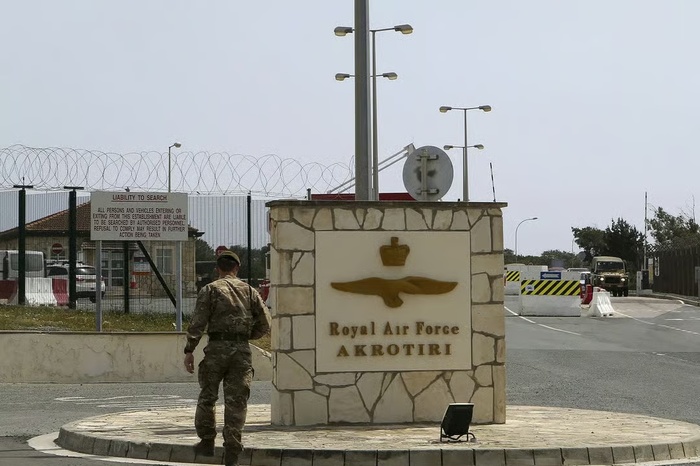
Greek Cyprus has reportedly requested negotiations with the United Kingdom to revise security arrangements for British military bases on the island following recent Iranian drone attacks, according to a report cited by the Telegraph.

Greek Cyprus is seeking updated security arrangements with the United Kingdom concerning its sovereign military bases on the island, following heightened regional tensions linked to recent Iranian drone activity.

According to the report, Greek Cypriot leader Nikos Christodoulides discussed the matter in a phone call with UK Prime Minister Keir Starmer on Saturday. The conversation reportedly addressed concerns about security in the wake of recent drone incidents in the region.

The proposal centers on revisiting the 1960 agreement that established the UK’s Sovereign Base Areas of Akrotiri and Dhekelia. Greek Cyprus is said to be seeking adjustments to the security framework once the ongoing Iran-related conflict stabilizes.

Importantly, the request does not include any demand for the UK to relinquish control of the bases.

A spokesperson for the UK Ministry of Defence stated that the status of the bases is not subject to negotiation. The official emphasized that the Sovereign Base Areas have remained under British sovereignty since Cyprus gained independence in 1960 and that there are no plans to alter this arrangement.

The spokesperson also highlighted the continued strong relationship between the UK and Greek Cyprus, particularly in the context of regional security concerns.

The request follows a recent drone strike that caused minor damage at the Akrotiri base, prompting responses from European naval forces earlier this month. The incident has contributed to growing security concerns across the Eastern Mediterranean amid broader regional instability.

Greek Cyprus has not yet publicly responded to the reported request, and the information has not been independently verified. The situation reflects increasing attention on strategic military installations in the region as geopolitical tensions persist.

Continue Reading

Trending