Connect with us

Middle East

Israeli Settlers Torch West Bank Mosque During Ramadan

Published

on

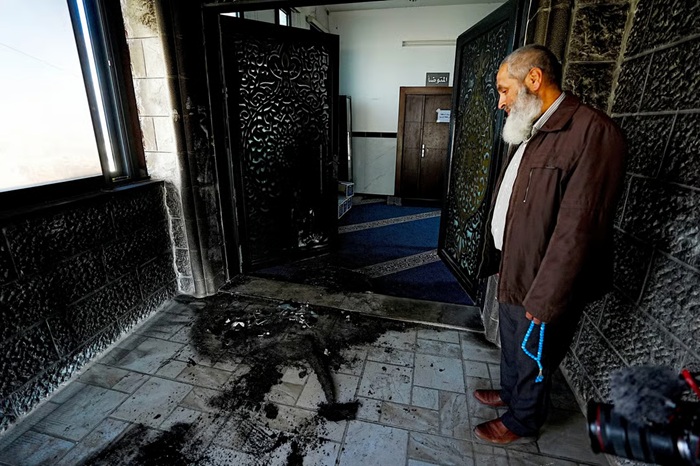
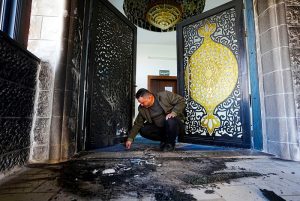
Israeli settlers set fire to the Abu Bakr Al-Siddiq Mosque in Tell village southwest of Nablus early Monday during Ramadan. Palestinian authorities said gates and exterior were damaged before the fire was cntrolled. Racist slogans were also sprayed, amid rising settler violence.

An arson attack on a mosque in the occupied West Bank has intensified concerns over the protection of religious sites amid a documented rise in settler violence.

The incident, which occurred during Ramadan, damaged the entrance and exterior of the Abu Bakr Al-Siddiq Mosque in Tell village southwest of Nablus.

Religious Site Targeted

Local Palestinian media said settlers carried out the attack early on Monday, setting fire to the mosque’s gates and outer structure. Residents intervened before flames spread inside the building.

Footage by Anadolu Agency shows charred walls and blackened ground at the entrance.

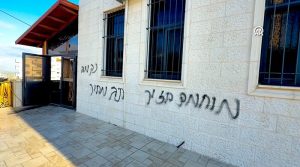
Graffiti bearing racist slogans was visible on the exterior, including the words “revenge” and “price tag.”

The phrase “price tag” has been associated with acts of vandalism targeting Palestinian property and places of worship.
The Islamic Waqf, which administers the mosque compound, confirmed that settlers attempted to burn the site and said it was following up with relevant authorities.

Local Security Response Questioned

Naaman Ramadan, head of the Tell village council, said the area had faced previous settler attacks without what he described as meaningful intervention by Israeli police or military forces.

His comments reflected a recurring complaint from Palestinian communities regarding accountability and deterrence.
The Palestinian Ministry of Religious Endowments and Affairs condemned the assault, describing it as part of a broader pattern affecting places of worship.

The ministry said that 45 mosques were attacked in 2025 “under the protection of Israeli forces.”

Violence Trends And Data

Official data from the Wall and Settlement Resistance Commission recorded approximately 4,723 cases of settler violence during 2025. Palestinian sources said the attacks had escalated following the start of the Gaza war in October 2023.

Human impact indicators remain severe. More than 1,000 Palestinians have been killed in the West Bank over the past two years, including 217 minors, according to Palestinian figures.

The ministry also highlighted pressures on Christian Palestinian communities, noting that over 50,000 residents live in areas facing what it described as growing threats from Israeli forces and settlers.

Protection Of Worship Spaces

The Tell mosque attack adds to a series of incidents involving religious infrastructure. Arson and graffiti targeting mosques and churches have periodically drawn international scrutiny, particularly regarding obligations under international humanitarian law governing occupied territories.

Continue Reading
Click to comment

Leave a Reply

Your email address will not be published. Required fields are marked *

Middle East

Israel’s Finance Minister: Trump Supports West Bank Annexation

Published

on

Israel’s Finance Minister Bezalel Smotrich said West Bank settlement expansion is coordinated with & backed by the Trump administration. Over 51,000 housing units have been approved since 2022, with the IDF expanding demolition to neighbourhoods in Lebanon.

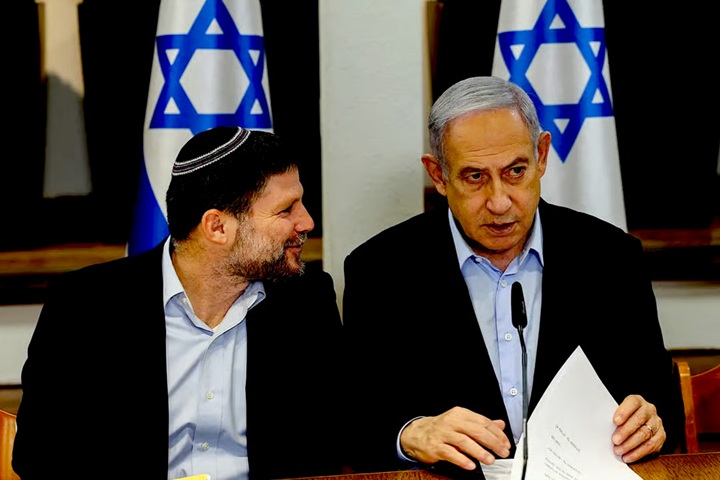
Israeli Finance Minister Bezalel Smotrich’s asserted “full backing” from the United States for West Bank settlement expansions, even as formal U.S. support for annexation remains unconfirmed.

Smotrich said Israel had “full coordination and full backing” from the U.S. administration for construction, regulation, and security in the West Bank, including engagement with U.S. President Donald Trump, Secretary of State Marco Rubio, and Ambassador Mike Huckabee.

He also acknowledged that Washington has not endorsed full annexation, adding, “we will also succeed in that.”

Since 2022, more than 51,000 housing units have been approved for deposit or final authorization, according to his office.

Israel’s approximately 500,000 settlers are concentrated largely in Area C, which remains under full Israeli control under the 1990s Oslo Accords framework.

Smotrich emphasized alignment within Israel’s leadership, stating, “Do you think I could do anything without Netanyahu?” and describing settlement expansion as official government policy.

The re-establishment of the Sa-Nur settlement more than 20 years after its evacuation illustrates renewed efforts to consolidate presence, with over a dozen families already relocated.

Channel 14 reporter Eliya Aviv said a new enforcement unit created under Smotrich operates “without delays, without petitions – they arrive and uproot everything,” accelerating demolitions and land control measures.

Smotrich described Palestinians in Gaza and the West Bank as part of an Iranian “axis of evil,” stating Israel is “fighting for our right to live.” He linked settlement expansion to security doctrine, arguing that “the 1967 lines are not defensible.”

In earlier remarks on March 23, he said, “We will continue to strike the regime,” and called for extending borders to the Litani River in Lebanon, adding, “The Litani River should be the border between us and Lebanon.” He had also outlined a broader vision of territorial expansion into Gaza, Lebanon, and Syria previously.

Smotrich said international condemnation has decreased, noting that even large-scale construction now draws less reaction than smaller projects did in the past.

He attributed criticism from some European countries to political considerations, claiming they “stand on the wrong side of history.”

At the same time, proposals for annexation continue to face global opposition, while tensions remain linked to wider regional conflict dynamics involving Gaza, Lebanon, and Iran.

Continue Reading

Middle East

Search for the Pilot Continues: Iran Offers $ Bounty – Trump Threatens

Published

on

Iran called on civilians to capture the missing pilot shot down from U.S. aircraft, offering bounty money, as Trump threatened 48 hours remain before “hell will reign down” on Iran if they don’t accept the deal.

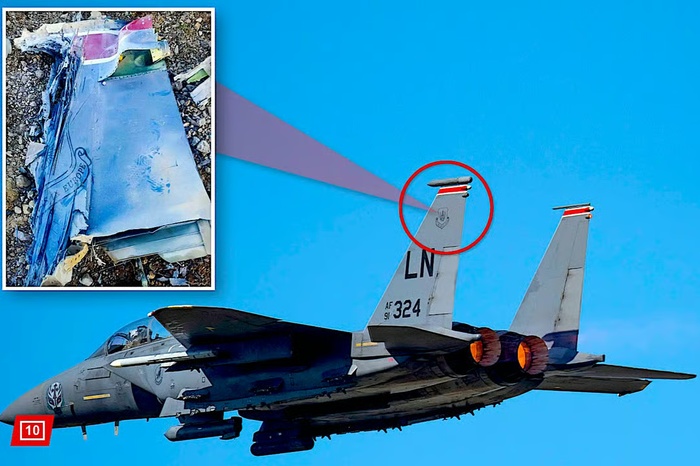
Downed US warplanes and a missing pilot have turned Washington’s air war over Iran into a high-stakes crisis for U.S. president Donald Trump. The U.S. military launched a search over southwestern Iran after an F-15E Strike Eagle was shot down, with one crew member rescued and another missing.

The incident marks the first confirmed loss of U.S. aircraft over Iranian territory in a war now in its sixth week, which began on February 28.

Iran also claimed an A-10 Thunderbolt II was hit, though a U.S. official said the cause of the crash remained unclear.

Iranian state media urged civilians to hand over any “enemy pilot,” while authorities searched mountainous terrain in Kohgiluyeh and Boyer-Ahmad province.

The Pentagon acknowledged “an aircraft being shot down” but released limited details, underscoring operational sensitivity. Trump said in an NBC interview the incident would not affect negotiations.

The conflict continues to widen geographically. An Iranian drone damaged the Dubai headquarters of Oracle, while earlier strikes hit Amazon Web Services facilities in the UAE and Bahrain.

At Iran’s Bushehr nuclear facility, an airstrike killed 1 security guard and marked the fourth strike on the site during the war.

In Dubai, officials described the Oracle damage as a “minor incident” caused by debris, with no injuries reported.

Iran signaled potential disruption of the Bab-el-Mandeb Strait, a 32 km-wide corridor through which over 10 percent of global oil and a quarter of container shipping passes.

The Strait of Hormuz has already seen reduced flows, contributing to rising fuel prices and market volatility. Parliament Speaker Mohammad Bagher Qalibaf questioned global reliance on the route, highlighting its strategic leverage.

The war has killed more than 1,900 people in Iran, alongside 13 U.S. service members, 19 in Israel, and over 1,300 in Lebanon, where more than 1 million have been displaced.

Despite escalation, Iran signaled openness to talks, with Foreign Minister Abbas Araghchi stating they “have never refused to go to Islamabad.”

Mediators from Pakistan, Türkiye, and Egypt are working toward a ceasefire framework, including a temporary halt in hostilities.

Continue Reading

Middle East

Downed Jets Become Trump’s New Headache as Iran Defends Airspace

Published

on

Downed US warplanes & a missing pilot have turned Washington’s air war over Iran into a high-stakes crisis for Donald Trump, exposing vulnerabilities in claimed air dominance amid humongous military cost.

The downing of multiple US aircrafts over Iran and the Gulf highlights growing operational risks and challenges claims of air superiority as the conflict enters its sixth week.

Iranian forces brought down a US F-15E two-seat strike fighter, with one crew member rescued and another unaccounted for, according to officials from both sides.

A separate A-10 Warthog was also hit by Iranian fire, with the pilot ejecting before the aircraft crashed in Kuwait. Two additional US airmen were rescued.

The incidents come despite assertions by President Donald Trump and Defense Secretary Pete Hegseth that US forces had achieved control of the skies.

Two HH-60W Black Hawk helicopters dispatched to locate the missing pilot were themselves hit by Iranian fire but exited Iranian airspace. The extent of injuries to crew members remains unclear.

Iran’s Revolutionary Guard Corps said it was searching a southwestern region for the downed pilot, while a local official promised rewards for capturing or killing “forces of the hostile enemy.”

Between April 2 and April 3, multiple US aircraft incidents were recorded. An F-15E was shot down, an A-10 was hit, and two HH-60W helicopters sustained damage during rescue operations.

Additional incidents included an F-16 declaring an emergency (7700) and landing safely, alongside 1–2 KC-135 refueling aircraft issuing emergency alerts, according to Evergreen Intel.

Iranian officials framed the incidents as a shift in momentum. Parliament Speaker Mohammad Baqer Qalibaf said the war had been “downgraded from regime change” to a hunt for pilots.

The missing pilot scenario raises political and military stakes for Washington, particularly amid limited public support for the war.

The war, which began on February 28, has killed thousands and 13 US service members, with more than 300 wounded, according to US Central Command.

Regional spillover continues, with Iran launching drones and missiles at Israel and Gulf states, including a strike on a power and water plant in Kuwait.

Oil markets reacted sharply, with US crude prices jumping 11% on Thursday.

President Trump signaled further escalation, writing: “Our Military… hasn’t even started destroying what’s left in Iran. Bridges next, then Electric Power Plants!”

US strikes have already targeted infrastructure, including the B1 bridge linking Tehran and Karaj, while Iran has struck energy facilities across the Gulf.

Continue Reading

Trending