Connect with us

America

New US Task Force Key in El Mencho Operation

Published

on

A newly established U.S. military-led counter-cartel task force provided intelligence support in Mexico’s operation that killed cartel leader El Mencho, marking a significant escalation in bilateral security coordination, Reuters reported.

A new U.S. military-led intelligence unit played a supporting role in Mexico’s high-profile operation against cartel boss El Mencho, according to a Reuters report citing American defense officials.

New Task Force at the Center of Intelligence Effort

The recently formed Joint Interagency Task Force-Counter Cartel (JITF-CC), formally launched last month, was created to map and dismantle drug cartel networks operating across both sides of the U.S.-Mexico border.

A U.S. defense official told Reuters that the task force provided intelligence ahead of Sunday’s operation but stressed that the raid itself was conducted solely by Mexican forces. A Mexican government source confirmed that no U.S. military personnel were physically involved in the mission.

Mexico’s defense ministry acknowledged receiving “complementary information” from U.S. authorities, without elaborating on the scope of that support.

Operation in Jalisco and Immediate Fallout

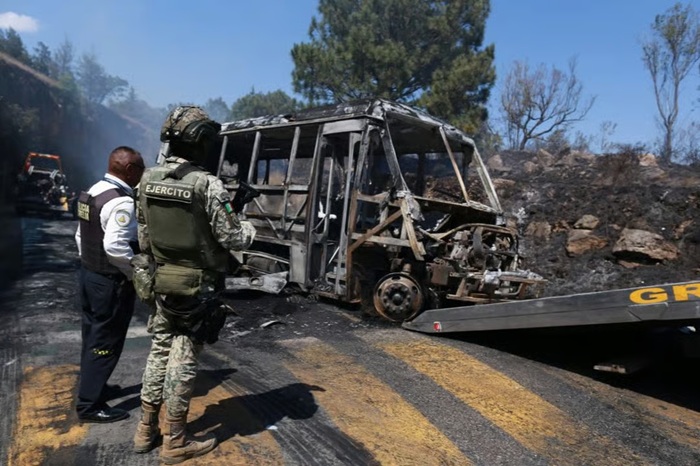
Mexican authorities killed Nemesio Oseguera, widely known as El Mencho, during an operation aimed at capturing him in the western state of Jalisco. The raid triggered violent reprisals, including burning vehicles and armed roadblocks across more than half a dozen states.

Oseguera, 59, was the leader of the powerful Jalisco New Generation Cartel (CJNG), considered one of Mexico’s most dominant criminal organizations. A former police officer turned cartel chief, he had evaded capture for years despite a $15 million U.S. reward for information leading to his arrest.

A former U.S. official told Reuters that Washington compiled a detailed target package on El Mencho, drawing from U.S. law enforcement and intelligence agencies, and shared it with Mexican authorities. He was described as being at or near the top of Washington’s priority list in Mexico.

US Military Expands Counter-Cartel Strategy

The creation of the JITF-CC signals a broader evolution in U.S. strategy against transnational drug trafficking. The task force’s mission is to “identify, disrupt, and dismantle cartel operations posing a threat to the United States along the U.S.-Mexico border.”

Brigadier General Maurizio Calabrese, who leads the task force, told Reuters that the U.S. military is applying lessons from campaigns against groups such as al Qaeda and Islamic State to analyze and map cartel networks.

“The cartels operate differently than al Qaeda or ISIS,” Calabrese said, noting that while only a few hundred individuals may sit at the top of cartel hierarchies, as many as 200,000 to 250,000 contractors could be involved in drug distribution logistics.

Political Context and Growing Pressure

The operation comes amid sustained pressure from U.S. President Donald Trump on Mexican President Claudia Sheinbaum to intensify efforts against cartels responsible for smuggling billions of dollars in cocaine and fentanyl into the United States.

According to Reuters, a second U.S. defense official said the new task force is part of a broader strategy that includes increasing U.S. military operational control along the border and expanded maritime interdiction efforts in the Caribbean and Pacific.

Jack Riley, a former senior official at the Drug Enforcement Administration, said Washington’s designation of Mexican cartels as terrorist organizations last year enabled broader military assistance, particularly in intelligence, surveillance, and reconnaissance capabilities.

“Our surveillance capabilities are going to be probably unlimited,” Riley said, while warning that cartel leaders are adept at concealing their identities and movements.

The killing of El Mencho represents a major milestone in Mexico’s campaign against organized crime — and highlights the growing role of the newly established U.S. counter-cartel task force in shaping cross-border security operations.

Continue Reading
Click to comment

Leave a Reply

Your email address will not be published. Required fields are marked *

America

Trump Wants to Punish Spain & NATO Allies Over Iran War

Published

on

A Pentagon email has revealed the U.S. has outlined options to punish NATO allies for not supporting the war on Iran, including suspending Spain, amid growing European defiance of U.S. policy & a parallel push by EU countries to deepen ties with China.

Washington is weighing punitive measures against NATO partners it views as unwilling to support operations in the Iran war, according to an internal Pentagon policy email.

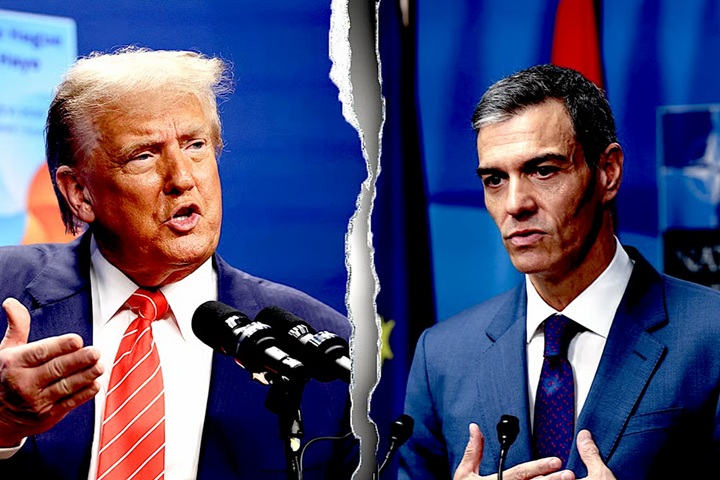
The memo, circulating at senior Pentagon levels, frames access, basing and overflight rights as “just the absolute baseline for NATO,” according to a U.S. official who talked to Reuters for its exclusive. It proposes suspending “difficult” countries from key alliance roles, with Spain specifically identified due to its refusal to allow bases or airspace to be used for strikes on Iran.

Spain hosts two major U.S. installations – Naval Station Rota and Morón Air Base – making its stance operationally relevant even if suspension would be largely symbolic in military terms.

One option includes suspending Spain from NATO structures, while another suggests reassessing U.S. diplomatic support for British control of the Falkland Islands, a dispute dating back to the 1982 war in which 650 Argentine and 255 British personnel were killed.

The measures aim to reduce what officials describe as a European “sense of entitlement,” signaling frustration with allies that declined to support U.S. naval operations to reopen the Strait of Hormuz after the war began on Feb. 28.

Pentagon Press Secretary Kingsley Wilson said allies “were not there for us,” adding the department would ensure options to make partners “do their part.”

President Donald Trump has echoed this view, asking, “Wouldn’t you if you were me?” when discussing potential U.S. withdrawal from NATO.

He also criticized Spain directly, saying, “Their financial numbers… are absolutely horrendous,” accusing them of contributing little to NATO defense.

Spain’s Prime Minister Pedro Sánchez rejected the report, stating governments “do not work off emails.”

In parallel, Spain has continued its anti-war stance. They have pushed to suspend the EU-Israel agreement, citing alleged breaches of international law, though Euronews said the effort lacks consensus, with Germany and Italy opposing it.

Meanwhile president Sánchez, speaking in China, said Europe should “strengthen ties with China,” reflecting broader strategic divergence within the alliance.

The dispute comes as NATO, now 76 years old, faces questions about cohesion. U.S. Defense Secretary Pete Hegseth complained Nato wouldn’t be much of an alliance if members hesitate to act, noting Iran’s missiles can reach Europe even if not the United States.

The Iran war, now in its eighth week, has exposed divisions over risk-sharing, military access, and the scope of alliance obligations, with policy options under review but no formal decisions announced.

Continue Reading

America

Budget Battle Begins: Trump Asks Congress $1.5 Trillion for War

Published

on

Trump proposed a record $1.5 trillion defense budget for 2027 amid Iran war, as costs reach $2B daily, sparking political backlash for rising debt & cuts on domestic spending.

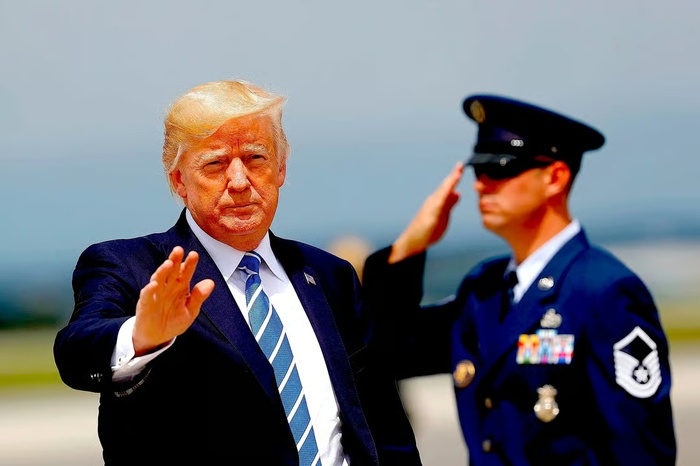
The Trump administration’s proposed $1.5 trillion defense budget reflects the escalating financial demands of the Iran war while intensifying political and fiscal tensions in Washington.

The White House’s 2027 proposal seeks a more than 40 percent increase in defense spending, the sharpest rise since World War II.

U.S. media cited closed-door briefings estimating the Iran war may be costing up to $2 billion per day as the conflict enters its fifth week.

The plan allocates over $1.1 trillion through standard appropriations, with an additional $350 billion via a party-line mechanism.

Recent losses underline the scale of military strain. According to EGYOSINT, U.S. assets hit include 4 F-15E Strike Eagles, 1 A-10 shot down, and 17 MQ-9 Reaper drones destroyed.

Other reported losses include 1 E-3G Sentry (Airborne Early Warning and Control – AEW&C) aircraft destroyed, 8 KC-135 tankers damaged or lost, and multiple helicopters including UH-60 Black Hawk and HH-60G Pave Hawk variants.

These losses add pressure to replenish stockpiles and sustain operational tempo.

Trump framed the increase as necessary, stating federal resources must prioritize “military protection” over domestic programs.

Democrats sharply criticized the proposal. Senator Jack Reed said: “The U.S. Department of Defense doesn’t lack funding, but it currently lacks responsible civilian leadership & management.”

To offset costs, the administration proposes $73 billion in non-defense cuts, about 10 percent, while boosting law enforcement funding by over $40 billion.

The U.S. already faces annual deficits near $2 trillion and total debt exceeding $39 trillion, raising concerns about long-term sustainability.

Senate Democratic Leader Chuck Schumer said: “Trump’s budget is Rotten To The Core,” adding it prioritizes “bombs in the Middle East” over domestic needs.

Some Republicans support the plan, aiming to push defense spending toward 5 percent of GDP, while others warn of deepening fiscal imbalances.

Congress retains authority to modify or reject the proposal, setting up a contentious budget process.

The scale of the request highlights the trade-off between wartime demands and domestic priorities, as lawmakers weigh immediate military needs against rising debt and political opposition.

Continue Reading

America

Iran-linked Hackers Breach FBI Director’s Personal Email

Published

on

The personal email of FBI Director Kash Patel has been compromised by an Iran-linked hacking group, with the U.S. Department of Justice confirming the breach as concerns grow over escalating cyber tensions.

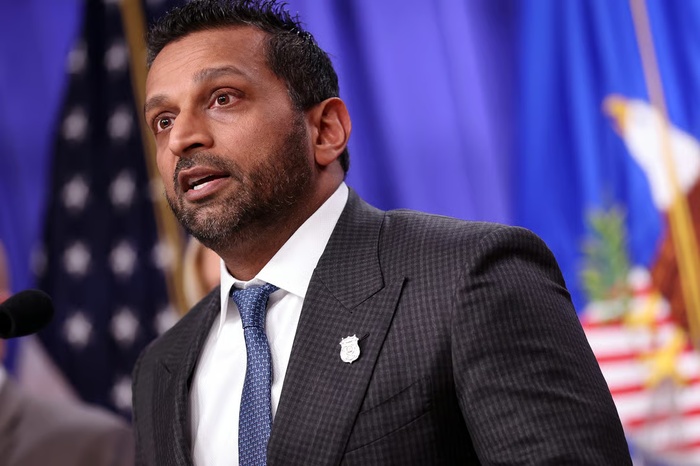
The U.S. Department of Justice confirmed that the email account of FBI Director Kash Patel had been compromised, following claims by a hacking group with alleged ties to Iran. The incident marks a significant cybersecurity concern involving a top U.S. intelligence official.

Officials at the Department of Justice acknowledged the breach but declined to provide further details about the scope or potential impact. The confirmation comes after the hackers publicly claimed responsibility and began releasing materials online.

A group calling itself “Handala Hack Team” said it had accessed Patel’s personal email inbox and published photos along with what it described as his resume. In a statement posted online, the group declared that Patel had joined its list of “successfully hacked victims.”

Cybersecurity firm Cyble described the group as an emerging but increasingly visible threat actor since late 2023, primarily targeting Israeli-linked entities and organizations.

While the hackers have released samples of the alleged data, Reuters reported it could not independently verify the authenticity of the emails. However, initial reviews suggest the material may include a mix of personal and professional correspondence dating from 2010 to 2019.

Continue Reading

Trending