Connect with us

Middle East

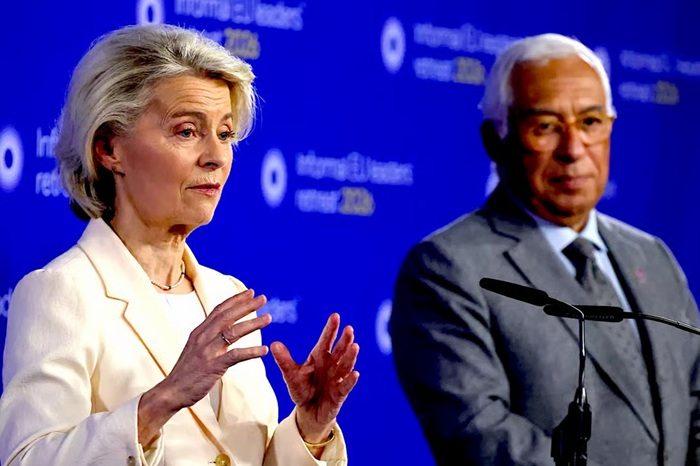
EU Leaders Ursula von der Leyen & Antonio Costa Call for Maximum Restraint

Published

on

European Commission President Ursula von der Leyen and European Council President Antonio Costa said developments in Iran are greatly concerning, and urged for maximum restraint, civilian protection & respect for international law.

European Commission President Ursula von der Leyen and European Council President Antonio Costa issued a joint statement expressing concern over developments in Iran and reaffirming the European Union’s commitment to regional stability, non-proliferation, and diplomatic engagement.

The two leaders said the developments in Iran are “greatly concerning” and confirmed that the EU remains in close contact with partners across the region. They reiterated the bloc’s “steadfast commitment to safeguarding regional security and stability,” signaling continuity in the EU’s strategic posture amid heightened tensions.

The statement emphasized coordination not only with regional actors but also among EU Member States, reflecting the bloc’s collective approach to foreign policy and crisis management.

Von der Leyen and Costa underscored that ensuring nuclear safety and preventing actions that could escalate tensions or undermine the global non-proliferation regime is “of critical importance.”

The reference places nuclear risk at the center of European concerns, aligning with longstanding EU priorities tied to arms control frameworks and the integrity of international agreements governing nuclear activity.

The EU leaders noted that the bloc has adopted extensive sanctions in response to the actions of Iran’s regime and the Revolutionary Guards. At the same time, they stressed that the European Union has consistently promoted diplomatic efforts aimed at addressing Iran’s nuclear and ballistic programmes through negotiated solutions.

In close coordination with Member States, the EU pledged to take “all necessary steps” to ensure that EU citizens in the region can count on full support.

The statement concluded with a call on all parties to exercise “maximum restraint,” protect civilians, and fully respect international law.

Continue Reading
Click to comment

Leave a Reply

Your email address will not be published. Required fields are marked *

Middle East

Bennett Turns Up The Heat On Netanyahu As Elections Loom

Published

on

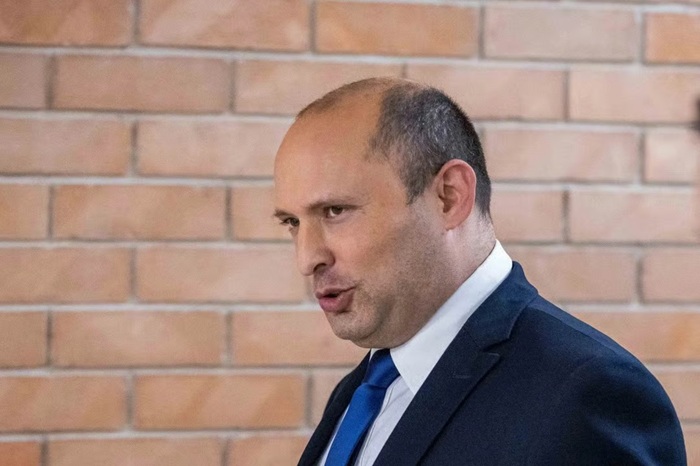
Former Israeli PM Naftali Bennett criticized Netanyahu’s war strategy, outlining faster high-intensity alternatives for Gaza and Iran. His criticizm of Netenyahu intensifies as elections are due by October 2026.

Former Israeli Prime Minister Naftali Bennett criticized Netanyahu’s handling of Israel’s wars and his incapability to rein in far-right minister Itamar Ben-Gvir.

He positioned himself as a sharper, faster alternative ahead of elections due by October 27, 2026.

Ben-Gvir Is Hurting Israel

Bennett said it is costly for Netanyahu’s coalition to depend on National Security Minister Itamar Ben-Gvir.

“Israel’s international standing is so bad. It’s shocking, largely because of failures and statements made by government ministers,” he said.

“Netanyahu knows that Ben-Gvir’s repeated stunts are enormously harmful to Israel. They damage our standing in the United States and undermine Trump’s ability to help us. But Netanyahu is incapable of putting Ben-Gvir in his place because he depends on him.”

He reminded an earlier remark regarding nuking Gaza: “When you have a minister who stupidly says, ‘We’re going to nuke Gaza,’ you pay a huge, huge international price with zero benefit,”

“And your credit pool empties, and then by the time you actually need it for material, for serious stuff, you’ve run out of credit.”

Bennett Rejected a Palestinian Consulate In East Jarusalem

Bennett examplifying his stance on the face of ally pressure, said “Biden pressured Netanyahu to agree to the establishment of an American consulate for Palestinians in East Jerusalem. Netanyahu had agreed in principle to establish it.”

“Then I entered office, and Biden told me: ‘I demand that you establish the consulate.’”

“And I told him: ‘Mr. President, Jerusalem is the capital of only one state – the State of Israel. I must refuse.'”

A Strategy of “Siege” Is More Effective For Gaza

Bennett outlined an alternative tactical framework for Gaza based on isolation and siege rather than sustained urban warfare.

“We would isolate areas, apply a full siege on those areas and let the citizens out and trap the terrorists,” Bennett said.

Bennett also offered a striking observation on Hamas leader Yahya Sinwar’s decision to launch the October 7 attacks.

“Do you know what Sinwar’s greatest strategic mistake was? That he attacked. Because we were on the path to self-destruction.”

A Game on Iran Already Started With Mossad

On Iran, Bennett described a multi-layered strategy he said he had already begun putting in motion during his time in office:

“We need to embark on a multi-year, long-term strategy of accelerating the collapse of the regime – not only through kinetic action while ensuring they don’t achieve a nuclear weapon before,” he said.

“The actions that I had begun with the Mossad and other groups are about 30 different actions. Not only bombing. I’m talking about economic actions. I’m talking about cyber, overt, covert.”

Bennett has previously described himself as Iran’s “worst nightmare” if returned to power.

His Together alliance, nationalist in orientation but secular and more moderate in style than Netanyahu’s current far-right coalition partners, aims to peel away right-leaning voters frustrated with Netanyahu’s legal troubles, the judicial reform crisis, and what Bennett calls governance failures since October 7.

Bennett founded a new party in 2025 called Bennett 2026, and allied with centrist Yair Lapid of Yesh Atid to form a joint list called Together (Beyachad), which Bennett leads.

The alliance has polled in double digits for Knesset seats and is considered one of the most significant electoral threats to Netanyahu’s Likud-led coalition.

Bennett previously ousted Netanyahu once, in 2021.

Continue Reading

Middle East

Iran Formed Secret Iraqi Cells to Strike Gulf Nations: Report

Published

on

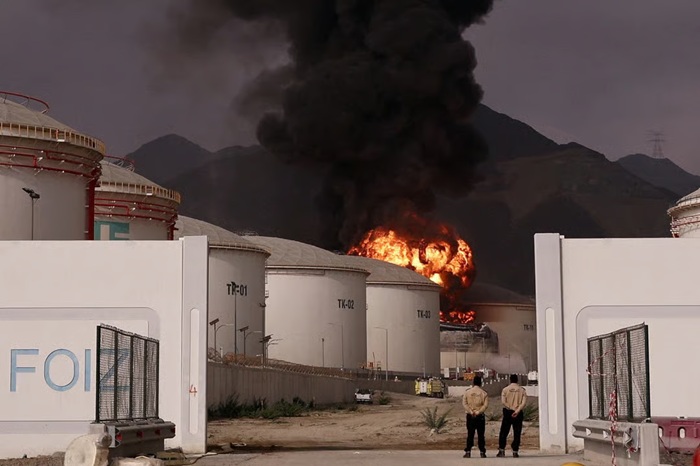
Iran’s Revolutionary Guards have established secretive new cells in Iraq to conduct drone attacks against Gulf countries hosting American forces, bypassing established proxy networks to maintain operational secrecy and avoid detection.

Iran’s Islamic Revolutionary Guard Corps has established secretive new cells in Iraq to execute attacks against Gulf countries hosting American forces.

The strategy intentionally bypasses established militia networks to avoid detection, according to eight Iraqi sources who told Reuters.

The covert network comprises three or four elite cells, each containing approximately 10 Iraqi Shi’ite fighters.

These units launched at least seven drone attacks from desert locations near Basra and Samawa against targets in Kuwait, Saudi Arabia, and the United Arab Emirates between April 20 and May 17.

Tactical Shift Under Economic Strain

The formation of these directly controlled units represents a significant shift in Iranian tactical operations.

The strategy aims to preserve Tehran’s regional force projection at a time when its traditional proxy network is diminished and its economic resources are depleted.

While some members were selected from the Islamic Resistance in Iraq umbrella group, these new cells operate entirely outside its command structure.

The units report directly to the Islamic Revolutionary Guard Corps.

The development follows signals from established Iraqi Shi’ite factions that they intend to disarm and transition into domestic politics.

This shift is intended to prevent direct conflict with the administration of U.S. President Donald Trump.

Regional Deniability and Plausible Cover

Operating smaller, highly radicalized cadres allows Tehran to maintain plausible deniability.

The arrangement insulates major Iran-backed political groups in Baghdad from Western retaliation and reduces U.S. pressure on the Iraqi government to disband them.

The newer groups operate under unfamiliar names with minimal public profiles.

They prioritize strict ideological loyalty and low operational footprints over mass recruitment.

The U.S. State Department has reiterated expectations that the Iraqi government dismantle all instruments of Iranian activity on its soil.

Iraqi Prime Minister Ali al-Zaidi and U.S. Envoy Tom Barrack recently discussed comprehensive disarmament plans for groups operating outside state control.

Continue Reading

Middle East

Strait of Hormuz Transit Fees Waived for 60-Day Period, PGSA Confirms

Published

on

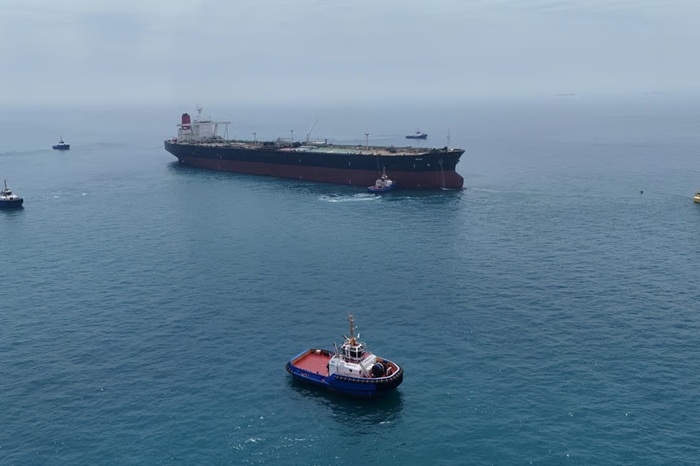
The Persian Gulf Strait Authority has confirmed that all security, safety, and environmental service fees for vessels transiting the Strait of Hormuz will be waived, but strictly within a specified 60-day period following the Islamabad Memorandum of Understanding.

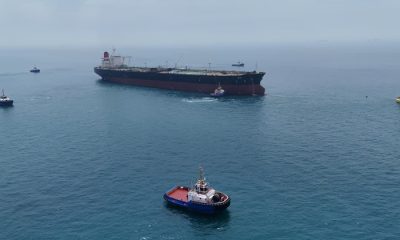
The Persian Gulf Strait Authority (PGSA) confirmed Friday that vessels transiting the Strait of Hormuz will not be charged fees, though the waiver is strictly limited to an announced 60-day period.

The temporary financial relief follows the signing of the Islamabad Memorandum of Understanding and subsequent instructions from relevant authorities.

Fees After 60 Days?

During this designated 60-day window, the Government of the Islamic Republic of Iran will also provide related insurance coverage for transiting vessels.

The suspension of service fees applies strictly to the specified timeframe, after which standard regulations are expected to resume.

Pre-Transit Mandates

To avoid operational delays at the strategic waterway’s entrance or exit, the authority has instituted mandatory pre-transit requirements.

Vessels must submit a formal transit request through official channels at least 48 hours prior to arriving in the strait area.

The application must include all required information, specifically vessel contact details and the exact route.

Safety Coordination Protocols

The PGSA cited special conditions and certain safety risks along the transit route as the basis for tightened oversight.

To ensure safe navigation and prevent maritime incidents, every vessel is required to coordinate its route and transit timing before entering the area.

The authority noted that failure to comply with these coordination and filing protocols remains the vessel owner’s sole responsibility.

Continue Reading

Trending