Connect with us

Africa

Global Powers Push Ghana to Halt Gold Royalty Hike

Published

on

US, China and several Western governments are pressing Ghana to halt a proposed gold royalty increase from 5% to as high as 12%. Mining firms warn the reform could raise costs in Africa’s largest gold producer & threaten operations.

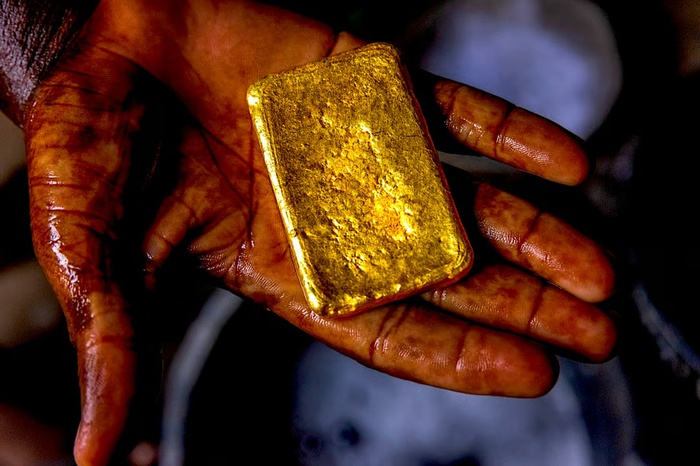
China, the United States, and several Western governments have mounted an unusual joint diplomatic effort to persuade Ghana to halt a planned overhaul of its gold royalty system, a move that could significantly raise costs for some of the world’s largest mining companies.

Ghana, Africa’s largest gold producer, is proposing to replace its current fixed 5% royalty with a sliding scale ranging from 5% to 12%, linked to international bullion prices.

The reform is intended to allow the government to capture greater revenue from gold markets that have recently reached successive historic highs.

However, mining companies argue the upper end of the proposed scale could sharply increase operating costs in one of the world’s most important gold jurisdictions.

The new royalty regime could take effect as early as next week unless the policy is amended or withdrawn. Mining companies operating in Ghana have warned that the 12% upper band would make the country one of the most expensive mining environments in Africa. Several industry executives say the reform would compress profit margins even as global gold prices remain elevated.

According to Reuters, Ghana has already agreed to reduce an existing levy to facilitate the reform’s passage. Even with that concession, mining firms argue the proposed scale remains too steep. Companies have submitted alternative proposals featuring lower royalty rates in an attempt to soften the policy.

The dispute comes as Ghana-linked mining companies report strong financial performance. In 2025, Newmont earned more than $7 billion, while Gold Fields more than doubled its profits and AngloGold Ashanti tripled its earnings. Meanwhile, Perseus Mining reported $421.7 million in profit, representing a 16% year-on-year increase.

Diplomatic pressure has accompanied industry opposition. Representatives from the United States, China, the United Kingdom, Canada, Australia, and South Africa have all raised concerns about the proposal, according to sources familiar with the discussions.

Diplomatic missions from these countries met with Ghana’s minister of lands and natural resources earlier this month and presented a joint document outlining their objections. The group is also seeking additional talks with the finance minister, according to two individuals with direct knowledge of the meeting.

One industry executive described the scale of the diplomatic engagement as unprecedented. “This is the first time I’ve seen the diplomatic community get involved at this scale,” the executive said.

Another executive summarized the concerns raised by foreign missions, noting: “The heads of missions expressed concern that the operating environment of the mines will be challenging.”

Senior executives from major mining companies have also intervened directly with Ghana’s government. Leaders from Newmont, Gold Fields, AngloGold Ashanti, and Perseus Mining sent letters or personally conveyed their concerns to Ghana’s lands minister in December and January.

Chinese mining firms operating in Ghana have also lodged formal protests. Companies including Zijin Mining, Chifeng Gold, and Shandong Gold warned that the proposal could jeopardize the viability of several major projects.

A letter from the Association of China-Ghana Mining, copied to Beijing’s ambassador and reviewed by Reuters, stated that the royalty increase could threaten operations at Zijin’s Akyem mine, Chifeng’s Wassa mine, and Shandong Gold’s Cardinal mine.

Industry sources say the dispute has unified mining companies across national lines. As one senior industry source put it: “The royalty issue has united companies like nothing in recent years.”

Continue Reading
Click to comment

Leave a Reply

Your email address will not be published. Required fields are marked *

Africa

Slavery Bill Is Due: African, Caribbean Nations Unite For Reparations

Published

on

African and Caribbean nations endorsed a 19-point reparations plan in Accra, calling for formal apologies for slavery, debt relief, and a Global Reparations Fund. The plan follows a March UN resolution that passed 123-3, with the US, Israel and Argentina voting against.

African and Caribbean nations endorsed a 19-point reparations plan in Ghana’s capital, calling for formal apologies from countries that benefited from transatlantic slavery, comprehensive debt relief, and the creation of a Global Reparations Fund.

The plan was adopted jointly by the African Union and the Caribbean Community’s Commission on Reparatory Justice at the close of a 3-day conference in the West African country.

The Accra conference, billed as “Next Steps,” was the first major gathering on reparatory justice since the UN General Assembly passed a Ghana-sponsored resolution in March recognizing the transatlantic slave trade as the gravest crime against humanity.

While the UN resolution passed with 123 votes in favour, the United States, Israel and Argentina voted against it, 52 countries, including the UK and all EU member states, abstained.

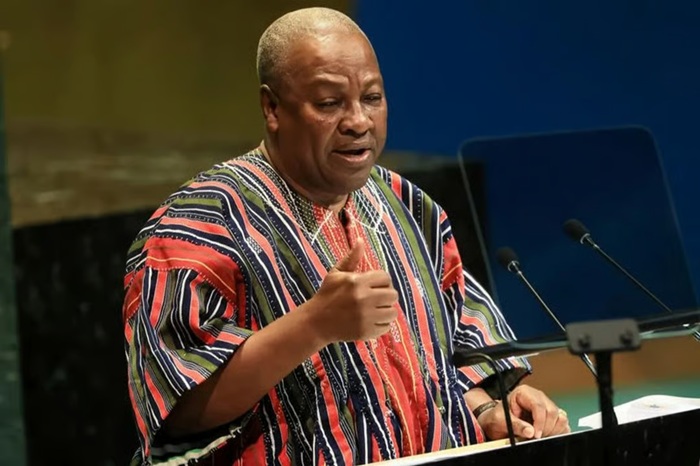
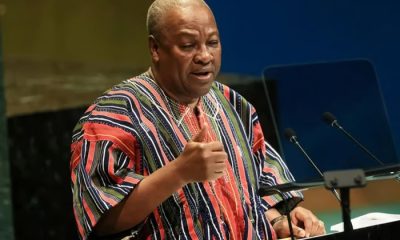
“None of us gathered in this hall today can be held personally responsible for the atrocities of the transatlantic slave trade,” Ghana’s President John Dramani Mahama told delegates.

“History does not ask us to inherit guilt, but it asks us to inherit responsibility.”

At least 12.5 million Africans were kidnapped and forcibly transported by European ships between the 15th and 19th centuries, a period spanning roughly 400 years.

A Plan, Not Just a Declaration

The 19-point plan goes significantly beyond symbolic recognition.

It calls for the establishment of a Global Reparations Fund, comprehensive debt cancellation for affected nations, and reforms to international financial institutions to ensure fairer representation for Global South countries.

It also demands the restitution of looted cultural property and ancestral remains, climate justice financing, and specific measures to address brutalities inflicted on African women and girls during slavery.

The document will be presented at the next UN General Assembly, with the African Union and CARICOM having merged previously separate frameworks into a single unified push.

Momentum Beyond Africa

Heads of state from Namibia, Liberia, Senegal, Barbados and Sao Tome and Principe attended the conference in person, alongside representatives from more than 80 countries including the Community of Latin American and Caribbean States, the Congressional Black Caucus and the NAACP.

French President Emmanuel Macron addressed the conference via video from the Elysee Palace.

Macron said enslaved people “were torn from their homelands, deported, dehumanised, and treated as goods,” while cautioning that reparations should not be seen “as an end point, or a cheque written to bring the story to a close.”

French lawmakers also voted only last month, to formally repeal slavery-era laws that had defined enslaved people as “movable property,” though they stopped short of including financial reparations in the legislation.

Also last month, Pope Leo XIV made a historic apology for the Vatican’s role in legitimising slavery and its delay in condemning the practice.

Continue Reading

Africa

Ethiopia’s UN Vote on Israeli Settlement Sparks Criticism & Confusion at Home

Published

on

Ethiopia voted ‘NO’ on UN Human Rights Council resolution condemning Israeli settlements in Palestine, sparking domestic backlash for shifting its decade long diplomatic stand. Critics say the shift is a blow to Ethiopia’s historic resistance against colonialism & Apartheid.

Ethiopia’s split voting at the United Nations Human Rights Council has triggered domestic backlash, exposing tensions between its historic pro-Palestinian stance and evolving strategic alignments.

At the UNHRC 61st session, Ethiopia voted “No” on resolution A/HRC/61/L.36 condemning Israeli settlements, joining only 2 other countries – the Czech Republic and North Macedonia – against 34 in favor and 10 abstentions.

At the same session, Addis Ababa backed resolution A/HRC/61/L.37 affirming Palestinian self-determination, causing further confusion. The divergence has drawn scrutiny, particularly as most African states supported the settlements resolution.

The vote sparked criticism among Ethiopians, many questioning a perceived break from the country’s anti-colonial legacy and support for anti-apartheid struggle.

Social media reactions also highlighted confusion over aligning with Israel “at a time the whole world is condemning Israel,” while others demanded official clarification.

Critics framed the move as inconsistent with Ethiopia’s historic identity as a symbol of resistance to colonial domination in Africa and elsewhere, and its historic support to Nelson Mandela in his struggle against Apartheid.

Some believe Ethiopia’s voting record on Palestine-related resolutions shows pattern. In December 2017, Ethiopia voted in favor of rejecting the U.S. recognition of Jerusalem as Israel’s capital. By May 2021, it abstained during an emergency UNGA session on Gaza.

In December 2022, it supported Palestinian self-determination but abstained on an International Court of Justice request on Israel’s occupation.

In September 2025, it again abstained on the New York Accord, which passed 142–10 with 12 abstentions.

Some argue this pattern reflects a dual-track strategy of backing Palestinian statehood while avoiding positions that could strain ties with Israel and Western partners, which critics say is a compromise too costly for Ethiopia’s status in African socio politics.

Officials frame the approach as balancing ties. Ethiopia maintains security and technology cooperation with Israel while relying on Western aid and investment, particularly from the United States.

At the same time, as host of the African Union, it remains tied to continental support for Palestinian statehood.

Speculation in Ethiopian political circles has pointed to possible Gulf influence, particularly from the United Arab Emirates, in shaping Addis Ababa’s deviance from its historic diplomatic stance.

The UAE has become a key economic and security partner, and its deepening ties with Israel have shaped popular belief that Ethiopia’s UN voting may reflect alignment within this emerging regional axis.

This debate has been amplified by a recent Al Jazeera report that raised questions over whether Ethiopia could be part of a so-called “Hexagon” alliance – an informal network allegedly linking Israel with select states across the Red Sea and Horn of Africa.

While unconfirmed, the framework is described as focusing on security coordination and strategic positioning in a contested region. Within this context, Ethiopia’s vote is seen by some observers as part of a broader recalibration rather than an isolated shift.

At the same time, officials continue to signal support for a two-state solution, suggesting Addis Ababa is attempting to balance new partnerships without fully abandoning its traditional diplomatic posture.

Continue Reading

Africa

“Democracy Kills” – Burkina Faso Leader Tells Public to Forget Election

Published

on

Burkina Faso’s military leadership has moved further away from its stated democratic transition, with leader Ibrahim Traore openly rejecting democratic governance while consolidating control amid worsening insecurity.

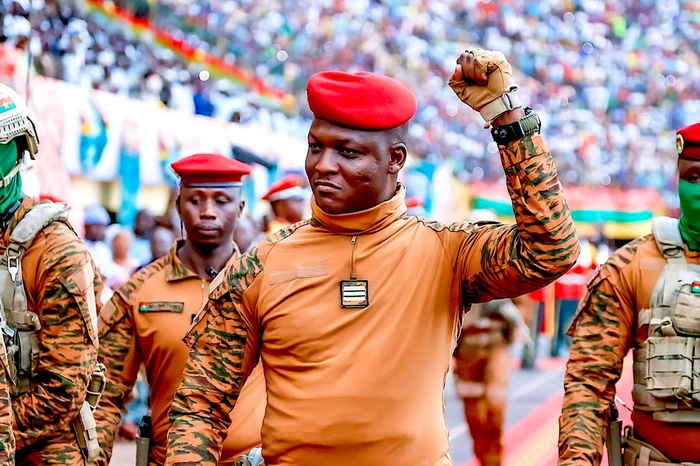
Speaking on state television Thursday, Traore said: “People need to forget about the issue of democracy… democracy isn’t for us.”

He added: “Democracy kills” and “Democracy is slavery,” citing Libya as an example of failed externally imposed governance models.

The remarks mark a sharp departure from earlier commitments to restore civilian rule following the September 2022 coup.

The junta has dismantled key political structures. In January, more than 100 political parties were dissolved and their assets seized.

Parliament had already been suspended, while the Independent National Electoral Commission was scrapped in July 2025 on cost grounds.

Elections initially promised for 2024 were postponed, with authorities stating voting cannot occur until the entire country is secured.

Traore justified the shift as necessary to confront armed terror groups linked to Daesh. However, violence has intensified rather than receded. Fatalities have tripled since his takeover, reaching 17,775 by May, compared with 6,630 deaths in the preceding 3 years, according to the Africa Center for Strategic Studies.

Hundreds of thousands have been displaced as armed groups expand territorial control.

Burkina Faso has aligned with neighboring military governments in Mali and Niger, which have taken similar steps against political parties.

All 3 countries exited ECOWAS in January to form the Alliance of Sahel States (AES).

They have also pivoted toward Russian paramilitary support after expelling approximately 5,000 French troops previously deployed in the region.

Critics point to growing pressure on institutions. Journalists, opposition figures, and legal professionals have been forcibly conscripted and sent to front lines in recent months.

Some were later released, but the measures have raised concerns about the erosion of civil and legal protections.

Continue Reading

Trending