Connect with us

Africa

Senegal Revokes Foreign Mining Licenses to Renegotiate Energy Deals

Published

on

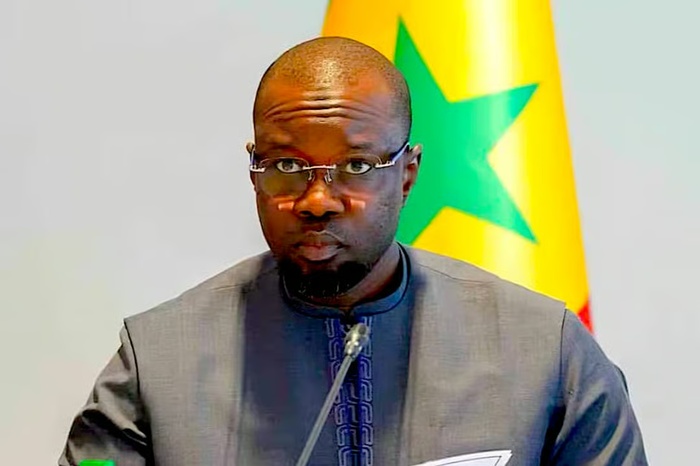
Senegal Prime Minister Ousmane Sonko called a BP gas contract unfair, revoked 71 mining licenses & froze an Indorama subsidiary’s accounts as the government seeks to renegotiate resource deals.

Senegal’s government has launched one of the most sweeping reviews of resource contracts in the country’s recent history, targeting energy, mining and infrastructure agreements signed under previous administrations.

Prime Minister Ousmane Sonko announced a series of measures including the revocation of mining licenses, a freeze on corporate accounts and plans to renegotiate gas contracts, arguing that several deals disadvantage the West African nation as it seeks to stabilize public finances.

The most prominent dispute involves a natural gas agreement tied to the Greater Tortue Ahmeyim project, operated by BP, which the government review concluded was structured in a way that disproportionately favored external partners.

“The contracts that have been signed are unfair contracts, which we intend to discuss in detail,” Sonko said in a televised statement announcing the results of the review.

The government plans to publish documentation detailing the contracts examined, including agreements related to gas, fishing and infrastructure. Sonko did not provide specific details about ongoing discussions with BP regarding the Greater Tortue Ahmeyim project. The company did not respond to a Reuters request for comment.

The contract review forms part of a broader reform agenda launched after the current administration came to power in 2024, pledging to reassess natural resource agreements and restore fiscal stability. Senegal is facing mounting economic pressure after public debt reached 132% of gross domestic product at the end of 2024, according to the International Monetary Fund (IMF).

The IMF subsequently froze its lending program after a government audit revealed previously misreported debt figures. Sonko has said the country does not plan to pursue a restructuring program despite what he described as a “difficult and painful repayment schedule.”

The government has introduced additional fiscal measures including plans to close 19 government agencies to reduce spending.

Alongside the contract review, Senegal is moving toward taking control of the Yakaar-Teranga gas project, currently operated by Kosmos Energy. Sonko said negotiations to nationalize the project were nearly complete and that Senegal would retake the block at no cost in the coming weeks.

Kosmos Energy holds a 90% stake in the field and assumed operatorship in 2023 after BP withdrew from the project.

The government has also cancelled exploration licenses for several offshore blocks, including Diender Offshore, Differe, Cayar Offshore Shallow, St Louis Offshore Shallow and Rufisque Offshore. Officials said the earlier concession areas were excessively large and did not reflect international industry practices.

Senegal only recently entered the ranks of oil-producing states when the Sangomar field, operated by Woodside Energy, began production in June 2024.

In parallel with the energy sector review, the government has revoked 71 mining licenses, including 14 gold permits, after determining that companies failed to comply with contractual obligations.

The authorities also froze the accounts of Industries Chimiques du Sénégal (ICS), a phosphate and fertilizer company controlled by Singapore-based Indorama Corporation, until it settles 250 billion CFA francs, equivalent to about 380 million euros ($438 million) owed to the state.

Sonko described the company as a major offender within the mining sector and said the freeze would remain in place until the payment dispute is resolved. Indorama did not respond to a Reuters request for comment.

The prime minister said the government review had uncovered broader structural problems in public procurement. According to the findings, numerous infrastructure projects were priced roughly 15% above market value, costing the country hundreds of millions of euros.

“We are still a long way from having completed this work,” Sonko said, adding that the investigation into contracts and financial arrangements across sectors would continue throughout his term in office.

“We’re going to completely change the way of doing things.”

Continue Reading
Click to comment

Leave a Reply

Your email address will not be published. Required fields are marked *

Africa

Slavery Bill Is Due: African, Caribbean Nations Unite For Reparations

Published

on

African and Caribbean nations endorsed a 19-point reparations plan in Accra, calling for formal apologies for slavery, debt relief, and a Global Reparations Fund. The plan follows a March UN resolution that passed 123-3, with the US, Israel and Argentina voting against.

African and Caribbean nations endorsed a 19-point reparations plan in Ghana’s capital, calling for formal apologies from countries that benefited from transatlantic slavery, comprehensive debt relief, and the creation of a Global Reparations Fund.

The plan was adopted jointly by the African Union and the Caribbean Community’s Commission on Reparatory Justice at the close of a 3-day conference in the West African country.

The Accra conference, billed as “Next Steps,” was the first major gathering on reparatory justice since the UN General Assembly passed a Ghana-sponsored resolution in March recognizing the transatlantic slave trade as the gravest crime against humanity.

While the UN resolution passed with 123 votes in favour, the United States, Israel and Argentina voted against it, 52 countries, including the UK and all EU member states, abstained.

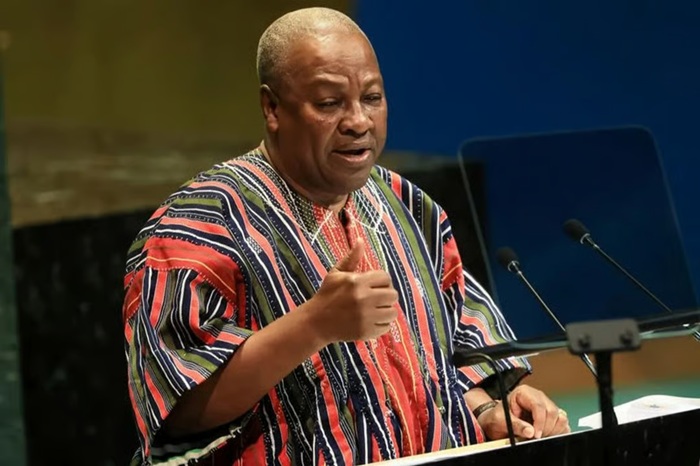
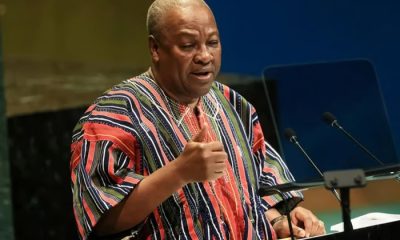
“None of us gathered in this hall today can be held personally responsible for the atrocities of the transatlantic slave trade,” Ghana’s President John Dramani Mahama told delegates.

“History does not ask us to inherit guilt, but it asks us to inherit responsibility.”

At least 12.5 million Africans were kidnapped and forcibly transported by European ships between the 15th and 19th centuries, a period spanning roughly 400 years.

A Plan, Not Just a Declaration

The 19-point plan goes significantly beyond symbolic recognition.

It calls for the establishment of a Global Reparations Fund, comprehensive debt cancellation for affected nations, and reforms to international financial institutions to ensure fairer representation for Global South countries.

It also demands the restitution of looted cultural property and ancestral remains, climate justice financing, and specific measures to address brutalities inflicted on African women and girls during slavery.

The document will be presented at the next UN General Assembly, with the African Union and CARICOM having merged previously separate frameworks into a single unified push.

Momentum Beyond Africa

Heads of state from Namibia, Liberia, Senegal, Barbados and Sao Tome and Principe attended the conference in person, alongside representatives from more than 80 countries including the Community of Latin American and Caribbean States, the Congressional Black Caucus and the NAACP.

French President Emmanuel Macron addressed the conference via video from the Elysee Palace.

Macron said enslaved people “were torn from their homelands, deported, dehumanised, and treated as goods,” while cautioning that reparations should not be seen “as an end point, or a cheque written to bring the story to a close.”

French lawmakers also voted only last month, to formally repeal slavery-era laws that had defined enslaved people as “movable property,” though they stopped short of including financial reparations in the legislation.

Also last month, Pope Leo XIV made a historic apology for the Vatican’s role in legitimising slavery and its delay in condemning the practice.

Continue Reading

Africa

Ethiopia’s UN Vote on Israeli Settlement Sparks Criticism & Confusion at Home

Published

on

Ethiopia voted ‘NO’ on UN Human Rights Council resolution condemning Israeli settlements in Palestine, sparking domestic backlash for shifting its decade long diplomatic stand. Critics say the shift is a blow to Ethiopia’s historic resistance against colonialism & Apartheid.

Ethiopia’s split voting at the United Nations Human Rights Council has triggered domestic backlash, exposing tensions between its historic pro-Palestinian stance and evolving strategic alignments.

At the UNHRC 61st session, Ethiopia voted “No” on resolution A/HRC/61/L.36 condemning Israeli settlements, joining only 2 other countries – the Czech Republic and North Macedonia – against 34 in favor and 10 abstentions.

At the same session, Addis Ababa backed resolution A/HRC/61/L.37 affirming Palestinian self-determination, causing further confusion. The divergence has drawn scrutiny, particularly as most African states supported the settlements resolution.

The vote sparked criticism among Ethiopians, many questioning a perceived break from the country’s anti-colonial legacy and support for anti-apartheid struggle.

Social media reactions also highlighted confusion over aligning with Israel “at a time the whole world is condemning Israel,” while others demanded official clarification.

Critics framed the move as inconsistent with Ethiopia’s historic identity as a symbol of resistance to colonial domination in Africa and elsewhere, and its historic support to Nelson Mandela in his struggle against Apartheid.

Some believe Ethiopia’s voting record on Palestine-related resolutions shows pattern. In December 2017, Ethiopia voted in favor of rejecting the U.S. recognition of Jerusalem as Israel’s capital. By May 2021, it abstained during an emergency UNGA session on Gaza.

In December 2022, it supported Palestinian self-determination but abstained on an International Court of Justice request on Israel’s occupation.

In September 2025, it again abstained on the New York Accord, which passed 142–10 with 12 abstentions.

Some argue this pattern reflects a dual-track strategy of backing Palestinian statehood while avoiding positions that could strain ties with Israel and Western partners, which critics say is a compromise too costly for Ethiopia’s status in African socio politics.

Officials frame the approach as balancing ties. Ethiopia maintains security and technology cooperation with Israel while relying on Western aid and investment, particularly from the United States.

At the same time, as host of the African Union, it remains tied to continental support for Palestinian statehood.

Speculation in Ethiopian political circles has pointed to possible Gulf influence, particularly from the United Arab Emirates, in shaping Addis Ababa’s deviance from its historic diplomatic stance.

The UAE has become a key economic and security partner, and its deepening ties with Israel have shaped popular belief that Ethiopia’s UN voting may reflect alignment within this emerging regional axis.

This debate has been amplified by a recent Al Jazeera report that raised questions over whether Ethiopia could be part of a so-called “Hexagon” alliance – an informal network allegedly linking Israel with select states across the Red Sea and Horn of Africa.

While unconfirmed, the framework is described as focusing on security coordination and strategic positioning in a contested region. Within this context, Ethiopia’s vote is seen by some observers as part of a broader recalibration rather than an isolated shift.

At the same time, officials continue to signal support for a two-state solution, suggesting Addis Ababa is attempting to balance new partnerships without fully abandoning its traditional diplomatic posture.

Continue Reading

Africa

“Democracy Kills” – Burkina Faso Leader Tells Public to Forget Election

Published

on

Burkina Faso’s military leadership has moved further away from its stated democratic transition, with leader Ibrahim Traore openly rejecting democratic governance while consolidating control amid worsening insecurity.

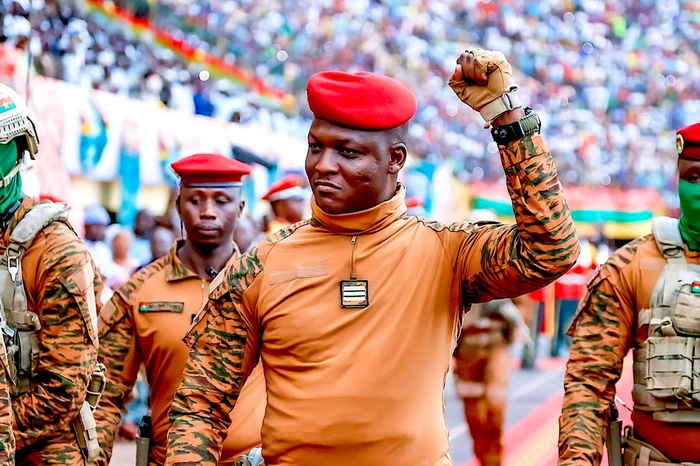
Speaking on state television Thursday, Traore said: “People need to forget about the issue of democracy… democracy isn’t for us.”

He added: “Democracy kills” and “Democracy is slavery,” citing Libya as an example of failed externally imposed governance models.

The remarks mark a sharp departure from earlier commitments to restore civilian rule following the September 2022 coup.

The junta has dismantled key political structures. In January, more than 100 political parties were dissolved and their assets seized.

Parliament had already been suspended, while the Independent National Electoral Commission was scrapped in July 2025 on cost grounds.

Elections initially promised for 2024 were postponed, with authorities stating voting cannot occur until the entire country is secured.

Traore justified the shift as necessary to confront armed terror groups linked to Daesh. However, violence has intensified rather than receded. Fatalities have tripled since his takeover, reaching 17,775 by May, compared with 6,630 deaths in the preceding 3 years, according to the Africa Center for Strategic Studies.

Hundreds of thousands have been displaced as armed groups expand territorial control.

Burkina Faso has aligned with neighboring military governments in Mali and Niger, which have taken similar steps against political parties.

All 3 countries exited ECOWAS in January to form the Alliance of Sahel States (AES).

They have also pivoted toward Russian paramilitary support after expelling approximately 5,000 French troops previously deployed in the region.

Critics point to growing pressure on institutions. Journalists, opposition figures, and legal professionals have been forcibly conscripted and sent to front lines in recent months.

Some were later released, but the measures have raised concerns about the erosion of civil and legal protections.

Continue Reading

Trending