Connect with us

Africa

DR Congo to Disarm Militia Affiliated with Rwandan Genocide of 1994

Published

on

Congo’s army launched a disarmament push against the FDLR, a Rwandan genocide-linked militia, as part of a U.S.-brokered peace deal, testing efforts to ease tensions with Rwanda amid ongoing conflict in eastern Congo.

Congo has initiated a disarmament campaign targeting the Democratic Forces for the Liberation of Rwanda, a militia tied to the 1994 Rwandan genocide, marking a critical step in implementing a fragile U.S.-brokered peace framework with Rwanda.

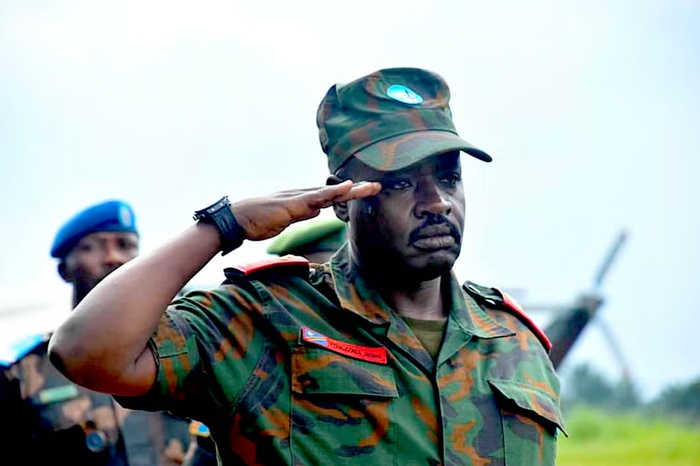
The Congolese armed forces (FARDC) confirmed preparations for operations against the FDLR, with Deputy Chief ​of Staff of FARDC Lieutenant General Nduru Jacques Ychaligonza dispatched to Kisangani to oversee the effort.

The move comes two weeks after Congolese and Rwandan officials met in Washington to revive a June peace agreement.

Ychaligonza outlined a phased approach beginning with voluntary surrender. “They must hand over their weapons, willingly or by force,” he said, adding, “We do not need bloodshed.” Authorities have established a reception site in Kisangani for fighters who surrender, with plans to eventually repatriate them to Rwanda.

The FDLR, composed partly of remnants of Rwanda’s former army and militias responsible for the 1994 genocide, has long been a central grievance for Kigali.

The latest move follows U.S. sanctions imposed weeks earlier on Rwanda’s defense forces over alleged backing of the M23 rebel group. The June agreement requires Congo to dismantle the FDLR while Rwanda commits to disengaging forces.

Despite these commitments, fighting has continued across eastern Congo, highlighting gaps in implementation.

The announcement coincides with reported withdrawals by M23 fighters from at least a dozen villages in North Kivu’s Lubero territory in recent days, according to provincial authorities. However, an M23 spokesperson described the movements as routine troop rotations.

Rwanda has repeatedly accused Congo of collaborating with the FDLR, while Kinshasa accuses Kigali of supporting M23, which controls significant territory following a rapid advance last year.

The disarmament push therefore sits at the center of a broader security trade-off, where progress on one armed group is closely tied to expectations of disengagement by another.

Continue Reading
Click to comment

Leave a Reply

Your email address will not be published. Required fields are marked *

Africa

Ethiopia’s UN Vote on Israeli Settlement Sparks Criticism & Confusion at Home

Published

on

Ethiopia voted ‘NO’ on UN Human Rights Council resolution condemning Israeli settlements in Palestine, sparking domestic backlash for shifting its decade long diplomatic stand. Critics say the shift is a blow to Ethiopia’s historic resistance against colonialism & Apartheid.

Ethiopia’s split voting at the United Nations Human Rights Council has triggered domestic backlash, exposing tensions between its historic pro-Palestinian stance and evolving strategic alignments.

At the UNHRC 61st session, Ethiopia voted “No” on resolution A/HRC/61/L.36 condemning Israeli settlements, joining only 2 other countries – the Czech Republic and North Macedonia – against 34 in favor and 10 abstentions.

At the same session, Addis Ababa backed resolution A/HRC/61/L.37 affirming Palestinian self-determination, causing further confusion. The divergence has drawn scrutiny, particularly as most African states supported the settlements resolution.

The vote sparked criticism among Ethiopians, many questioning a perceived break from the country’s anti-colonial legacy and support for anti-apartheid struggle.

Social media reactions also highlighted confusion over aligning with Israel “at a time the whole world is condemning Israel,” while others demanded official clarification.

Critics framed the move as inconsistent with Ethiopia’s historic identity as a symbol of resistance to colonial domination in Africa and elsewhere, and its historic support to Nelson Mandela in his struggle against Apartheid.

Some believe Ethiopia’s voting record on Palestine-related resolutions shows pattern. In December 2017, Ethiopia voted in favor of rejecting the U.S. recognition of Jerusalem as Israel’s capital. By May 2021, it abstained during an emergency UNGA session on Gaza.

In December 2022, it supported Palestinian self-determination but abstained on an International Court of Justice request on Israel’s occupation.

In September 2025, it again abstained on the New York Accord, which passed 142–10 with 12 abstentions.

Some argue this pattern reflects a dual-track strategy of backing Palestinian statehood while avoiding positions that could strain ties with Israel and Western partners, which critics say is a compromise too costly for Ethiopia’s status in African socio politics.

Officials frame the approach as balancing ties. Ethiopia maintains security and technology cooperation with Israel while relying on Western aid and investment, particularly from the United States.

At the same time, as host of the African Union, it remains tied to continental support for Palestinian statehood.

Speculation in Ethiopian political circles has pointed to possible Gulf influence, particularly from the United Arab Emirates, in shaping Addis Ababa’s deviance from its historic diplomatic stance.

The UAE has become a key economic and security partner, and its deepening ties with Israel have shaped popular belief that Ethiopia’s UN voting may reflect alignment within this emerging regional axis.

This debate has been amplified by a recent Al Jazeera report that raised questions over whether Ethiopia could be part of a so-called “Hexagon” alliance – an informal network allegedly linking Israel with select states across the Red Sea and Horn of Africa.

While unconfirmed, the framework is described as focusing on security coordination and strategic positioning in a contested region. Within this context, Ethiopia’s vote is seen by some observers as part of a broader recalibration rather than an isolated shift.

At the same time, officials continue to signal support for a two-state solution, suggesting Addis Ababa is attempting to balance new partnerships without fully abandoning its traditional diplomatic posture.

Continue Reading

Africa

“Democracy Kills” – Burkina Faso Leader Tells Public to Forget Election

Published

on

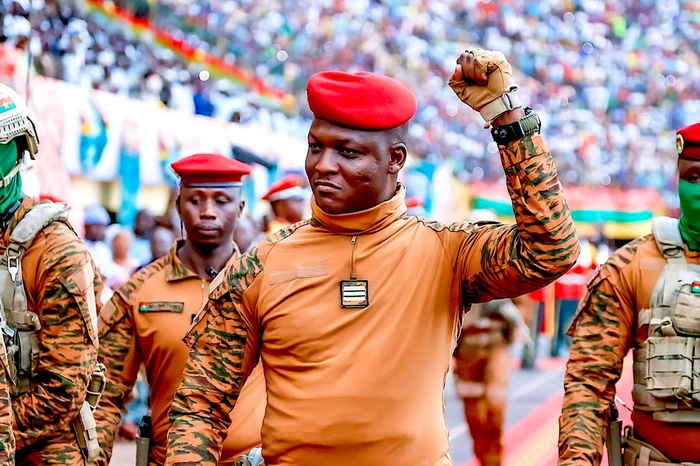
Burkina Faso’s military leadership has moved further away from its stated democratic transition, with leader Ibrahim Traore openly rejecting democratic governance while consolidating control amid worsening insecurity.

Speaking on state television Thursday, Traore said: “People need to forget about the issue of democracy… democracy isn’t for us.”

He added: “Democracy kills” and “Democracy is slavery,” citing Libya as an example of failed externally imposed governance models.

The remarks mark a sharp departure from earlier commitments to restore civilian rule following the September 2022 coup.

The junta has dismantled key political structures. In January, more than 100 political parties were dissolved and their assets seized.

Parliament had already been suspended, while the Independent National Electoral Commission was scrapped in July 2025 on cost grounds.

Elections initially promised for 2024 were postponed, with authorities stating voting cannot occur until the entire country is secured.

Traore justified the shift as necessary to confront armed terror groups linked to Daesh. However, violence has intensified rather than receded. Fatalities have tripled since his takeover, reaching 17,775 by May, compared with 6,630 deaths in the preceding 3 years, according to the Africa Center for Strategic Studies.

Hundreds of thousands have been displaced as armed groups expand territorial control.

Burkina Faso has aligned with neighboring military governments in Mali and Niger, which have taken similar steps against political parties.

All 3 countries exited ECOWAS in January to form the Alliance of Sahel States (AES).

They have also pivoted toward Russian paramilitary support after expelling approximately 5,000 French troops previously deployed in the region.

Critics point to growing pressure on institutions. Journalists, opposition figures, and legal professionals have been forcibly conscripted and sent to front lines in recent months.

Some were later released, but the measures have raised concerns about the erosion of civil and legal protections.

Continue Reading

Africa

RSF Drone Strike on Sudan Hospital Kills 10, Including Hospital Leadership

Published

on

RSF drone strikes hit al-Jabalain Hospital in Sudan’s White Nile, killing 10 including 7 staff, while a separate report cites RSF forces storming a hospital in El Daein, underscoring deliberate attacks on healthcare facilities.

Attacks on healthcare infrastructure in Sudan are intensifying, with drone strikes and ground assaults on hospitals signaling a widening pattern of targeting medical facilities amid an escalating conflict.

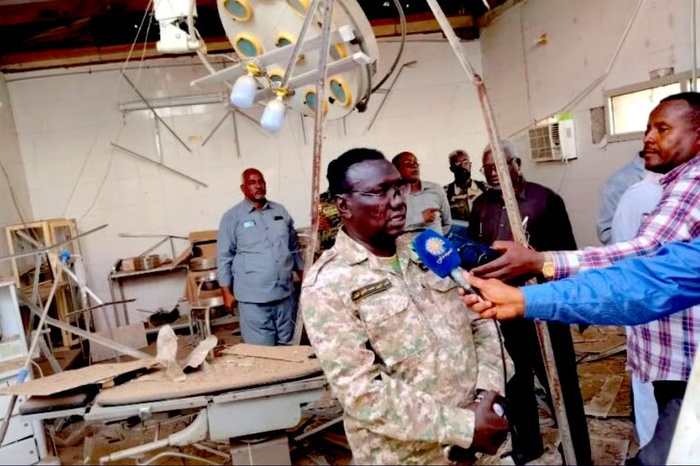
Doctors Without Borders (MSF) said the Rapid Support Forces (RSF) carried out 2 drone strikes on al-Jabalain Hospital in White Nile province on Thursday, hitting an operating theater and a maternity ward.

At least 10 people were killed, including 7 medical staff, and 19 others were injured. Patients were transferred to a hospital in Kosti, approximately 50 miles (80 km) away.

MSF said: “The attack is even more appalling as it occurred during a children’s immunization campaign.”

The strike disrupted both emergency care and routine services, compounding pressure on an already strained healthcare system.

A hospital staff member, Salah Moussa, described the sequence of events. “I rushed to the hospital when I heard the explosion… another drone strike was launched and I got hit and lost consciousness,” he told AP.

Sudan’s information minister Khalid Aleisir condemned the attack and called for designating the RSF a terrorist organization.

“We also hold regional backers directly responsible… including advanced weaponry and unmanned aerial systems,” he said.

The attack killed senior personnel, including the hospital’s general manager and administrative manager. Moussa said: “The hospital lost all its medical and administrative leadership in this attack.”

The first explosion occurred around 11 a.m., followed by a second strike as staff attempted to evacuate injured colleagues, indicating a double-strike pattern.

Sudan Doctors Network described the incident as a “deliberate assault on health facilities and unarmed civilians.”

Emergency Lawyers said additional strikes targeted a medical supply depot in Rabak, the capital of White Nile province, pointing to a broader effort affecting healthcare logistics.

In a separate incident, Sudan Doctors Network said RSF-affiliated forces stormed Family Hospital in El Daein, East Darfur, assaulting medical staff and destroying equipment.

The group said personnel were beaten and facilities damaged, calling it “a blatant violation of the sanctity of healthcare facilities.” It added that the attack occurred amid “a complete absence of any intervention from the responsible authorities.”

The incidents underscore a deepening pattern of attacks on healthcare infrastructure by UAE-backed RSF militia, further eroding Sudan’s fragile medical system and amplifying the humanitarian toll of the conflict.

Continue Reading

Trending