Connect with us

Asia-Pasific

Six Pakistani Soldiers Killed Near Afghan Border

Published

on

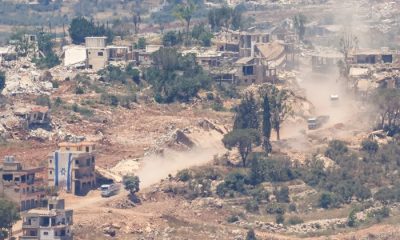
Six Pakistani soldiers were killed when militants stormed a checkpoint in Kurram district. The attack heightens tensions with Afghanistan amid an already fragile ceasefire.

The raid targeted a remote mountain area long used by armed groups moving between Pakistan and Afghanistan. It is among the deadliest incidents since October’s border clashes.

Militants Launch Night Assault

Armed fighters stormed the checkpoint between Monday night and Tuesday morning, triggering heavy gunfire across the ridge.

Six soldiers were killed, several others were wounded, and two attackers also died in the clash. Authorities described the outpost as exposed terrain where infiltration attempts frequently occur.

Tehreek-e-Taliban Pakistan Claims Attack

The group known as Tehreek-e-Taliban Pakistan said its fighters carried out the operation against the mountain post. It has escalated attacks in frontier regions for nearly 20 years, taking advantage of difficult terrain and limited local security coverage.

Authorities in Kabul rejected accusations of providing sanctuary, insisting Pakistan’s security issues originate within its own borders.

Border Tensions Intensify Again

October’s week-long fighting killed about 70 people and wounded hundreds before a ceasefire was negotiated.

Subsequent skirmishes persisted, including gunfire and shelling on Friday that left five people dead near a crossing point. Officials warn the frontier remains volatile despite attempts to stabilize the situation.

Population Pressure Raises Friction

Pakistan’s accelerated return of Afghan nationals—numbering in the millions—has increased strain along border communities.

Authorities recently signaled that humanitarian shipments would resume into Afghanistan to ease logistical pressure. Residents on both sides say uncertainty and mistrust continue to complicate daily movement.

Continue Reading
Click to comment

Leave a Reply

Your email address will not be published. Required fields are marked *

Asia-Pasific

Vietnam Prepares for a Second American Invasion

Published

on

Hanoi defense documents revealed in 2026 show Vietnam’s military preparing for a possible U.S. “war of aggression,” even after 2023 partnership upgrades and 2025 Trump trade deals, highlighting Vietnam’s balancing act between security fears and economic ties.

An internal Vietnamese Ministry of Defense document completed in August 2024 shows Hanoi preparing contingencies for a potential U.S. “war of aggression,” underscoring a widening gap between Vietnam’s expanding economic engagement with Washington and its security establishment’s threat perceptions.

The paper, titled “The 2nd U.S. Invasion Plan,” was cited in a Tuesday analysis by The 88 Project, a human rights organization, and frames the United States as a “belligerent” power even as bilateral ties were elevated in 2023 to a Comprehensive Strategic Partnership.

Security Doctrine vs Partnership

The document argues that Washington and its allies, seeking to strengthen deterrence against China, are prepared to apply “unconventional forms of warfare” and even conduct large-scale invasions against states that “deviate from its orbit.”

While Vietnamese planners acknowledge that currently there is little risk of a war against Vietnam, they add that due to the U.S.’s “belligerent nature” they need to be vigilant to prevent “the U.S. and its allies from ‘creating a pretext’ to launch an invasion” of the country.

Ben Swanton, co-director of The 88 Project, said the assessment reflects a broad institutional consensus.

This isn’t just some kind of a fringe element or paranoid element within the party or within the government.

Ben Swanton – The 88 Project

“The 2nd U.S. Invasion Plan”

Vietnamese analysts trace what they see as a steady U.S. military buildup in Asia across three administrations – Barack Obama, Donald Trump’s first term, and Joe Biden – aimed at forming a regional front against China. Yet the documents depict Beijing as a rival rather than an existential threat, reserving that category for Washington.

Dr. Zachary Abuza of the National War College in the U.S. said the military retains “a very long memory” of the war that ended in 1975 and remains primarily preoccupied with the risk of a Western-backed “color revolution,” modeled on Ukraine in 2004 or the Philippines in 1986.

Those fears surfaced publicly in June 2024, when an army television broadcast accused U.S.-linked Fulbright University of fomenting unrest, prompting a rare Foreign Ministry defense of the institution.

Nguyen Khac Giang of Singapore’s ISEAS-Yusof Ishak Institute said the military has “never been too comfortable” with the U.S. partnership, reflecting tensions between conservative security factions and more outward-facing economic technocrats.

Trade Leverage Meets Regime Anxiety

The disclosures arrive amid intensifying economic interdependence. On July 2, 2025, U.S. President Donald Trump announced a trade agreement imposing a 20% tariff on Vietnamese goods and 40% on transshipping, while granting the United States “total access” to Vietnam’s markets.

However, Chinese firms have since increasingly routed exports through Vietnam and Malaysia to evade U.S. tariffs that can reach 145%, prompting crackdowns by Vietnam and Thailand, according to the Financial Times.

Senior Counselor to the President for Trade and Manufacturing Peter Navarro amplified the pressure on April 7, 2025, calling Vietnam as “a colony of Communist China” used to evade American Tariff and warning against shrimp imports that could hurt Louisiana producers.

Trump’s rhetoric has also sharpened Hanoi’s unease. On October 5, 2025, Trump declared, “We would have won in Vietnam and Afghanistan easily if we fought to win… We are not politically correct anymore, we win now.”

Trump’s language reinforces long-standing fears inside Vietnam’s security establishment that Washington retains a coercive mindset toward weaker states, lending credibility to military planners who argue the U.S. could still resort to force or regime pressure. In Hanoi, such remarks are read less as domestic bravado than as strategic signaling, hardening skepticism about U.S. intentions even as economic ties deepen.

At the same time, Trump’s family business broke ground on a $1.5 billion golf and luxury real estate project in Hung Yen province after To Lam became Communist Party general secretary, signaling parallel tracks of political suspicion and commercial engagement.

Maduro’s Capture Spurs Regional Anxiety

China remains Vietnam’s largest two-way trade partner, while the United States is its biggest export market, forcing Hanoi into a constant balancing act. Giang noted that Trump’s military operation to capture Venezuela’s Nicolás Maduro revived conservative fears, particularly because Cuba remains a sensitive ally for Vietnam’s political elite.

Abuza said the contradiction is structural. Even reform-minded leaders assume Washington would support regime change if given the opportunity. “Yes, they like us, they’re working with us, they are good partners for now,” he said, “but given the opportunity if there were a color revolution, the Americans would support it.”

Continue Reading

Asia-Pasific

South Korea Completes KF-21 Fighter Flight Tests

Published

on

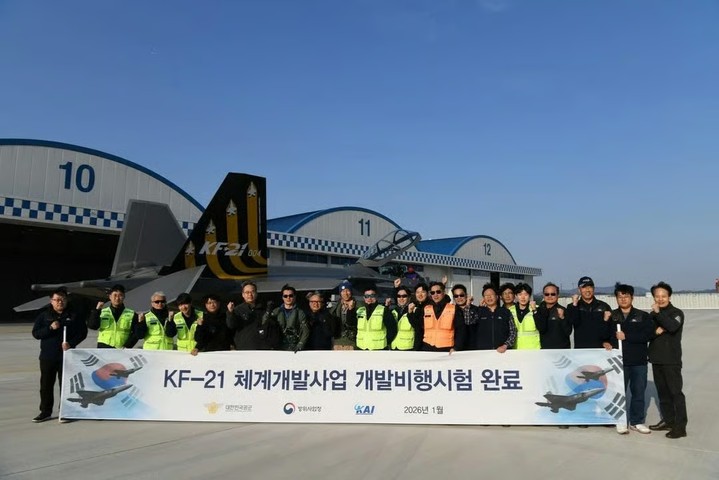
South Korea has completed all planned development flight tests of its indigenous KF-21 Boramae fighter jet, marking a major milestone ahead of mass production and delivery to the air force in 2026.

South Korea has successfully completed all planned development flight tests of the KF-21 Boramae, its domestically developed 4.5-generation multirole fighter jet, marking a major milestone in the country’s indigenous defense aviation program. 

According to the Defense Acquisition Program Administration (DAPA), the final test flight was conducted on January 12, 2026, over the southern sea off Sacheon, in South Gyeongsang Province, using the fourth prototype aircraft.

The completion of the final sortie brings to a close approximately 42 months of development flight testing, formally ending the aircraft’s full development flight test phase.

The KF-21 flight test program involved six prototype aircraft, which together accumulated around 1,600 accident-free sorties

This figure was reduced from an initially planned 2,000 flights due to the use of extended-duration missions and efficient test planning, including aerial refueling operations.

Across these sorties, engineers verified more than 13,000 individual test conditions, covering a wide range of critical performance and systems checks.

These included flight stability, high-angle-of-attack maneuvers, supersonic flight, aerial refueling capability, and advanced avionics integration.

Key subsystems tested included the indigenously developed AESA radar, as well as air-to-air weapons separation and live firing trials, confirming the aircraft’s core combat capabilities.

The KF-21 Boramae — formerly known as the KF-X program — is South Korea’s first domestically developed supersonic fighter aircraft. The project is led by Korea Aerospace Industries (KAI) in cooperation with the Agency for Defense Development and more than 225 domestic companies, reflecting a broad national industrial effort.

The aircraft is intended to replace the Republic of Korea Air Force’s aging F-4 Phantom II and F-5 fighter fleets, while significantly enhancing the country’s technological self-reliance.

The first prototype rollout took place in April 2021, followed by the maiden flight on July 19, 2022.

The KF-21 is powered by twin GE F414 engines and features advanced avionics, a reduced radar signature design, and semi-stealth characteristics.

The aircraft is designed to integrate modern Western weapons systems, including Meteor and IRIS-T air-to-air missiles, positioning it as a capable multirole platform for regional air superiority missions.

With flight testing complete, system development is expected to conclude in the first half of 2026.

Deliveries of mass-produced aircraft to the Republic of Korea Air Force (ROKAF) are scheduled to begin in the second half of 2026.

Initial Block I aircraft will focus primarily on air-to-air combat roles.

More advanced Block II variants, incorporating full air-to-ground and anti-ship capabilities, are planned for introduction from early 2027.

South Korea aims to field up to 120 KF-21 fighters by the early 2030s.

The successful, incident-free completion of the KF-21’s development flight tests ahead of schedule highlights the program’s maturity and South Korea’s growing aerospace and defense capabilities.

It places the country among a small group of nations capable of independently designing and producing advanced combat aircraft, while also attracting export interest from countries including the UAEPoland, and others.

Continue Reading

Asia-Pasific

Kim Jong Un Orders Artillery Revolution With 600mm Rockets

Published

on

North Korean leader Kim Jong Un inspected a munitions factory producing 600mm KN-25 rocket systems, calling them a “strategic attack means” and urging mass production as part of a broader push to modernize long-range artillery ahead of a 2026 party congress.

North Korean leader Kim Jong Un has publicly elevated the country’s super-large multiple rocket launcher force to a strategic tier, calling for a fundamental transformation of North Korea’s artillery capabilities. 

According to state media KCNA, Kim on December 28, 2025 inspected a major munitions factory producing super-large caliber rocket systems and praised them as a “super-powerful weapon” capable of delivering sudden, precise, and devastating strikes.

Kim described the system as a potential “strategic attack means” that could “annihilate the enemy,” language that places the weapon beyond traditional battlefield artillery. He urged what he called a “revolution in upgrading the artillery weapon system,” emphasizing the need for expanded mass production to ensure the weapon becomes the backbone of North Korea’s modernized long-range artillery forces.

The system inspected is widely identified by external analysts as the KN-25, a 600mm caliber weapon first tested in 2019

Although North Korea officially categorizes it as a multiple launch rocket system (MLRS), Western militaries frequently classify it as a short-range ballistic missile due to its range and flight profile.

The KN-25 is assessed to have a strike range of approximately 380–400 kilometers, allowing coverage of targets across much of South Korea, including the Seoul metropolitan area and potential U.S. military facilities. 

It is believed to use precision guidance based on inertial navigation, possibly supplemented by satellite inputs, with reported accuracy measured in tens of meters. The launcher is typically mounted on tracked or wheeled transporter-erector-launchers carrying four to six tubes, enhancing survivability through rapid relocation.

While the system is conventionally armed, North Korea has previously claimed the KN-25 could carry tactical nuclear warheads, further blurring the distinction between artillery and missile forces.

Images released by state media showed Kim touring the production facility with rows of launcher vehicles visible, underscoring the industrial scale of the program. Kim’s focus on serial production suggests the KN-25 is moving from a niche capability toward a mass-deployed system integrated into North Korea’s standing force structure.

By emphasizing both precision and volume, Pyongyang appears to be pursuing a doctrine that combines saturation fire with accurate, long-range strikes. This approach complicates missile defense planning by presenting a large number of high-speed, quasi-ballistic threats that sit below the traditional strategic missile threshold but exceed conventional artillery norms.

The factory inspection forms part of a broader sequence of military-related activities by Kim, including visits to nuclear submarine construction sites and oversight of missile testing programs. These appearances come ahead of a key Workers’ Party of Korea congress expected in early 2026, where defense modernization is likely to feature prominently.

Taken together, the messaging highlights North Korea’s intent to anchor its deterrence posture not only in intercontinental systems but also in highly mobile, precision-capable artillery forces designed for rapid escalation in a regional conflict.

Continue Reading

Trending