Connect with us

Asia-Pasific

Pentagon: China Building Toward 1,000 Nuclear Warheads as It Prepares for “National Total War”

Published

on

China is expanding its nuclear arsenal toward more than 1,000 warheads by 2030 while preparing for what it calls “national total war,” according to the Pentagon’s 2025 China Military Power Report, signaling a shift toward sustained, high-intensity conflict planning.

China is moving steadily toward a nuclear force exceeding 1,000 warheads by the end of the decade, a development the Pentagon says marks one of the most consequential shifts in global strategic stability in decades.

In its 2025 annual report to Congress, the U.S. Department of Defense assesses that Beijing’s nuclear buildup, while temporarily slowing in pace, remains firmly on track.

“The PLA remains on track to have over 1,000 nuclear warheads by 2030.”

The report notes that China’s stockpile remained in the low 600s through 2024, but emphasizes that the overall trajectory is unchanged.

This expansion represents a dramatic increase from estimates in 2020, when the Pentagon assessed China possessed roughly 200 warheads.

The buildup is accompanied by advances in delivery systems, early-warning capabilities, and command-and-control structures, indicating a transition from a minimal deterrent posture toward a far more flexible and survivable nuclear force.

The Pentagon highlights China’s progress toward an early-warning counterstrike capability, a posture closer to launch-on-warning doctrines long associated with U.S. and Russian nuclear forces.

According to the report, China is investing heavily in space-based infrared sensors and other detection systems designed to shorten decision timelines in a crisis.

“China probably made progress on its attempts to achieve an early warning counterstrike capability.”

This shift, the report suggests, increases both China’s confidence in its deterrent and the risks of miscalculation during periods of heightened tension.

The Pentagon also points to China’s September 2024 launch of an intercontinental ballistic missile into the Pacific Ocean—the first such test since 1980—as evidence of growing confidence in full-range nuclear strike capabilities.

The nuclear expansion is not occurring in isolation.

The Pentagon situates China’s strategic forces within a broader transformation of how Beijing conceptualizes war itself.

The report states that China increasingly views future conflict as a struggle between entire national systems rather than discrete military engagements.

“China’s top military strategy focuses squarely on overcoming the United States through a whole-of-nation mobilization effort that Beijing terms ‘national total war.’”

Under this concept, nuclear forces serve not only as a deterrent but as a central pillar of escalation control, designed to shape adversary decision-making across the full spectrum of conflict.

The report indicates that China’s leadership sees nuclear weapons, cyber operations, space capabilities, and conventional long-range strikes as integrated tools rather than separate domains.

The Pentagon describes “national total war” as a framework that extends beyond the battlefield, encompassing economic resilience, industrial mobilization, information control, and civilian-military integration.

Drawing lessons from Russia’s war in Ukraine, Chinese military writings emphasize the need to sustain conflict over time while managing domestic stability and international pressure.

“The PLA views conflict not simply as a clash of militaries, but as a clash of national systems.”

In this context, China’s nuclear buildup provides strategic depth, allowing Beijing to deter external intervention while prosecuting a prolonged campaign.

The report suggests that China believes a credible and survivable nuclear force reduces the likelihood that the United States or its allies would escalate a regional conflict—such as over Taiwan—into a wider war.

The Pentagon warns that China’s combined nuclear expansion and whole-of-nation war planning pose a growing challenge to U.S. deterrence strategies.

Rather than preparing solely for short, sharp conflicts, Beijing appears to be positioning itself for sustained competition and potential conflict against a technologically advanced adversary.

The report frames China’s trajectory as a deliberate effort to reshape the strategic environment, reduce U.S. freedom of action, and alter escalation dynamics in China’s favor.

While the Pentagon stops short of predicting imminent conflict, it underscores that the scale and integration of China’s nuclear and conventional modernization efforts are fundamentally changing the risk landscape in the Indo-Pacific and beyond. 

Continue Reading
Click to comment

Leave a Reply

Your email address will not be published. Required fields are marked *

Asia-Pasific

Iran Nears Supersonic Anti-Ship Missile Deal With China

Published

on

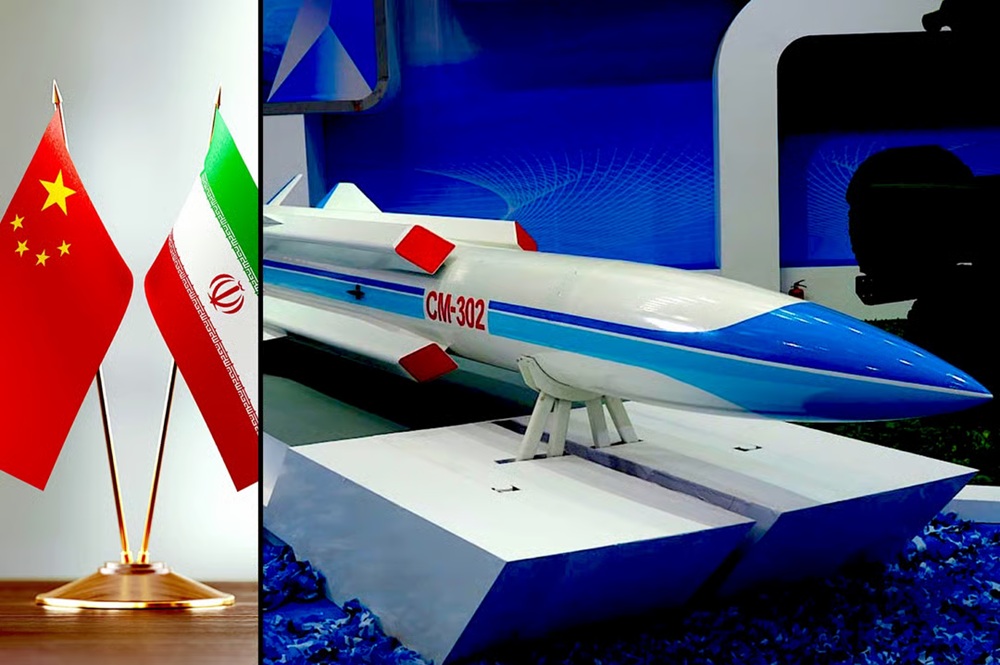
Iran and China are nearing a deal for CM-302 supersonic anti-ship missile after talks spanning at least two years, Reuters’ sources said. The move coincides with US naval deployments & renewed sanctions pressure, highlighting a potential shift in regional maritime deterrence.

Iran is approaching a potential procurement milestone that intersects with regional force posture and sanctions policy: negotiations with China for CM-302 supersonic anti-ship cruise missiles have entered final stages, according to Reuters who cited six individuals familiar with the talks.

The timing is notable. The United States has concentrated major naval assets within striking distance of Iran, while diplomatic friction over Tehran’s nuclear and missile programs persists.

Capability Shift At Sea

The CM-302, marketed by China Aerospace Science and Industry Corporation – CASIC – is designed for high-speed, low-altitude penetration. Sources described a range of about 290 kilometers and a supersonic flight profile intended to complicate shipborne defenses.

Two weapons experts cited by Reuters assessed that deployment would “significantly enhance” Iran’s maritime strike options, particularly against high-value naval targets.

Negotiations began at least two years ago and accelerated after the 12-day Israel-Iran war in June, the six sources said. As discussions progressed last summer, senior Iranian defense officials traveled to China, including Deputy Defense Minister Massoud Oraei, according to two security officials. Reuters said Oraei’s visit had not been previously disclosed.

Sanctions And Embargo Friction

Any transfer would sit uneasily with the United Nations sanctions framework referenced by Reuters. A UN arms embargo first imposed in 2006 was suspended in 2015 under a nuclear agreement, then reimposed last September.

Reuters could not determine the number of missiles under discussion, the contract value, or a delivery timeline.

Official responses were measured and divergent. An Iranian foreign ministry official told Reuters it was “an appropriate time to make use” of military and security agreements with allies.

After publication, China’s Ministry of Foreign Affairs said it was not aware of talks on a missile sale. China’s defense ministry and CASIC did not respond to requests for comment.

US Force Posture Near Iran

The reported negotiations coincide with a visible U.S. naval presence. Reuters cited the aircraft carrier USS Abraham Lincoln and its strike group already deployed, with USS Gerald R. Ford and escorts heading to the region.

Combined, the two carriers can embark more than 5,000 personnel and approximately 150 aircraft, underscoring the scale of U.S. contingency planning.

A White House official did not address the missile talks directly but referenced U.S. President Donald Trump’s stance: “either we will make a deal or we will have to do something very tough like last time.”

Trump said on February 19 that Iran had 10 days to reach an agreement over its nuclear program or face military action.

Reuters previously reported on February 13 that Washington was preparing for the possibility of sustained, weeks-long operations if ordered.

Arsenal Depletion And Diversification

Pieter Wezeman of the Stockholm International Peace Research Institute characterized the potential CM-302 purchase as a “significant improvement” for an Iranian arsenal described as depleted by last year’s war.

CASIC promotes the missile as capable of engaging large surface combatants and adaptable across ships, aircraft, and mobile ground launchers, with secondary land-attack capability.

Beyond anti-ship systems, the six sources said Iran is discussing additional Chinese equipment, including surface-to-air missiles described as MANPADS, anti-ballistic weapons, and anti-satellite systems.

Historically, China was a major arms supplier to Iran in the 1980s, with large-scale transfers declining by the late 1990s amid international pressure.

U.S. officials have accused Chinese firms of supplying missile-related materials to Iran in recent years, though not complete missile systems.

Continue Reading

Asia-Pasific

Vietnam Prepares for a Second American Invasion

Published

on

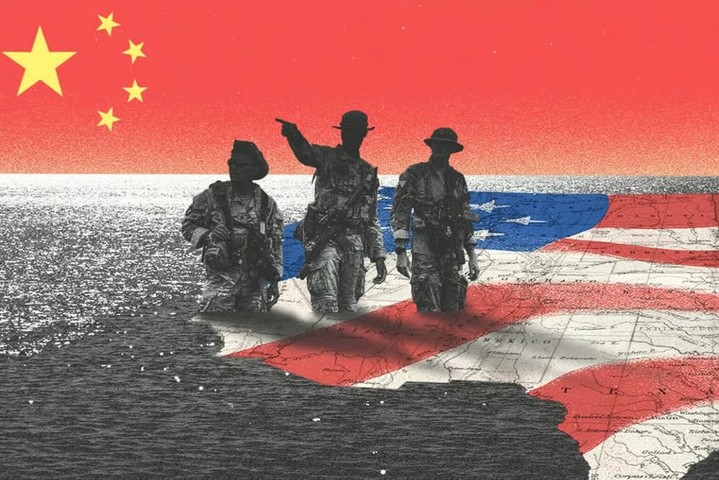
Hanoi defense documents revealed in 2026 show Vietnam’s military preparing for a possible U.S. “war of aggression,” even after 2023 partnership upgrades and 2025 Trump trade deals, highlighting Vietnam’s balancing act between security fears and economic ties.

An internal Vietnamese Ministry of Defense document completed in August 2024 shows Hanoi preparing contingencies for a potential U.S. “war of aggression,” underscoring a widening gap between Vietnam’s expanding economic engagement with Washington and its security establishment’s threat perceptions.

The paper, titled “The 2nd U.S. Invasion Plan,” was cited in a Tuesday analysis by The 88 Project, a human rights organization, and frames the United States as a “belligerent” power even as bilateral ties were elevated in 2023 to a Comprehensive Strategic Partnership.

Security Doctrine vs Partnership

The document argues that Washington and its allies, seeking to strengthen deterrence against China, are prepared to apply “unconventional forms of warfare” and even conduct large-scale invasions against states that “deviate from its orbit.”

While Vietnamese planners acknowledge that currently there is little risk of a war against Vietnam, they add that due to the U.S.’s “belligerent nature” they need to be vigilant to prevent “the U.S. and its allies from ‘creating a pretext’ to launch an invasion” of the country.

Ben Swanton, co-director of The 88 Project, said the assessment reflects a broad institutional consensus.

This isn’t just some kind of a fringe element or paranoid element within the party or within the government.

Ben Swanton – The 88 Project

“The 2nd U.S. Invasion Plan”

Vietnamese analysts trace what they see as a steady U.S. military buildup in Asia across three administrations – Barack Obama, Donald Trump’s first term, and Joe Biden – aimed at forming a regional front against China. Yet the documents depict Beijing as a rival rather than an existential threat, reserving that category for Washington.

Dr. Zachary Abuza of the National War College in the U.S. said the military retains “a very long memory” of the war that ended in 1975 and remains primarily preoccupied with the risk of a Western-backed “color revolution,” modeled on Ukraine in 2004 or the Philippines in 1986.

Those fears surfaced publicly in June 2024, when an army television broadcast accused U.S.-linked Fulbright University of fomenting unrest, prompting a rare Foreign Ministry defense of the institution.

Nguyen Khac Giang of Singapore’s ISEAS-Yusof Ishak Institute said the military has “never been too comfortable” with the U.S. partnership, reflecting tensions between conservative security factions and more outward-facing economic technocrats.

Trade Leverage Meets Regime Anxiety

The disclosures arrive amid intensifying economic interdependence. On July 2, 2025, U.S. President Donald Trump announced a trade agreement imposing a 20% tariff on Vietnamese goods and 40% on transshipping, while granting the United States “total access” to Vietnam’s markets.

However, Chinese firms have since increasingly routed exports through Vietnam and Malaysia to evade U.S. tariffs that can reach 145%, prompting crackdowns by Vietnam and Thailand, according to the Financial Times.

Senior Counselor to the President for Trade and Manufacturing Peter Navarro amplified the pressure on April 7, 2025, calling Vietnam as “a colony of Communist China” used to evade American Tariff and warning against shrimp imports that could hurt Louisiana producers.

Trump’s rhetoric has also sharpened Hanoi’s unease. On October 5, 2025, Trump declared, “We would have won in Vietnam and Afghanistan easily if we fought to win… We are not politically correct anymore, we win now.”

Trump’s language reinforces long-standing fears inside Vietnam’s security establishment that Washington retains a coercive mindset toward weaker states, lending credibility to military planners who argue the U.S. could still resort to force or regime pressure. In Hanoi, such remarks are read less as domestic bravado than as strategic signaling, hardening skepticism about U.S. intentions even as economic ties deepen.

At the same time, Trump’s family business broke ground on a $1.5 billion golf and luxury real estate project in Hung Yen province after To Lam became Communist Party general secretary, signaling parallel tracks of political suspicion and commercial engagement.

Maduro’s Capture Spurs Regional Anxiety

China remains Vietnam’s largest two-way trade partner, while the United States is its biggest export market, forcing Hanoi into a constant balancing act. Giang noted that Trump’s military operation to capture Venezuela’s Nicolás Maduro revived conservative fears, particularly because Cuba remains a sensitive ally for Vietnam’s political elite.

Abuza said the contradiction is structural. Even reform-minded leaders assume Washington would support regime change if given the opportunity. “Yes, they like us, they’re working with us, they are good partners for now,” he said, “but given the opportunity if there were a color revolution, the Americans would support it.”

Continue Reading

Asia-Pasific

South Korea Completes KF-21 Fighter Flight Tests

Published

on

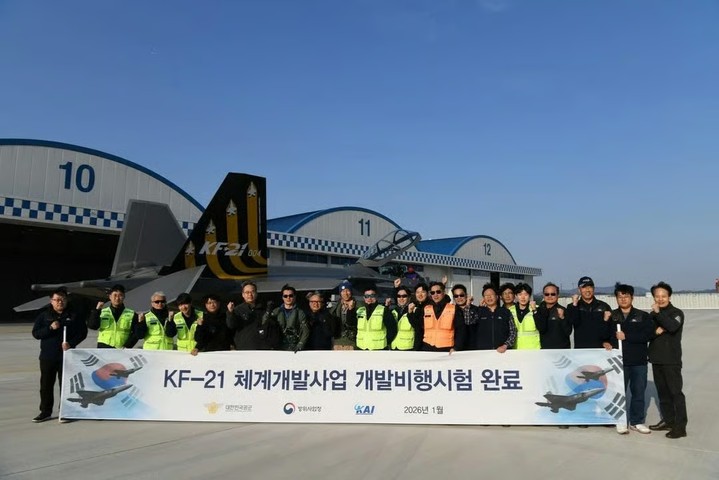
South Korea has completed all planned development flight tests of its indigenous KF-21 Boramae fighter jet, marking a major milestone ahead of mass production and delivery to the air force in 2026.

South Korea has successfully completed all planned development flight tests of the KF-21 Boramae, its domestically developed 4.5-generation multirole fighter jet, marking a major milestone in the country’s indigenous defense aviation program. 

According to the Defense Acquisition Program Administration (DAPA), the final test flight was conducted on January 12, 2026, over the southern sea off Sacheon, in South Gyeongsang Province, using the fourth prototype aircraft.

The completion of the final sortie brings to a close approximately 42 months of development flight testing, formally ending the aircraft’s full development flight test phase.

The KF-21 flight test program involved six prototype aircraft, which together accumulated around 1,600 accident-free sorties

This figure was reduced from an initially planned 2,000 flights due to the use of extended-duration missions and efficient test planning, including aerial refueling operations.

Across these sorties, engineers verified more than 13,000 individual test conditions, covering a wide range of critical performance and systems checks.

These included flight stability, high-angle-of-attack maneuvers, supersonic flight, aerial refueling capability, and advanced avionics integration.

Key subsystems tested included the indigenously developed AESA radar, as well as air-to-air weapons separation and live firing trials, confirming the aircraft’s core combat capabilities.

The KF-21 Boramae — formerly known as the KF-X program — is South Korea’s first domestically developed supersonic fighter aircraft. The project is led by Korea Aerospace Industries (KAI) in cooperation with the Agency for Defense Development and more than 225 domestic companies, reflecting a broad national industrial effort.

The aircraft is intended to replace the Republic of Korea Air Force’s aging F-4 Phantom II and F-5 fighter fleets, while significantly enhancing the country’s technological self-reliance.

The first prototype rollout took place in April 2021, followed by the maiden flight on July 19, 2022.

The KF-21 is powered by twin GE F414 engines and features advanced avionics, a reduced radar signature design, and semi-stealth characteristics.

The aircraft is designed to integrate modern Western weapons systems, including Meteor and IRIS-T air-to-air missiles, positioning it as a capable multirole platform for regional air superiority missions.

With flight testing complete, system development is expected to conclude in the first half of 2026.

Deliveries of mass-produced aircraft to the Republic of Korea Air Force (ROKAF) are scheduled to begin in the second half of 2026.

Initial Block I aircraft will focus primarily on air-to-air combat roles.

More advanced Block II variants, incorporating full air-to-ground and anti-ship capabilities, are planned for introduction from early 2027.

South Korea aims to field up to 120 KF-21 fighters by the early 2030s.

The successful, incident-free completion of the KF-21’s development flight tests ahead of schedule highlights the program’s maturity and South Korea’s growing aerospace and defense capabilities.

It places the country among a small group of nations capable of independently designing and producing advanced combat aircraft, while also attracting export interest from countries including the UAEPoland, and others.

Continue Reading

Trending