
America
The First Casualty of Trump’s New World: Welcome to Stable Chaos, Goodbye Maduro

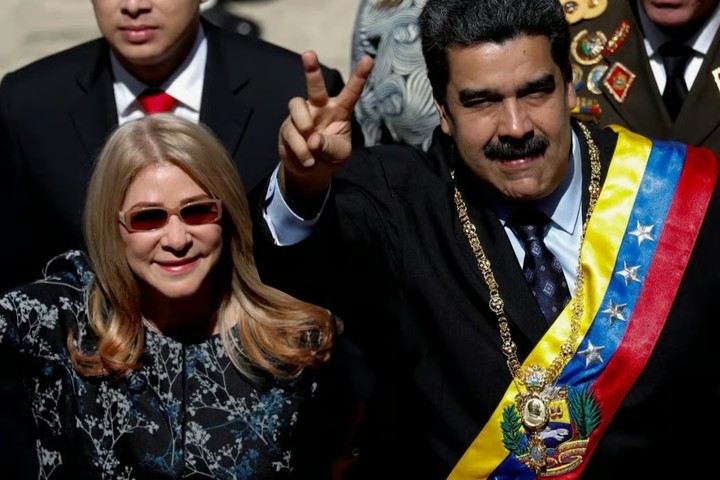
As Yunus Emre Erdölen underlines, Trump’s concern is neither democracy nor drugs; as he himself openly states, it is Venezuelan oil and U.S. interests.What once happened behind closed doors in Trump’s new world is now unfolding right before our eyes. The rudeness of hard power stands naked in all its rawness and brutality. For this reason, seriously sitting down to debate whether “Maduro was good or bad” or whether “the attack was legal or illegal” has little importance in this new world.
Exactly 35 years ago, on January 3, 1990, American soldiers blasted rock songs through large speakers in front of the Vatican Embassy in Panama. The Clash’s “I Fought the Law,” U2’s “All I Want Is You,” and Bruce Cockburn’s “If I Had a Rocket Launcher” were just a few of the “symbolic” songs on the American soldiers’ playlist.
Of course, the American soldiers were not carrying out a cultural initiative to promote 1990s hit songs in a Latin American country hundreds of kilometers away from their homeland. When Panama’s dictator Manuel Noriega—once supported by the CIA and the United States—began acting against U.S. interests and using money obtained from drug trafficking against America, U.S. President George H. W. Bush pressed the button and decided to remove Noriega. The operation that began in December 1989 involved 27,000 American troops; Panama was invaded, and Noriega, who had no real support among the people, could not resist and sought refuge in the Vatican Embassy.
To exert psychological pressure on Noriega, an opera-loving dictator, American soldiers surrounded the embassy building and blasted rock music at full volume day and night. However, this psychological torture lasted only three days. The Vatican told the United States that embassy staff were also disturbed and requested the music be stopped, and the Americans put the speakers back into their trunks.
Despite the end of the American rock music torture, Noriega’s resistance was broken in 10 days. Fearing that he would be lynched by his own people, he surrendered to American forces and was taken to the United States by Delta Force units to stand trial.
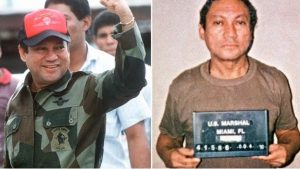
Noriega was sentenced to 40 years for drug trafficking and money laundering, released in 2007 for good behavior, then extradited to France where he was convicted and imprisoned, and later returned to Panama to serve his sentence there. He died at the age of 83 in the hospital where he was receiving treatment.
By sheer coincidence, exactly 35 years later, again on a January 3, American soldiers once more abducted a Latin American leader from his country with Delta Force units and brought him to the United States to stand trial.
But this time not by blasting rock music in front of an embassy—rather by storming a sitting president’s bedroom and abducting him and his wife in their pajamas, forcing them onto a helicopter.
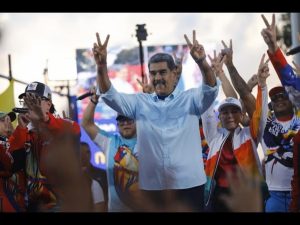
Venezuela’s Curse, Law’s Lament
In the Venezuela operation—originally planned for Christmas but delayed due to attacks in Nigeria—the United States first bombed military targets and symbolic locations such as Chávez’s tomb. Then, using intelligence sources close to Maduro, a special Delta Force team raided the private compound where he was staying. American soldiers stormed Maduro and his wife’s bedroom and woke them from their sleep. As the couple ran toward their shelter, they were prevented from closing the door and were taken in their pajamas onto a helicopter, then transferred to a military ship waiting in open waters.
The “official” justification for the operation—which Trump himself said he watched “like watching television”—was drug trafficking and Maduro’s alleged anti-democratic rule. But Trump himself does not even emphasize these official reasons. Trump openly states that the United States will distribute Venezuelan oil and profit from it, even stressing that it will be managed in a way that benefits everyone by sharing it with countries like China.
Trump’s decision to abduct a country’s leader from his bed without involving Congress violates both international law and American law. And yes, Maduro is an autocrat who condemned his country to rigged elections, high inflation, corruption, and poverty.
After Chávez’s death in 2013, Maduro took office and, when he lost the 2015 parliamentary elections to the opposition, steered decisively toward autocracy. First, in order to block the opposition’s constitutional majority, the Supreme Court annulled the mandates of three MPs, depriving the opposition of its two-thirds majority. Then, again through the court, parliament’s powers were stripped on the grounds of alleged electoral fraud and transferred to the judiciary, with parliamentary immunity lifted to prosecute lawmakers. Although parliament’s powers were later nominally restored amid backlash, Maduro’s government deemed the legislature illegitimate and ignored its will.
Maduro then called for a constituent assembly to draft a new constitution and held a referendum boycotted by the opposition. With only 41% turnout, Maduro supporters won all seats. The Constituent Assembly’s first act was to abolish the powers of the legitimately elected opposition parliament and redesign the political balance under Maduro’s command.
The opposition, which refused to recognize Maduro’s disputed 2018 victory, took to the streets, organized mass protests with millions participating, declared parliamentary speaker Juan Guaidó the legitimate president, and sought to delegitimize Maduro internationally. Rather than legitimizing a rigged system by narrowly losing, the opposition chose to reject it outright.
By clinging to power against his own people, Maduro imposed a permanent instability on his country, triggered a humanitarian crisis that forced 7 million people to flee over the past decade, and presided over a catastrophic economic collapse. Even left-wing governments in Colombia, Chile, and Brazil distanced themselves from Maduro. Still, the opposition persisted and organized a massive primary in 2023 with 2.5 million voters. Opposition leader María Corina Machado—who won 93% of the vote—later received the Nobel Peace Prize.
Despite mediation efforts by countries like Norway and agreements that politics should not be shaped through bans, Venezuela’s judiciary once again barred Machado from running and later excluded her substitute candidate from the ballot due to “technical issues.” Machado then arranged for the last-minute candidacy of little-known former diplomat Edmundo González, whom the Maduro government assumed could not win.
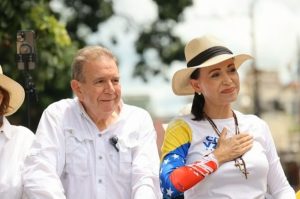
Under constant threat of arrest, Machado campaigned alongside González and mobilized voters despite political bans. Claiming victory based on signed tally sheets, the opposition was met with repression as the Maduro regime declared itself the winner with 51% and accused the opposition of disinformation. Numerous international bodies, including left-wing Latin American governments, questioned the election’s legitimacy. As repression intensified, the label “dictator” became openly used.
González, declared the legitimate president by Maduro-opposing countries, sought refuge in the Spanish consulate after publishing the tally sheets and fled to Madrid on a private military plane.
Two years later, it was Maduro who was forced to leave his country by helicopter—abducted from his bedroom on Trump’s orders. The Maduro regime was unplugged.
But none of this really matters. Because in Trump’s world, “who is right, who is wrong; what is democratic or not; what is legal or not” is irrelevant.
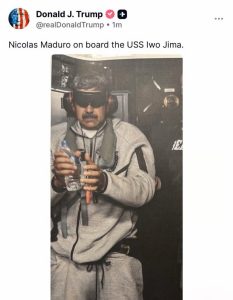
The Weak Are Crushed
Debates over whether Maduro is a “brave anti-imperialist” or a “brutal dictator” belong to the old world. In Trump’s new world, raw power reigns. States always suspended principles through hard power, but they used to at least cloak it in justification. Trump’s America no longer needs even that.
This is not about drugs—Trump just last week pardoned a former Honduran leader convicted of drug trafficking, calling the trial unfair.
This is not about democracy—Trump openly supports and praises autocrats worldwide and draws inspiration from them for his own country.
As Trump has made abundantly clear, this is about pure economic and pragmatic interests: oil and U.S. spheres of influence. What once happened behind closed doors is now done in plain sight. The message to the world is simple: only power matters. Maduro and his regime became the first to be eliminated in this new order because of their inability to even protect their leader’s bedroom.
There is little point in engaging in neat “neither Maduro nor the U.S.” debates or theoretical discussions in a world governed by brute force.
Like it or not, this is the new world order. The gates of hell are open; everything is permissible. When Trump feels like it, he can have a head of state abducted from his bed in pajamas.
This time not with rock music, but with a massive televised spectacle designed to distract from the Epstein files and win over Hispanic American voters fleeing left-wing autocrats ahead of the 2026 midterms.
Trump has launched the 2026 season of his new reality show, with himself as the star and the world as a powerless audience.
Maduro was the first contestant to be voted off the island.
This year’s theme: Stable chaos.
We’d better get used to it. Unfortunately.

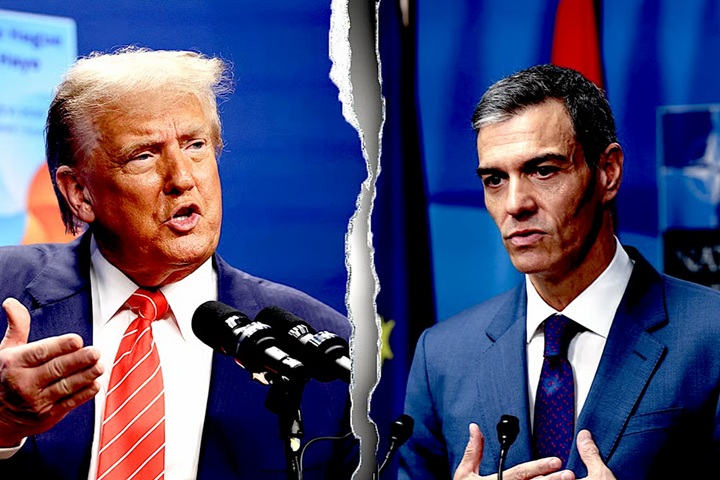
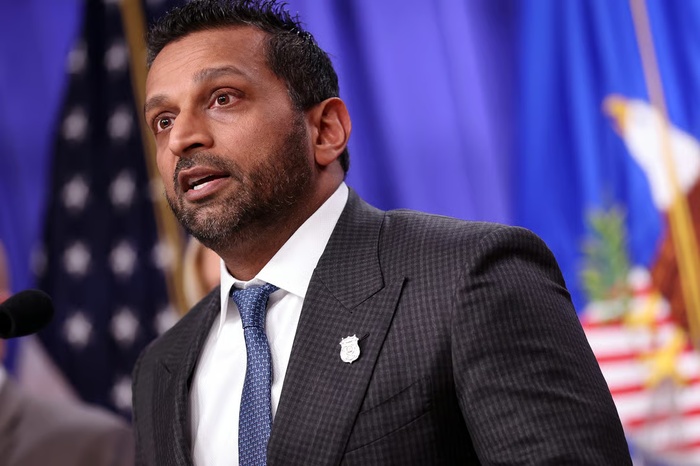
The personal email of FBI Director Kash Patel has been compromised by an Iran-linked hacking group, with the U.S. Department of Justice confirming the breach as concerns grow over escalating cyber tensions.
The U.S. Department of Justice confirmed that the email account of FBI Director Kash Patel had been compromised, following claims by a hacking group with alleged ties to Iran. The incident marks a significant cybersecurity concern involving a top U.S. intelligence official.
Officials at the Department of Justice acknowledged the breach but declined to provide further details about the scope or potential impact. The confirmation comes after the hackers publicly claimed responsibility and began releasing materials online.
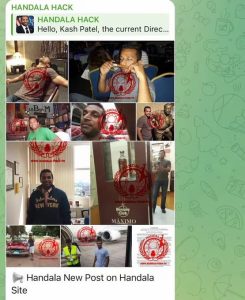
A group calling itself “Handala Hack Team” said it had accessed Patel’s personal email inbox and published photos along with what it described as his resume. In a statement posted online, the group declared that Patel had joined its list of “successfully hacked victims.”
Cybersecurity firm Cyble described the group as an emerging but increasingly visible threat actor since late 2023, primarily targeting Israeli-linked entities and organizations.
While the hackers have released samples of the alleged data, Reuters reported it could not independently verify the authenticity of the emails. However, initial reviews suggest the material may include a mix of personal and professional correspondence dating from 2010 to 2019.


