Connect with us

Europe

Louvre Heist Suspects Face Judge in Paris

Published

on

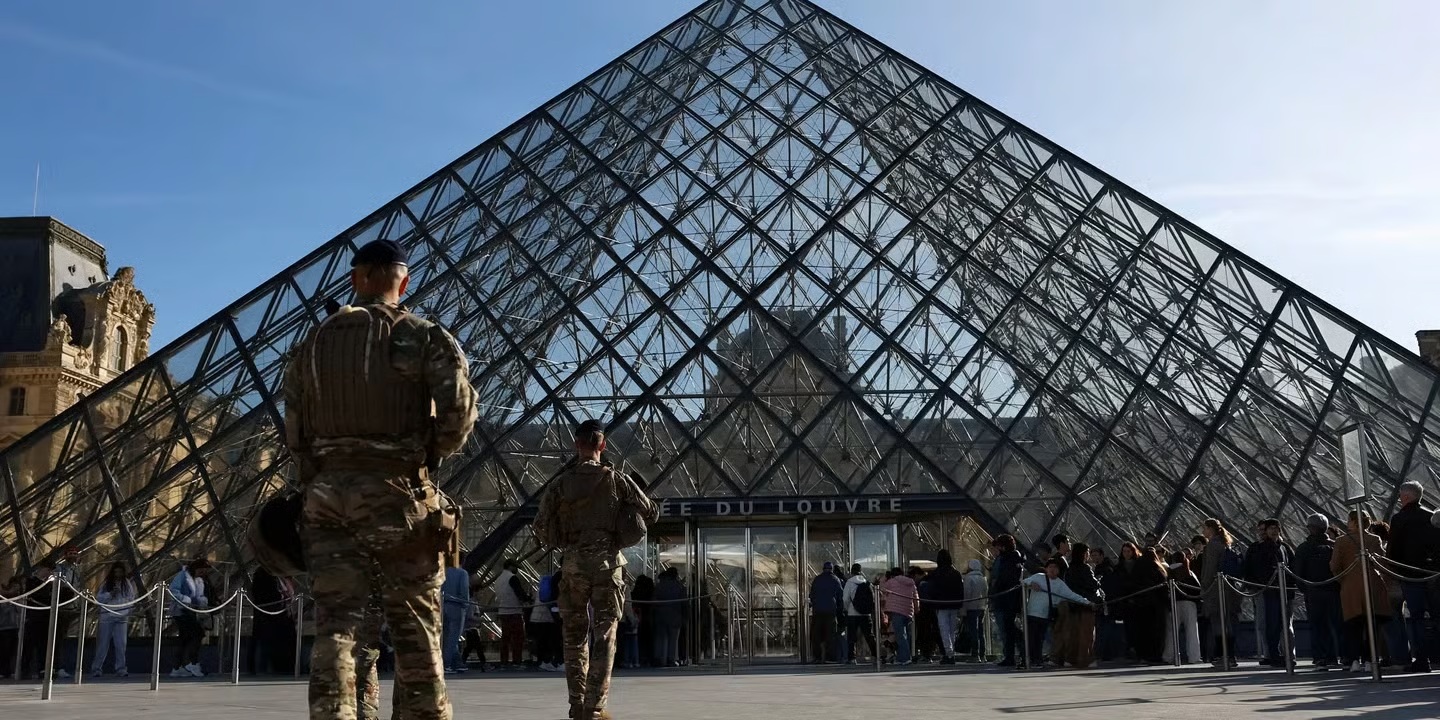
Suspects linked to last month’s $102 million jewelry heist at the Louvre Museum appeared before a judge in a Paris court on Saturday.

According to AFP, prosecutors confirmed that several individuals were brought before a judge but did not specify the exact number. The arrests come after weeks of investigation into the daylight raid that stunned both French authorities and the global art community.

Last month, the world’s most visited museum became the scene of a high-profile robbery. Using power tools, the thieves stormed the Louvre in broad daylight and escaped within seven minutes, taking jewelry worth approximately $102 million.

Alleged Mastermind Among Those Arrested

French authorities initially detained two suspects shortly after the heist. This week, prosecutors announced five additional arrests — including the suspected ringleader — in Paris and surrounding areas, particularly in the northern suburb of Seine-Saint-Denis. The Paris prosecutor’s office has not specified how many suspects appeared in court.

Partial Confessions from Two Suspects

Paris prosecutor Laure Beccuau said on Wednesday that the first two suspects had “partially admitted to the charges” and were indicted for theft and criminal conspiracy. Investigators believe the pair entered the museum to carry out the heist while two accomplices waited outside as lookouts.

The Stolen Jewels Still Missing

While the arrests mark progress in the case, the stolen jewels have yet to be recovered. Investigators are analyzing security footage and witness statements, suspecting the valuables may already have been smuggled out of the country.

Continue Reading
Click to comment

Leave a Reply

Your email address will not be published. Required fields are marked *

Europe

Ukraine-Russia Talks in Abu Dhabi Stuck on Territorial Dispute

Published

on

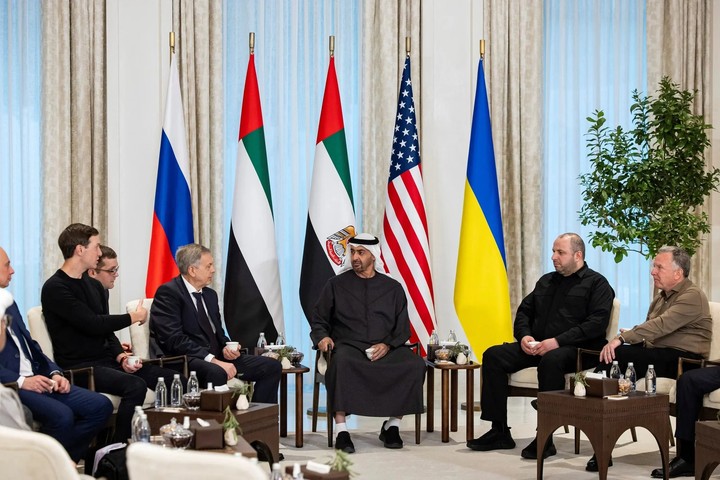
Ukraine, Russia, and the U.S. held talks in Abu Dhabi on Friday with territory as the central issue. Ukrainian President Volodymyr Zelensky said Russia must end the war it started as Washington pushes a deal to halt the nearly four-year conflict.

Ukrainian and Russian negotiators met publicly for the first time under a U.S.-backed framework aimed at ending a war now approaching its fourth year. Ukrainian President Volodymyr Zelensky framed the talks in stark terms, saying territorial disputes would be central but insisting that “the most important thing is that Russia should be ready to end this war, which it started.”

The UAE foreign ministry said discussions began Friday and would continue over two days, signaling a structured attempt to move beyond exploratory contacts toward defined political trade-offs.

The timing reflects intense diplomatic sequencing since the Abu Dhabi meeting followed Zelensky’s encounter with U.S. President Donald Trump at the World Economic Forum in Davos one day earlier, and came hours after U.S. envoy Steve Witkoff held nearly four hours of talks with Russian President Vladimir Putin in Moscow. Despite the compressed schedule, Russian officials made clear that movement hinges on geography, not process.

“A Very Important Condition”

Moscow’s position was restated bluntly. Kremlin spokesman Dmitry Peskov said Russia’s demand that Ukraine cede all of Donbas, including roughly 20 percent of Donetsk region still under Ukrainian control, was “a very important condition.” Kremlin adviser Yury Ushakov added that “reaching a long-term settlement can’t be expected without solving the territorial issue.”

Russia’s delegation in Abu Dhabi, led by Admiral Igor Kostyukov, was composed primarily of military officials, underscoring the security-first framing.

Russia continues to demand a Ukrainian military withdrawal from Donbas, a position Kyiv has rejected outright. Russian state media TASS said buffer zones and monitoring mechanisms were also discussed, suggesting Moscow is probing enforcement models without retreating from sovereignty claims.

De-Escalation Tracks and Energy Leverage

Alongside territorial talks, the U.S. and Ukraine have explored a limited energy ceasefire as a confidence-building step, according to the Financial Times. Under the proposal, Russia would halt strikes on Ukrainian power plants, heating systems, and water facilities in exchange for Ukraine stopping attacks on Russian oil refineries and Russia’s so-called shadow fleet of oil tankers. The idea reflects winter pressures: Ukrainians have faced widespread power outages, while Kyiv’s long-range drones have increasingly targeted Russian energy infrastructure, including facilities in the Black Sea and Mediterranean.

Both sides, however, see risks. The Kremlin views energy strikes as a key source of leverage, while Ukraine considers its drone campaign a rare asymmetric tool undermining Russia’s war financing. Turkish Foreign Minister Hakan Fidan summarized the impasse, saying that “as long as the territorial issue concerning Donbas is not resolved, the deadlock appears unlikely to be broken,” adding that ideas such as demilitarization or joint economic zones hinge on the unresolved question of sovereignty.

U.S. Pressure and Narrowed Scope

Similarly, Witkoff struck a cautiously optimistic tone, saying, “I believe we’ve narrowed it down to a single issue”, arguing the deadlock would be solved if both sides genuinely want to.

The U.S. delegation in Abu Dhabi included Witkoff, Trump adviser Jared Kushner, Army Secretary Dan Driscoll, and NATO’s top military officer, U.S. Air Force General Alexus Grynkewich. Ukraine’s team featured senior security figures, including Rustem Umerov and intelligence chief Kyrylo Budanov.

U.S. President Donald Trump, speaking on Jan. 21, framed the talks through a transactional lens, saying the U.S. had previously spent “$350 billion” on Ukraine and claiming a rare earths deal would “probably get most of that back.”

His comment highlighted how economic and territorial calculations are now entwined in Washington’s approach, even as fighting continues.

Ahead of the talks, Russian strikes killed seven civilians in eastern Ukraine, including a five year old, underscoring the gap between diplomatic momentum and battlefield realities.

Continue Reading

Europe

Greece Plans Maritime Expansion, Risking Possible War with Türkiye

Published

on

Greece said it plans to extend its territorial waters, potentially in the Aegean Sea beyond 6 nautical miles, despite Türkiye’s “casus belli” warning, a move with serious implications against its NATO ally Türkiye.

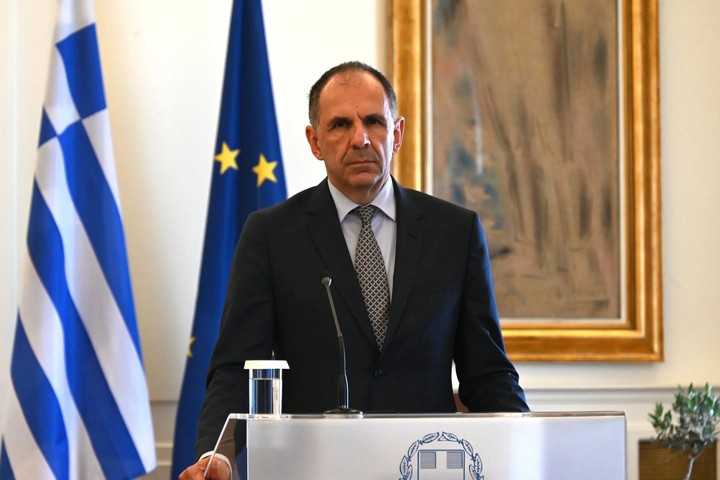
Greece’s announcement that it intends to further extend its territorial waters marks a deliberate assertion of sovereignty that reopens one of the most sensitive fault lines in relations with Türkiye. Speaking in parliament on Jan. 16, Foreign Minister of Greece George Gerapetritis confirmed that Athens plans additional extensions beyond the 6 nautical miles that currently define Greek territorial waters in the Aegean Sea, aligning the basin with steps already taken elsewhere.

“Today, our sovereignty in the Aegean Sea extends to 6 nautical miles,” he said. “As there was an agreement with Egypt, as there was an agreement with Italy, there will also be a (further) extension of the territorial waters.”

Greece already expanded its territorial waters in the Ionian Sea from 6 to 12 nautical miles following a bilateral agreement with Italy, and signed a maritime delimitation accord with Egypt in the eastern Mediterranean.

The Aegean, however, has remained excluded due to Türkiye’s long-standing objection and the 1995 decision by the Turkish parliament declaring any unilateral Greek extension beyond six miles a “casus belli”, or cause for war.

“We Will Not Negotiate Sovereignty”

The Aegean dispute goes beyond territorial waters, touching on airspace, overflights, continental shelves, and exclusive economic zones (EEZs) in a semi-enclosed sea dotted with Greek islands close to the Turkish mainland. Greek officials insist that international maritime law permits a 12 nautical mile limit, while Ankara argues that the Aegean’s geography makes such an extension unacceptable.

Gerapetritis framed recent steps as part of a broader maritime doctrine, linking territorial waters to environmental initiatives and national sovereignty, claiming that Greece would not retreat from its positions, further unveiling the boundaries of two planned marine parks in July, including one in the Aegean covering 9,500 square kilometers, initially around the southern Cyclades.

Ankara objected to the move, seeing it as a precedent-setting assertion of jurisdiction. Türkiye has also previously responded to what it describes as Greek unilateralism in the Aegean with counter-measures of its own.

In August 2025, Ankara formally designated two Marine Protected Areas (MPAs) after Greece declared marine parks in the Aegean without consultation. The zones were registered in Türkiye’s Marine Spatial Planning Map submitted to the United Nations, which Turkish officials said was intended for environmental protection while also affirming sovereign rights. The Turkish government said any Greek attempt to impose unilateral maritime realities in the Aegean was “null and void,” adding that Türkiye remained open to regional environmental cooperation but not “at the cost of its national interests.”

Constraint Management Between NATO Allies

Despite the sharp legal disagreement, Athens and Ankara have eased tensions in recent years through dialogue and confidence-building measures. Greece maintains that the only dispute open for discussion is the delimitation of maritime zones, including the continental shelf and EEZ. Türkiye, for its part, argues that Greek domestic politics incentivize hardline positions.

On Jan. 15, Turkish Foreign Minister Hakan Fidan said the perception of Türkiye as a threat has always played a driving role in Greek politics. He added that Greek leaders face a choice “between resolving problems with Türkiye and bringing peace to the region, or risking their own political career,” concluding that the situation needs to come to an end.

Regional Alignments and Security Signaling

The maritime debate unfolds alongside expanding security cooperation involving Greece, Israel, and Greek Cyprus. On Dec. 17, plans were disclosed for studying a joint brigade-level rapid reaction force in the eastern Mediterranean.

Days later, the Israel Defense Forces announced a trilateral military cooperation work plan with Greece and Greek Cyprus, covering joint exercises, training, working groups, and strategic dialogue – a move that risks drawing Greece into broader regional controversies. Given the IDF’s conduct in ongoing conflicts and the scrutiny it faces internationally for the genocide in Gaza, closer institutional alignment is likely to expose Athens to heightened diplomatic criticism and public backlash well beyond the Eastern Mediterranean.

Athens highlights its own defense modernization, pointing to new frigates and broader naval upgrades, while stressing continued dialogue with Ankara. A meeting between Turkish President Recep Tayyip Erdoğan and Greece Prime Minister Kyriakos Mitsotakis is expected in February in Ankara, underscoring parallel tracks of engagement and deterrence as Greece advances its maritime strategy.

Continue Reading

Europe

Putin Meets US Envoy as Ukraine Talks Narrow to Territory

Published

on

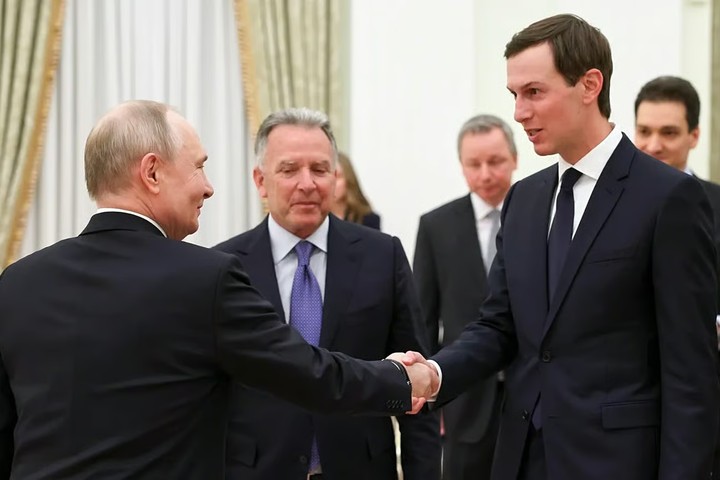
Russian President Vladimir Putin held hours long talks in Moscow with U.S. Special Envoy Steve Witkoff and Jared Kushner, as both sides said negotiations to end the war in Ukraine have narrowed to a single unresolved issue: territory.

Russian President Vladimir Putin met a U.S. delegation in Moscow for extended talks on ending the war in Ukraine, with both sides signaling that negotiations have reached a critical stage focused on territorial questions.

Extended Talks in Moscow

The Kremlin said talks between Putin and the U.S. delegation led by Special Envoy Steve Witkoff and including U.S. President Donald Trump’s son-in-law Jared Kushner lasted more than three hours and stretched into the early hours of Friday, ending after 3 a.m. local time.

“Exceptionally Frank” Discussions

Kremlin Foreign Policy Aide Yury Ushakov described the latest talks as “exceprionally substantive, constructive and extremely frank and confidential.” In a post on X, Krill Dmitriev, head of Russia’s sovereign wealth fund, also characterized the discussions as “important.”

Ushakov said Putin empahasized that Russia is “sincerely interested in resolving the Ukrainian crisis through political and diplomatic methods.”

Territory Central to Any Settlement

Despite the diplomatic tone, the Kremlin made clear that territorial issues remain the main obstacle to a lasting agreement. Ushakov said Putin told U.S. negotiators that a “long term settlement” would not be possible without first resolving territorial questions based on a formula previously discussed in Anchorage.

Until such issues are addressed, Ushakov added, Russia will continue to pursue its objectives “on the battlefield,” where he said Russian forces currently hold the strategic initiative.

Witkoff: Talks Reduced to One Issue

Hours before flying to Moscow, Witkoff said progress had been made in negotiations, describing them as having been reduced to “one issue.” Speaking at an event on the sidelines of the World Economic Forum in Davos, he said the narrowing of focus meant a solution was achievable.

“I think we’ve got it down to one issue, and we have discussed iterations of that issue, and that means it’s solvable,” Witkoff said. A European official later confirmed that the remaining issue he referred to was territory.

Trilateral Talks Set for Abu Dhabi

In a related development, the Kremlin announced that representatives from Russia, the United States and Ukraine will meet Friday in Abu Dhabi, United Arab Emirates, for the first trilateral talks focused on security issues since the war began. The working group on security matters was agreed upon during the latest Moscow meeting.

This three way meeting, confirmed by Ukrainian President Volodymyr Zelensky, is scheduled to span two days and marks a significant diplomatic step as efforts continue to find a pathway toward ending the conflict.

Continue Reading

Trending