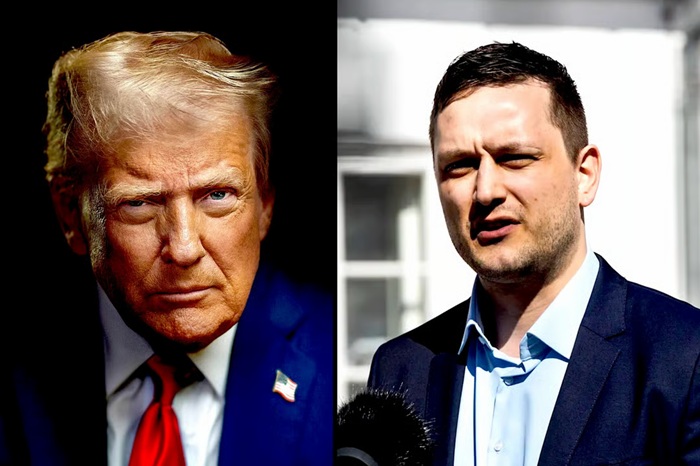
Greenland Prime Minister Jens-Frederik Nielsen rejected U.S. President Donald Trump’s proposal to send a U.S. hospital ship to Greenland after Trump’s Saturday post. Nielsen cited Greenland’s free public healthcare system.
Greenland’s rejection of a U.S. hospital ship proposal underscores the delicate political climate surrounding Washington’s renewed focus on the Arctic territory. Jens-Frederik Nielsen’s response was swift and pointed, signaling both openness to cooperation and frustration with the manner of the announcement.
Healthcare Sovereignty Asserted
Nielsen dismissed the proposal in a Facebook post on Sunday, responding to Trump’s Saturday social media message that he was working with Louisiana Governor Jeff Landry, described as a special envoy to Greenland, to dispatch a hospital boat.
“President Trump’s idea of sending an American hospital ship here to Greenland has been noted. But we have a public healthcare system where treatment is free for citizens. It is a deliberate choice,” Nielsen wrote.
The statement framed the issue not as a rejection of assistance but as a defense of Greenland’s policy model. Greenland operates a publicly funded healthcare system providing universal access. By emphasizing that treatment is “free for citizens,” Nielsen signaled that external medical deployments are not viewed as a necessity.
“Talk To Us Instead”
Nielsen coupled the refusal with criticism of Washington’s communication style. “But talk to us instead of just making more or less random outbursts on social media,” he said.
The language reflected broader unease in Nuuk and Copenhagen over Trump’s repeated remarks that he wishes to “take over” Greenland.
Diplomatic talks involving Greenland, Denmark, and the United States were launched late last month to manage tensions within the NATO alliance. The hospital ship proposal emerged just hours after Denmark’s Joint Arctic Command announced the evacuation of a crew member requiring urgent medical treatment from a U.S. submarine operating seven nautical miles outside Nuuk. Authorities did not indicate any connection between the evacuation and Trump’s post.
Arctic Optics And Timing
The episode unfolded against a backdrop of strained rhetoric. In February, Nielsen had sharply criticized the idea of territorial pressure within NATO, stating: “Imagine a NATO country acquiring, taking, or threatening an ally. Where would the world stand if that happened?”
He added: “We would be a pawn. We would be a piece in a big game.” Nielsen concluded: “It’s outrageous.”
Separately, The Telegraph cited sources alleging that Senator Lindsey Graham described Danish Prime Minister Mette Frederiksen as a “little lady” during a heated exchange over Greenland, highlighting tensions surrounding the issue.
Alliance Strains Resurface
Greenland’s leadership reiterated that the territory remains “open to dialogue and cooperation, also with the U.S.”
Yet the rejection of a high-visibility humanitarian gesture illustrates the sensitivity of symbolic moves in a region where sovereignty, security, and alliance politics intersect.