Connect with us

Europe

UN Once Again Approves Two-State Solution for Palestine

Published

on

The United Nations General Assembly adopted a resolution reaffirming its responsibility toward the Palestinian question, calling for an end to Israel’s post-1967 occupation, and demanding global support for a two-state solution amid a deepening humanitarian crisis.

The draft resolution titled Peaceful Settlement of the Question of Palestine, prepared by Djibouti, Jordan, Mauritania, Qatar, Senegal and Palestine, was put to a vote in the General Assembly. It passed with overwhelming support: 151 member states voted “yes,” while 11 countries — including the United States and Israel — voted “no,” and 11 abstained.

The resolution restates the UN’s responsibility toward Palestine and calls for the full termination of Israel’s occupation of territories seized after 1967. It urges the international community to support the two-state framework as the basis for a lasting political settlement.

The text demands an immediate halt to settlement activities that have expropriated Palestinian land and insists that Israel comply with international law. It further calls on states not to recognize any territorial changes while urging the resumption of negotiations that have stalled for years.

Call for Renewed Diplomacy and Humanitarian Assistance

Member states are urged to increase humanitarian aid to Palestinians amid a severe ongoing crisis. The resolution warns against any unilateral border changes and stresses that the political track must be revived without delay.

It also welcomes the peace agreement that came into effect in Gaza on October 10, underscoring that any demographic or territorial modifications in the Strip are unacceptable. The text affirms that Gaza is an integral part of the Palestinian territories occupied in 1967.

Demand for Withdrawal from Occupied Territories

The General Assembly reiterates that Israel must withdraw from all territories occupied since 1967, including East Jerusalem. It emphasizes the Palestinian people’s inalienable rights — particularly their right to self-determination and the establishment of an independent state.

The resolution argues that realizing these rights is essential for any durable peace, and it calls on the international community to ensure that the political, legal, and humanitarian dimensions of the conflict receive coordinated global attention.

The United Nations General Assembly adopted a resolution in 2025 on the two-state solution for Palestine and Israeli occupations. This is a repeat of resolutions adopted by the UN General Assembly on similar issues in previous years; similar resolutions were adopted in 2012, 2014, 2018, and 2020, but no concrete progress was achieved in practice. The latest resolution adopted also calls for an end to Israel’s occupation since 1967 and support for a two-state solution.

Continue Reading
Click to comment

Leave a Reply

Your email address will not be published. Required fields are marked *

Europe

EU Ministers Seal 2026 Migration Reform Deal

Published

on

EU interior ministers have approved a far-reaching migration reform for 2026, introducing stricter asylum procedures, faster deportations and a new solidarity mechanism aimed at easing pressure on frontline states and restoring confidence in the bloc’s border management.

Interior ministers of EU member states have reached an agreement on a comprehensive migration reform package for 2026, following years of political deadlock. The new regulations include tighter asylum procedures, faster deportations and new mechanisms for sharing financial responsibility.

Key Elements of the Reform

  • Simplification of deportation procedures and expansion of detention capacity.
  • Adoption of “safe third country” and “safe country of origin” lists.
  • Creation of a €430 million solidarity fund to support states under pressure.
  • An additional plan for the relocation of 21,000 people in 2026.
  • Three solidarity options for member states: relocations, financial contributions or alternative measures.
  • Cyprus, Greece, Italy and Spain identified as the countries most affected by migration pressure.

Purpose and Roadmap of the Reform

EU officials state that the reform package aims to revive the spirit of solidarity within the bloc and strengthen border control, particularly in the aftermath of the migration crisis that began in 2015. The accelerated rejection and return procedures are designed to reduce the burden on certain member states.

Danish Interior Minister Rasmus Stoklund summarized the intent of the reform by saying, “We will be able to reject and return people who do not have the right to asylum in Europe more quickly. It should not be human smugglers who control access to Europe.”

Additionally, EU Migration Commissioner Magnus Brunner highlighted the significance of restoring public trust: “It is also important to give people the feeling that we have control over what is happening.”

Concerns, Criticism and Political Tension

Human rights groups and several political figures have strongly criticized the decisions. Organizations such as Amnesty International have compared the measures to harsh deterrence-based policies.

Meanwhile, Melissa Camara, a member of the French Green Party, described the proposed changes as “abandoning our fundamental values and human rights.”

Some EU members remain reluctant to share responsibility. After the meeting, Germany’s Alexander Dobrindt announced that Germany would not accept additional asylum seekers nor provide extra financial support.

The reform has revived politically sensitive debates within the EU, causing significant concern among those advocating for broader protections for asylum seekers.

A Path Defined by Control, Solidarity and Ongoing Debate

The newly adopted package aims to enhance control and coordination in EU migration management, institutionalize burden-sharing and ease the pressure on frontline states. However, the reluctance of some member states, warnings from human rights advocates and persistent public divisions may complicate the implementation.

The practical effects of the reform — as well as its implications for the EU’s value-based identity — will be closely monitored in the months ahead.

Continue Reading

Europe

Macron Warns U.S. May Betray Ukraine

Published

on

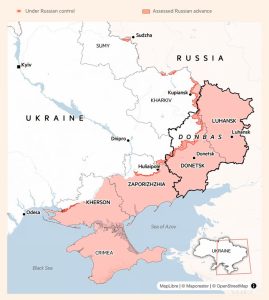
European leaders privately warned Ukraine that the United States may concede territory to Russia in emerging peace negotiations. A leaked call shows concern that Washington’s strategy could endanger Kyiv’s security.

The warnings came during a confidential call earlier this week, where heads of government expressed alarm over U.S.-driven proposals drafted without European input.

According to the transcript, leaders feared that pressure from Washington could force Ukraine into concessions before clear security guarantees are secured.

Macron Warns Of “Great Danger”

According to the leaked summary, the French president said “there is a possibility” the U.S. could “betray Ukraine on the question of territory,” describing the current negotiating phase as “a big danger” for Kyiv’s leadership.

Germany’s chancellor urged Zelenskyy to be “very careful,” warning that intermediaries involved in talks were “playing games with both you and us.” Two participants in the call confirmed the transcript’s accuracy.

European Leaders Rally Around Kyiv

Finland’s president reportedly said, “we must not leave Ukraine and Volodymyr alone with these guys,” drawing agreement from the NATO secretary general, who added, “we need to protect Volodymyr.”

European diplomats stressed that only Russia benefits from splits between Europe and the U.S., urging unity as negotiations intensify.

U.S. Peace Plan Sparks Unease

Washington’s initial 28-point proposal—revised to 19 points after talks in Geneva—included controversial ideas such as Ukraine surrendering additional territory, limiting its military size and freezing its NATO bid.

The latest draft remains unacceptable to Moscow, which continues to insist on maximalist territorial and political demands.

European leaders argued that an imposed settlement would destabilize Ukraine and endanger continental security.

Divergent Accounts And Political Pressures

Kyiv declined to comment on the leaks. The Élysée challenged wording attributed to the French president, saying he “did not express himself in these terms,” while refusing to provide an alternative account.

Meanwhile, U.S. envoys held five hours of talks with Russia’s president in Moscow before traveling to Miami for follow-on negotiations with Ukraine’s national security team.

Continue Reading

Europe

Mosque and Turkish Association Targeted in France

Published

on

A mosque and a Turkish association affiliated with DİTİB were targeted in racist attacks in France’s Haute-Loire and Ain departments.

In France’s Haute-Loire and Ain departments, a mosque and a Turkish association affiliated with Turkish-Islamic Union for Religious Affairs (DITIB) have been subjected to racist attacks: copies of the Kur’an‑ı Kerim were torn and discarded in a mosque, and a bullet was left in the mailbox of a DITIB-linked association. The incidents have drawn condemnation from both the government and Muslim community organisations.

Qurans Torn in Mosque Attack Sparks Outrage

The assault on the Puy-en-Velay mosque involved a group entering the premises and tearing copies of the Qur’an before scattering them on the floor. French Interior Minister Laurent Nunez condemned the act in a statement shared on X, calling it unacceptable in the French Republic and announcing that a formal investigation had been opened. The French Council of the Muslim Faith (CFCM) also issued a statement expressing solidarity with the mosque community, describing the act as a serious instance of Islamophobia that must not be minimized under any circumstances.

Bullet Left at Turkish Association Raises Security Concerns

In the second incident, the Montreal-la-Cluse branch of DITIB was targeted when a bullet was placed in its mailbox. The association denounced the act as an attempt to intimidate the local Turkish community and undermine social cohesion. In its statement, DITIB expressed solidarity with members of the association and vowed to pursue legal action. The organization urged authorities to act with responsibility and sensitivity as communities grapple with heightened fears of targeted attacks.

Islamophobia Debate Intensifies After Controversial Survey

The incidents follow escalating criticism over a recent survey published on 18 November by the polling institute Ifop, which claimed to assess the relationship between Muslims in France, Islam, and Islamism. Critics said the survey violated neutrality standards and risked fueling anti-Muslim sentiment. The CFCM warned that surveys and political narratives portraying Muslims as a suspicious demographic could contribute to a rise in hate-driven actions. The council reiterated concerns about the instrumentalization of research targeting Muslim citizens and urged the community to remain vigilant.

Continue Reading

Trending