Connect with us

Middle East

Netanyahu Targets Iran and New York’s Elected Mayor

Published

on

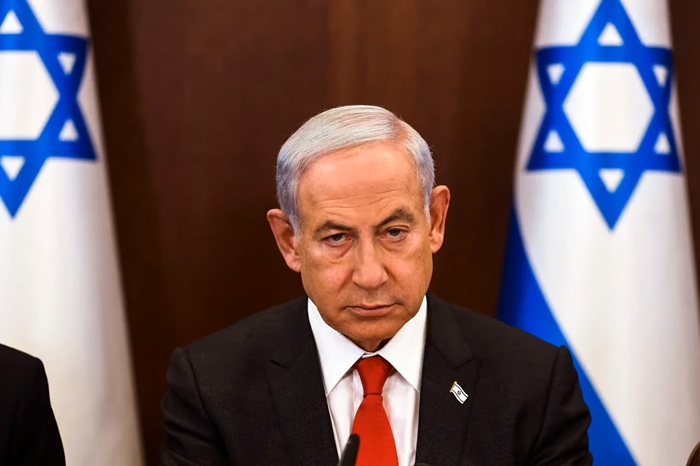
Israeli Prime Minister Benjamin Netanyahu sent sharp dual messages during a New York Times event—declaring “our work with Iran isn’t finished” while telling New York’s mayor-elect Zohran Mamdani that he will come to the city despite potential arrest threats.

Speaking virtually at a New York Times event, Israeli Prime Minister Benjamin Netanyahu delivered forceful statements on Iran, Gaza, and regional dynamics, while directly confronting New York’s incoming mayor Zohran Mamdani over his pledge to enforce the ICC’s arrest warrant against him.

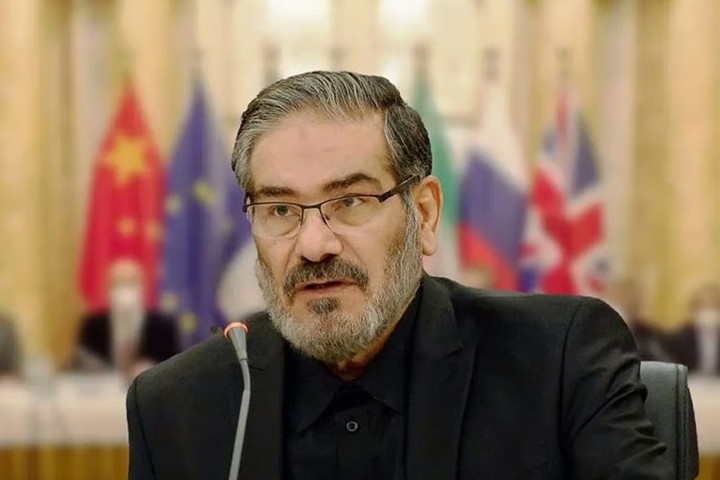
“Our Work with Iran Isn’t Finished”

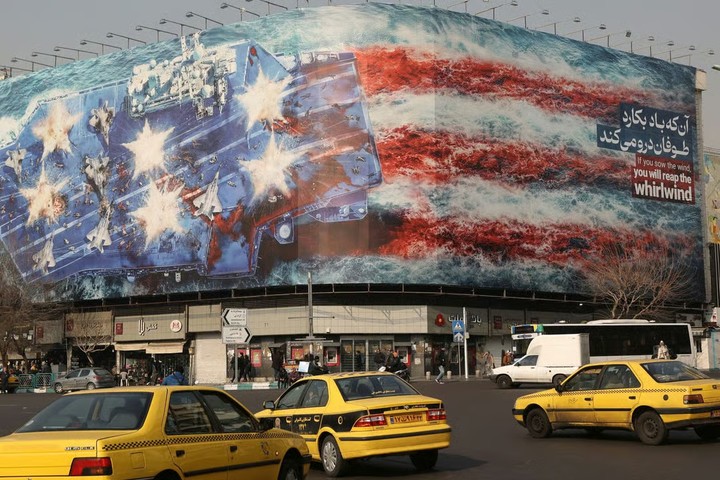
Netanyahu argued that Israel has “won the war” against what he called the Iran-led axis, insisting Tehran has been severely weakened but warning that the campaign is far from over.
“I said we would change the face of the Middle East. We have won this war,” he claimed. “We were fighting not only Hamas, but Hezbollah, the Assad regime, the militias in Iraq, the Houthis—and Iran. We succeeded, but this war will never end.”

Netanyahu stressed that Israel continues its campaign against Iran’s nuclear ambitions, recalling attacks in Gaza, Lebanon, Syria, Yemen, Iraq and Iran, and even the assassinations of Iranian nuclear scientists. Nevertheless, he asserted that “Tehran still retains the capacity to reach a nuclear weapon.”

“I Will Go and We Will See’

Netanyahu responded directly to New York’s mayor-elect Zohran Mamdani, who said he would enforce the International Criminal Court’s arrest warrant for Gaza war crimes if Netanyahu entered the city.
“I will go [to New York] and we will see what happens,” Netanyahu said defiantly.

Defends Israeli Army Despite Civilian Deaths

Asked about war crimes allegations in Gaza—where more than 70,000 Palestinians have been killed in two years—Netanyahu insisted that the Israeli army “cares about civilian life,” despite mounting international criticism and ICC proceedings.

Abraham Accords and Gaza Negotiations

Netanyahu said phase one of the Gaza ceasefire and hostage exchange deal has been completed, and that the second phase—disarming Hamas—has begun. He stated this would happen “the easy way or the hard way,” including through military action if necessary.

Responding to a question about Saudi Crown Prince Mohammed bin Salman making Palestinian statehood a condition for joining the Abraham Accords, Netanyahu said Israel “will not allow” a Palestinian state. However, he claimed expanding the accords remains in the interest of Israel and the region.

Netanyahu also said there is domestic pressure to take action against the Palestinian Authority but argued instead that the PA “needs reform,” adding that the Israeli government is not considering the PA for governing Gaza. Instead, he pointed to armed groups Israel has supported, arguing they “do not want the Palestinian Authority or Hamas.”

Comments on Trump Call and Future in Politics

Asked whether he discussed a potential pardon for corruption cases with U.S. President Donald Trump during their recent call—reportedly raised by President Isaac Herzog—Netanyahu said they “did not discuss personal matters” and refused to reveal private conversations.

When questioned about retirement at age 76, Netanyahu replied: “I do not measure this by time but by tasks. The great majority of people in the country support me.”

Continue Reading
Click to comment

Leave a Reply

Your email address will not be published. Required fields are marked *

Middle East

Israeli Raid on UNRWA HQ in East Jerusalem Condemned

Published

on

Israeli forces raided UNRWA’s East Jerusalem headquarters, seizing equipment and replacing the UN flag with Israel’s flag — an act the agency’s chief condemned as a direct breach of international law following months of intimidation and political pressure.

Israeli police, accompanied by municipal officials, carried out a pre-dawn raid on the UNRWA headquarters in occupied East Jerusalem, removing equipment, cutting communications and lowering the UN flag in an operation the agency’s leadership denounced as a flagrant violation of international law. The move comes after months of arson attacks, protests, political interference and escalating restrictions on the UN agency’s presence in Israel, deepening concerns over the erosion of humanitarian space in the region.

Forced Entry and Seizure of Equipment

UNRWA Commissioner-General Philippe Lazzarini said the operation unfolded at dawn, when Israeli forces forced their way into the sealed premises in the Sheikh Jarrah district. According to his account, trucks, motorcycles and forklifts were brought in to remove furniture, IT systems and other agency-owned materials. The UN flag was taken down and replaced with Israel’s national flag, symbolising what the agency described as a deliberate act of provocation.

A Facility Already Abandoned Under Pressure

The compound has remained unused by UNRWA since early this year, after Israeli authorities ordered the agency to vacate all its buildings inside Israel and halt its activities in the country. Lazzarini stressed that Monday’s raid is the culmination of an extended campaign of harassment, including arson attacks on UNRWA property, hostile demonstrations and a wave of misinformation targeting the agency’s mandate and credibility.

Political Backdrop and Legal Disputes

Israel banned UNRWA from operating within its territory after accusing several staff members of involvement in the Hamas-led 7 October 2023 assault. UNRWA has firmly denied the allegations, and in October the International Court of Justice ruled that Israel’s claims lacked evidence. Nevertheless, the accusations triggered major political fallout: the United States — historically the agency’s largest donor — suspended its financial contributions, deepening an already severe funding crisis.

Escalating Tensions Over UN Mandate

Lazzarini warned that Israel’s legislative and administrative actions, including recent laws passed by the Knesset restricting UNRWA, represent a breach of Israel’s obligations under international conventions governing the treatment of UN operations. Humanitarian organisations argue that undermining UNRWA directly threatens the stability of services relied upon by millions of Palestinian refugees across the region.

Continue Reading

Middle East

Israel Signals Permanent Gaza Occupation With “Yellow Line”

Published

on

Israeli Chief of Staff Eyal Zamir announced that the “yellow line” in Trump’s peace plan for Gaza represents new borders for Israel. Zamir declared permanent occupation, stating that Israel would maintain its current military positions.

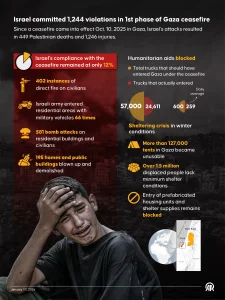
Israeli Chief of the General Staff, Eyal Zamir has announced that the so-called “yellow line” from U.S. President Donald Trump’s ceasefire proposal effectively constitutes a new Israeli border inside Gaza, confirming that the military intends to maintain its current forward positions and thereby enforce a long-term occupation over more than half of the territory. The declaration sharply contradicts commitments made in the October ceasefire agreement, igniting new uncertainty over the future governance and territorial integrity of Gaza.

Israel’s New “Yellow Line” Strategy Redefines Gaza’s Map

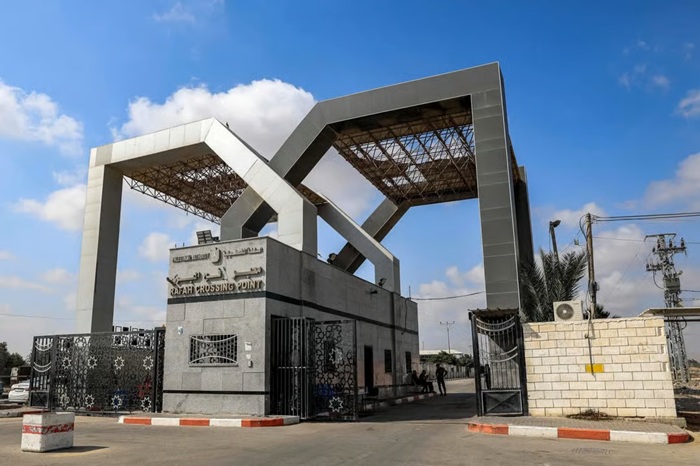
During a visit to reserve units stationed in northern Gaza, Israeli Chief of the General Staff Eyal Zamir told soldiers that the “yellow line” introduced in Trump’s 20-point ceasefire outline now serves as an “advanced defensive belt and operational boundary” for Israeli communities. He emphasised that the army intends to stay in its current positions — positions that give Israel control over most farmland, major approach routes and the Egypt–Gaza border crossing.

Zamir insisted the army holds “broad operational control over large sections of the Gaza Strip” and will continue to remain on these defensive lines indefinitely.

Contradiction With the Ceasefire Agreement

Zamir’s stance stands at odds with the October ceasefire deal, under which Israel pledged not to occupy, annex or permanently station forces inside Gaza. The agreement requires Israel to withdraw completely, aside from a narrow security perimeter, and gradually hand authority to a new international force.

Israeli government spokespersons refrained from clarifying whether Zamir’s statements reflect official policy. One senior official said forces were positioned “in accordance with the ceasefire draft,” while simultaneously accusing Hamas of violating the truce.

Plans for Long-Term Zones Inside Gaza

According to documents obtained by The Guardian newspaper, that Gaza could be split into two major zones:

  • A “green zone” under Israeli and international military oversight, where reconstruction would eventually begin.
  • A “red zone” that would remain uninhabitable for an indefinite period.

A U.S. official familiar with the discussions told reporters that the idea of reunifying Gaza in the near future is “a fantasy,” suggesting Washington anticipates a prolonged de facto partition along the “yellow line.”

Uncertain Path for the New International Security Force

The current ceasefire framework ties Israel’s withdrawal to the disarmament of Hamas, yet offers no detailed mechanism or timetable. Although the UN recently approved the creation of an international security force, no country has yet pledged troops.

Some states — including Türkiye — say they are considering participation but insist on clear mandates to prevent the force from turning into a tool “executing Tel Aviv’s objectives.” Experts warn that ambiguities surrounding Hamas’s disarmament make many governments wary of committing soldiers without guarantees.

Escalating Doubts About Feasibility

The widening gap between Israel’s commitments and its actions fuels deep concern over the viability of the ceasefire plan. Despite agreeing to withdraw, Israel has continued military operations in Gaza and has largely failed to pull back its forces. Persistent strikes on civilian areas and the refusal to vacate forward positions raise fears that the “yellow line” may evolve into a permanent partition imposed by force.

Continue Reading

Middle East

Leaked Video Shakes Israeli Army

Published

on

Footage showing Israeli soldiers sexually assaulting and torturing a Palestinian detainee inside a military prison has sparked a national outcry. The army’s top legal officer, who allegedly leaked the video, resigned and was detained.

The incident began with the leak of footage recorded in 2024 at the Sde Teiman military detention facility in southern Israel. The video showed Israeli soldiers sexually assaulting and torturing a Palestinian detainee captured from Gaza. When the footage was broadcast on Channel 12 television in August 2024, it sparked an international outcry.

The then Military Advocate General, Major General Yifat Tomer-Yerushalmi, who was said to have leaked the video to the media, resigned from her position. Long targeted by Israel’s far-right circles, Yerushalmi disappeared following her resignation. Leaving a note for her family and initially believed to have committed suicide, she was found alive after hours of searching and taken into custody.

“The Greatest Damage to the State’s Image”

Israeli Prime Minister Benjamin Netanyahu said that the leaked video caused “the greatest damage ever done to the country’s international image.” Netanyahu accused Yerushalmi of “targeting the soldiers.”

Israeli Defense Minister Israel Katz also announced that “all necessary sanctions” would be imposed against the attorney general, calling for her rank to be revoked.

Scandalous Statement from Masked Soldiers

The Israeli soldiers at the center of the scandal held a press conference in front of the Supreme Court in West Jerusalem, their faces covered. According to Israel’s Channel 7 television, one of the soldiers said “I’m tired of silence. We expected thanks, but instead we were blamed.”

The soldier claimed that they had been subjected to a “staged trial,” adding “The decision on who the criminals are has already been made. We will not be silenced; we will continue to fight for justice and for our families.”

Torture Footage from Sde Teiman and Political Reactions

The leaked video showed soldiers surrounding a Palestinian detainee, subjecting him to sexual torture, and attempting to conceal themselves from security cameras. The Israeli Military Prosecution launched an investigation into nine soldiers involved in the incident on charges of “torture, perversion, and attempting to violate bodily integrity.”

Following the release of the footage, far-right groups and several members of parliament staged a protest outside the Sde Teiman base in July 2024. When the soldiers were about to be detained, the same groups stormed the military facility, attempting to obstruct the judicial process.

Conflict Between Law and Politics in the Army

In her resignation letter, Yerushalmi wrote that threats against her and the officers of the legal unit had intensified because they sought to uphold the rule of law within the Israel Defense Forces (IDF).

“There are things that must not be done, even to the worst of prisoners”

Her words sparked widespread debate across the country.

Continue Reading

Trending