Connect with us

Asia-Pasific

Cambodia Closes Border With Thailand as Ceasefire Claims Falter

Published

on

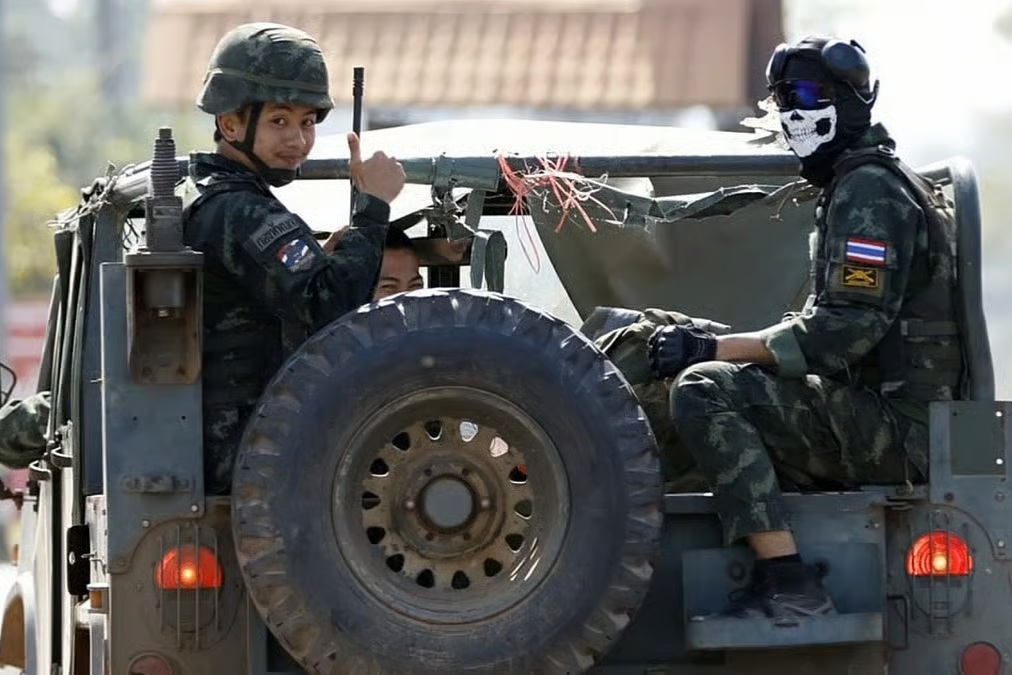
Cambodia has shut all border crossings with Thailand indefinitely as heavy fighting continues, casting doubt on US President Donald Trump’s claim that the two sides agreed to halt hostilities.

Cambodia has ordered the closure of all border crossings with Thailand “until further notice,” its interior ministry announced on Saturday, as armed clashes continued despite Washington’s claims of an imminent ceasefire.

The move came hours after U.S. President Donald Trump said Thai and Cambodian leaders had agreed to stop fighting following his phone calls with both prime ministers. However, statements from both governments suggested no such agreement had taken effect on the ground.

Thai Prime Minister Anutin Charnvirakul said a ceasefire would only be possible if Cambodia fully withdrew its forces from disputed areas and cleared landmines along the border. Cambodian officials, meanwhile, said their forces would continue operations to defend national sovereignty.

Casualties Mount On Both Sides

Thailand confirmed that four soldiers were killed on Saturday, raising its military death toll since Monday to 15, with at least 270 personnel injured. Thai authorities also said six civilians were wounded in cross-border rocket attacks.

Cambodia reported at least 11 civilian deaths and 59 injuries since the fighting escalated earlier in the week but has not updated its military casualty figures.

Both sides accused each other of targeting civilian infrastructure. Cambodia’s defence ministry said Thai F-16 fighter jets bombed hotel buildings and a bridge, while Thailand said Cambodian rockets struck residential areas, injuring civilians.

Mass displacement has followed the violence, with an estimated 700,000 people evacuated from border regions on both sides.

Trump’s Mediation Under Strain

Trump earlier claimed he could stop the conflict “by picking up the phone,” later announcing on social media that the two countries had agreed to “cease shooting” and revert to a peace deal signed in October under US and Malaysian mediation.

Yet neither Bangkok nor Phnom Penh publicly endorsed an immediate ceasefire after speaking with the US president. Thai officials stressed that trade pressure should not be used as leverage, warning Washington against linking the conflict to tariffs, as occurred during a previous flare-up in July.

Cambodian leaders made no reference to US-brokered terms, instead reiterating their resolve to continue fighting.

Continue Reading
Click to comment

Leave a Reply

Your email address will not be published. Required fields are marked *

Asia-Pasific

South Korea Completes KF-21 Fighter Flight Tests

Published

on

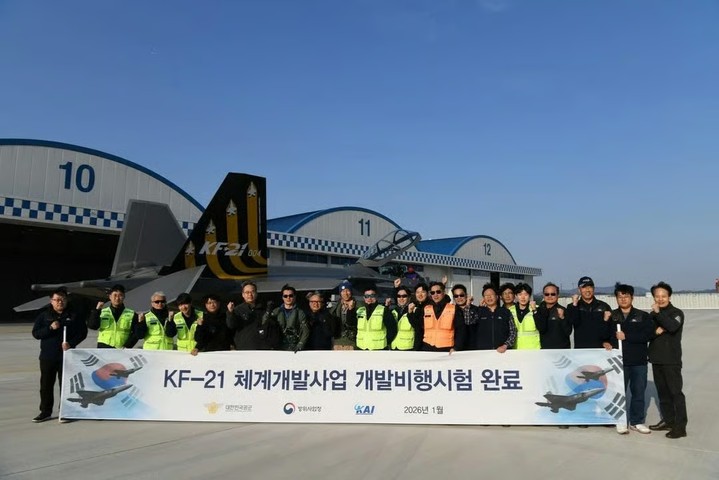
South Korea has completed all planned development flight tests of its indigenous KF-21 Boramae fighter jet, marking a major milestone ahead of mass production and delivery to the air force in 2026.

South Korea has successfully completed all planned development flight tests of the KF-21 Boramae, its domestically developed 4.5-generation multirole fighter jet, marking a major milestone in the country’s indigenous defense aviation program. 

According to the Defense Acquisition Program Administration (DAPA), the final test flight was conducted on January 12, 2026, over the southern sea off Sacheon, in South Gyeongsang Province, using the fourth prototype aircraft.

The completion of the final sortie brings to a close approximately 42 months of development flight testing, formally ending the aircraft’s full development flight test phase.

The KF-21 flight test program involved six prototype aircraft, which together accumulated around 1,600 accident-free sorties

This figure was reduced from an initially planned 2,000 flights due to the use of extended-duration missions and efficient test planning, including aerial refueling operations.

Across these sorties, engineers verified more than 13,000 individual test conditions, covering a wide range of critical performance and systems checks.

These included flight stability, high-angle-of-attack maneuvers, supersonic flight, aerial refueling capability, and advanced avionics integration.

Key subsystems tested included the indigenously developed AESA radar, as well as air-to-air weapons separation and live firing trials, confirming the aircraft’s core combat capabilities.

The KF-21 Boramae — formerly known as the KF-X program — is South Korea’s first domestically developed supersonic fighter aircraft. The project is led by Korea Aerospace Industries (KAI) in cooperation with the Agency for Defense Development and more than 225 domestic companies, reflecting a broad national industrial effort.

The aircraft is intended to replace the Republic of Korea Air Force’s aging F-4 Phantom II and F-5 fighter fleets, while significantly enhancing the country’s technological self-reliance.

The first prototype rollout took place in April 2021, followed by the maiden flight on July 19, 2022.

The KF-21 is powered by twin GE F414 engines and features advanced avionics, a reduced radar signature design, and semi-stealth characteristics.

The aircraft is designed to integrate modern Western weapons systems, including Meteor and IRIS-T air-to-air missiles, positioning it as a capable multirole platform for regional air superiority missions.

With flight testing complete, system development is expected to conclude in the first half of 2026.

Deliveries of mass-produced aircraft to the Republic of Korea Air Force (ROKAF) are scheduled to begin in the second half of 2026.

Initial Block I aircraft will focus primarily on air-to-air combat roles.

More advanced Block II variants, incorporating full air-to-ground and anti-ship capabilities, are planned for introduction from early 2027.

South Korea aims to field up to 120 KF-21 fighters by the early 2030s.

The successful, incident-free completion of the KF-21’s development flight tests ahead of schedule highlights the program’s maturity and South Korea’s growing aerospace and defense capabilities.

It places the country among a small group of nations capable of independently designing and producing advanced combat aircraft, while also attracting export interest from countries including the UAEPoland, and others.

Continue Reading

Asia-Pasific

Kim Jong Un Orders Artillery Revolution With 600mm Rockets

Published

on

North Korean leader Kim Jong Un inspected a munitions factory producing 600mm KN-25 rocket systems, calling them a “strategic attack means” and urging mass production as part of a broader push to modernize long-range artillery ahead of a 2026 party congress.

North Korean leader Kim Jong Un has publicly elevated the country’s super-large multiple rocket launcher force to a strategic tier, calling for a fundamental transformation of North Korea’s artillery capabilities. 

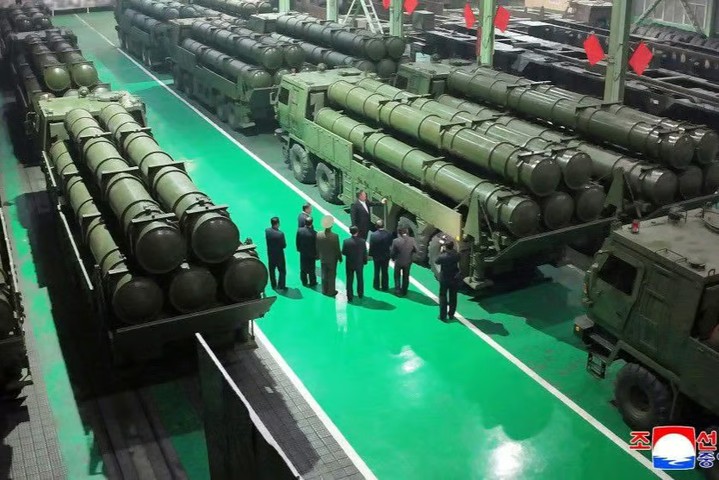
According to state media KCNA, Kim on December 28, 2025 inspected a major munitions factory producing super-large caliber rocket systems and praised them as a “super-powerful weapon” capable of delivering sudden, precise, and devastating strikes.

Kim described the system as a potential “strategic attack means” that could “annihilate the enemy,” language that places the weapon beyond traditional battlefield artillery. He urged what he called a “revolution in upgrading the artillery weapon system,” emphasizing the need for expanded mass production to ensure the weapon becomes the backbone of North Korea’s modernized long-range artillery forces.

The system inspected is widely identified by external analysts as the KN-25, a 600mm caliber weapon first tested in 2019

Although North Korea officially categorizes it as a multiple launch rocket system (MLRS), Western militaries frequently classify it as a short-range ballistic missile due to its range and flight profile.

The KN-25 is assessed to have a strike range of approximately 380–400 kilometers, allowing coverage of targets across much of South Korea, including the Seoul metropolitan area and potential U.S. military facilities. 

It is believed to use precision guidance based on inertial navigation, possibly supplemented by satellite inputs, with reported accuracy measured in tens of meters. The launcher is typically mounted on tracked or wheeled transporter-erector-launchers carrying four to six tubes, enhancing survivability through rapid relocation.

While the system is conventionally armed, North Korea has previously claimed the KN-25 could carry tactical nuclear warheads, further blurring the distinction between artillery and missile forces.

Images released by state media showed Kim touring the production facility with rows of launcher vehicles visible, underscoring the industrial scale of the program. Kim’s focus on serial production suggests the KN-25 is moving from a niche capability toward a mass-deployed system integrated into North Korea’s standing force structure.

By emphasizing both precision and volume, Pyongyang appears to be pursuing a doctrine that combines saturation fire with accurate, long-range strikes. This approach complicates missile defense planning by presenting a large number of high-speed, quasi-ballistic threats that sit below the traditional strategic missile threshold but exceed conventional artillery norms.

The factory inspection forms part of a broader sequence of military-related activities by Kim, including visits to nuclear submarine construction sites and oversight of missile testing programs. These appearances come ahead of a key Workers’ Party of Korea congress expected in early 2026, where defense modernization is likely to feature prominently.

Taken together, the messaging highlights North Korea’s intent to anchor its deterrence posture not only in intercontinental systems but also in highly mobile, precision-capable artillery forces designed for rapid escalation in a regional conflict.

Continue Reading

Asia-Pasific

Japan Faces Record Birth Collapse in 2025

Published

on

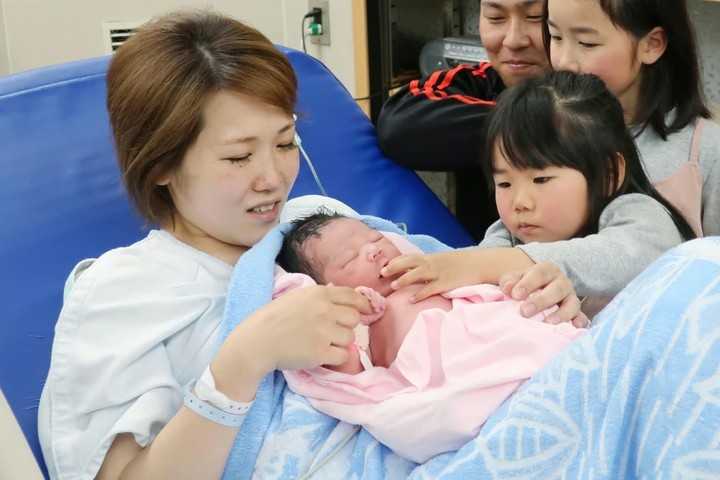
Japan’s birth count in 2025 is set to fall below 670,000, the lowest since 1899, beating even official pessimistic forecasts. The figures challenge government population strategy and complicate fiscal planning amid rising deaths and limited immigration.

Japan is on track to register its lowest number of births since records began in 1899, underscoring how sharply demographic reality has diverged from official planning assumptions. 

Based on preliminary data from the first 10 months of 2025, demographers expect total births to fall below 670,000, a level the government had not projected until 2041

This would place the milestone 16 years earlier than forecast, eroding the credibility of medium- and low-variant population scenarios used in fiscal and economic planning.

The estimates contrast starkly with projections last updated in 2023 by the National Institute of Population and Social Security Research, which anticipated 749,000 births in 2025 under its central scenario. 

Even the most pessimistic “low variant” forecast had assumed around 681,000 births this year. A sub-670,000 outcome would therefore breach all official planning bands simultaneously.

The scale of the decline presents a direct challenge for Prime Minister Sanae Takaichi, who in late November 2025 convened the first meeting of the Population Strategy Headquarters, a task force she labeled essential to addressing Japan’s “biggest problem.” 

The government allocated roughly $23 billion in 2024 for a three-year program aimed at boosting births and marriage rates.

Yet structural indicators continue to move in the opposite direction. 

Annual marriages, a key variable in a society where births outside marriage remain rare, have fallen below 500,000, about half the 1972 peak. 

At the same time, annual deaths continue to rise. Japan’s population shrank by just over 900,000 people in 2024, compounding pressure on pension systems, taxation, and labor supply.

Masakazu Yamauchi of Waseda University estimates that 2025 births will represent a 3 percent decline from 686,000 recorded in 2024, marking the 10th consecutive year of record-low births. 

The expected figures exclude children born to foreign residents, further highlighting the contraction of Japan’s native population at a time when resistance to immigration is rising.

Economists and opposition politicians have urged authorities to revise their assumptions. 

But doing so would carry political and fiscal consequences. 

Years of government efforts to raise the birth rate have proven futile,” said Masatoshi Kikuchi of Mizuho Securities, warning that acknowledging the trend would make “higher taxes and lower pension benefits inevitable.”

Some demographers have also examined whether 2026, a hinouma or “fire horse” year in the Japanese astrological calendar, could further distort birth trends. 

In 1966, the last such year, births fell by 25 percent before rebounding in 1967. However, Takashi Inoue of Aoyama Gakuin University dismissed its relevance today, noting that younger generations regard it as historical trivia. 

I don’t think it will have much of an impact on their marriage or childbirth behaviour,” he said.

The data suggest that Japan’s demographic trajectory is no longer fluctuating around forecasts but settling consistently below them, forcing policymakers to confront limits on social engineering in the face of entrenched economic and social change.

Continue Reading

Trending