Connect with us

America

U.S. Plans Mandatory Social Media Checks for All Tourists

Published

on

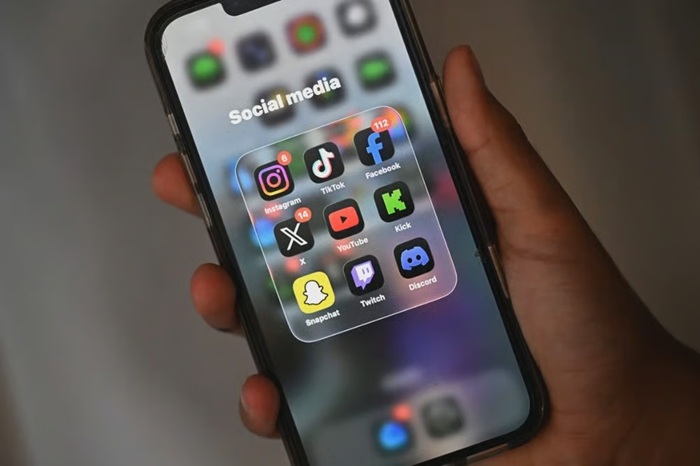
The U.S. government is proposing mandatory social media screening for all foreign tourists, requiring five years of posts and associated digital identifiers.

The proposed rule, published in the U.S. Federal Register, applies to all visitors regardless of visa status, including those from visa-waiver countries such as the U.K., where tourists typically stay up to 90 days using a $40 ESTA authorization.

CBP Seeks Expanded Digital Disclosure

U.S. Customs and Border Protection (CBP) has proposed that all foreign visitors disclose five years of social media accounts, email addresses, phone numbers, and contact information linked to their digital footprint.

According to the notice, this information would be “mandatory” and include the names, addresses, numbers, and birthdays of family members.

The plan extends current ESTA requirements, which today only request basic contact details and emergency information.

The proposal also introduces biometric expansions.

CBP intends to require facial photos (“selfies”) for ESTA applications and collect face, fingerprints, DNA, and iris data—beyond the face and fingerprint checks currently performed upon arrival.

These changes would place ESTA applicants under a more intensive screening regime than the existing two-year authorization process.

The proposal is now open for a 60-day public consultation window.

New Scrutiny for Online Speech

There have been several cases in which travelers have already been denied entry to the U.S. based on content discovered on their devices since President Donald Trump took office in January.

A French scientist turned away in March after messages deemed to “reflect hatred toward Trump and… described as terrorism” were found on his phone.

These incidents underscore how social media and private messages have increasingly influenced border decisions even before the proposed rule.

Operational Impact on Visa-Waiver Travel

The proposed expansion would particularly affect travelers from the U.K. and other visa-waiver states who rely on ESTA for short-term entry.

Britons currently submit simple contact details and travel information, but the document makes clear that future applications could require multiple years of digital history and significantly more personal identifiers.

The requirement to disclose social media accounts for five years represents a notably higher threshold compared with other Western immigration systems.

Collecting DNA and iris scans at the application stage would also shift biometric capture from the border to the pre-travel phase.

For high-volume tourist flows—such as millions of European visitors per year—CBP’s proposal reflects a strategic move to push security evaluation earlier in the travel chain.

While CBP asserts that the mandate aims to strengthen national security vetting, the breadth of required data, including family-member identifiers, poses operational and civil-liberties questions likely to surface during the 60-day consultation period.

For now, the proposal marks one of the most expansive digital-identity screening measures contemplated for U.S. entry in recent years.

Continue Reading
Click to comment

Leave a Reply

Your email address will not be published. Required fields are marked *

America

US Approves $15.7 Billion Arms Sales to Israel and Saudi Arabia

Published

on

The Trump administration has cleared new weapons sales worth $6.67 billion to Israel and $9 billion to Saudi Arabia, a move announced as regional tensions rise and diplomatic efforts continue over Gaza and Iran.

The United States has approved a significant new round of arms sales to Israel and Saudi Arabia, the State Department announced late Friday, after formally notifying Congress earlier in the day. The decisions underscore Washington’s continued military support for its Middle Eastern allies at a time of heightened regional uncertainty.

The approvals come as US President Donald Trump advances a ceasefire plan aimed at ending the Israel-Hamas conflict in Gaza, while U.S. officials also weigh the risk of a broader confrontation with Iran. Although the ceasefire has largely held, major challenges remain in its next phases, including the deployment of an international security force and the politically sensitive task of disarming Hamas fighters.

Regional Tensions And U.S. Policy

The arms sales were made public as speculation grows over potential U.S. military action against Iran, adding urgency to efforts to strengthen allied defense capabilities. Trump’s administration has argued that reinforcing partners such as Israel and Saudi Arabia is critical to maintaining deterrence and stability across the Middle East.

The timing of the announcements also reflects Washington’s attempt to balance diplomatic engagement on Gaza with continued military backing for Israel, even as civilian casualties and reconstruction needs dominate international discussions.

What The Approved Arms Packages Include?

According to the U.S. State Department, the newly approved arms sales consist of the following systems and equipment:

Israel – $6.67 billion package

  • 30 Apache attack helicopters, equipped with rocket launchers and advanced targeting and sensor systems (valued at $3.8 billion)
  • 3,250 light tactical vehicles for transporting personnel and logistics and extending lines of communication (valued at $1.98 billion)
  • Power packs for armored personnel carriers that have been in service since 2008 (valued at $740 million)
  • An undisclosed number of light utility helicopters to complement Israel’s existing fleet (valued at $150 million)

The Apache helicopters represent the largest single component of the Israel package, valued at $3.8 billion, followed by $1.98 billion for the light tactical vehicles. Additional funding covers vehicle upgrades and supporting aviation assets.

Saudi Arabia – $9 billion package

  • 730 Patriot air and missile defense missiles
  • Associated Patriot system equipment and support components
  • Capabilities designed to strengthen the region’s integrated air and missile defense architecture

The department said the sale would support U.S. foreign policy and national security objectives by improving the security of a major non-NATO ally seen as a stabilizing force in the Gulf region. Officials added that the enhanced capability would protect Saudi, U.S. and allied land forces and significantly improve Saudi Arabia’s contribution to regional missile defense.

The announcement followed meetings in Washington between Saudi Defense Minister Khalid bin Salman and senior Trump administration officials, including Secretary of State Marco Rubio and Defense Secretary Pete Hegseth.

“No Impact On Regional Military Balance”

In separate but nearly identical statements, the State Department said none of the approved sales would alter the military balance in the region. Officials stressed that the packages would enhance Israel’s ability to counter current and future threats by improving its capacity to defend borders, critical infrastructure and population centers.

“The United States is committed to the security of Israel,” the department said, adding that assisting Israel in maintaining a strong and ready self-defense capability remains vital to U.S. national interests.

Together, the deals highlight Washington’s continued reliance on arms sales as a central pillar of its Middle East strategy, even as diplomatic and security challenges in the region remain unresolved.

Continue Reading

America

DOJ Releases 3 Million Pages of Epstein Files

Published

on

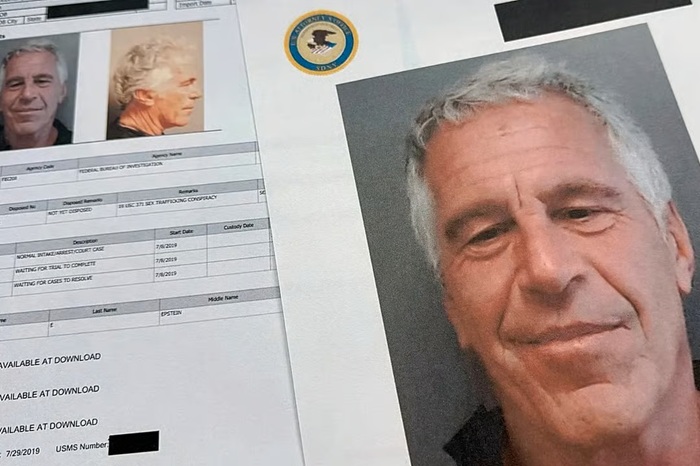
The U.S. Department of Justice on January 30 released over 3 million pages of documents tied to convicted sex offender Jeffrey Epstein, fulfilling part of a law requiring transparency.

The Justice Department announced Friday that it has released the largest batch yet of records connected to Jeffrey Epstein, the late financier convicted of sex trafficking. The disclosures include over 3 million pages of documents, alongside more than 2,000 videos and 180,000 images, as part of efforts to comply with the Epstein Files Transparency Act passed by Congress and signed into law in 2025.

Most files released late and after redactions

Deputy Attorney General Todd Blanche said the disclosure fulfilled the Justice Department’s obligation under federal law, despite missing the original legislative deadline by more than a month. He explained that the released materials represent roughly 3.5 million pages that have been reviewed and processed for public access, including photographs and court records from investigations into Epstein and his associate Ghislaine Maxwell.

Blanche emphasized that the department took extensive steps to protect the privacy and safety of survivors, redacting images and videos before publication. He also insisted that the Justice Department did not withhold documents to protect US President Donald Trump or other individuals.

Content includes high-profile references

Among the newly released materials are records mentioning several well-known figures and elites, including Donald Trump, Bill Clinton, Prince Andrew, Elon Musk and others, with references to email exchanges, travel logs, and guest lists tied to Epstein’s Caribbean island and other locales.

One portion of earlier released materials also showed that federal prosecutors in 2020 learned US President Trump flew on Epstein’s private jet more frequently in the 1990s than previously documented, although no wrongdoing was alleged.

Criticism over incomplete and redacted disclosures

Despite the volume of material now public, many Democratic lawmakers and victims’ advocates argue that the release falls short of the law’s intent. They contend that the administration has not released all documents required, with portions still withheld or heavily redacted in ways that obscure meaningful content.

Representative Ro Khanna and others have publicly demanded that the Justice Department explain why only a fraction of the potentially responsive pages have been disclosed and why some names and records remain blacked out.

Critics also note potential legal avenues including subpoenas and court challenges could be used to force a more complete release of the files, highlighting growing political pressure ahead of further review.

Victims, transparency and ongoing debate

Survivors of Epstein’s crimes and advocacy groups have similarly expressed alarm over the partial nature of the release, saying it may deprive victims and the public of full accountability and historical record.

The Justice Department maintains its actions balance transparency with the legal requirement to protect personally identifiable information and sensitive material involving ongoing investigations.

As the debate continues, lawmakers are weighing additional oversight and legal options to ensure compliance with the Epstein Files Transparency Act and to address concerns that the current disclosures do not fully reflect the scope of the Epstein case and related investigations.

Continue Reading

America

Trump’s Most Fierce Critic Ilhan Omar Assaulted in Minneapolis

Published

on

U.S. President Donald Trump said Tuesday his administration will de-escalate in Minnesota after Alex Pretti was killed by federal agents, following Renee Good’s earlier death. DHS pulled its mission leader, sent Tom Homan, and now faces scrutiny over ICE tactics.

U.S. President Donald Trump’s pledge to “de-escalate a little bit” in Minnesota marks a rare tactical adjustment in his administration’s immigration enforcement campaign, prompted by the fatal shooting of Alex Pretti and the earlier death of Renee Good.

Speaking to Fox News on Tuesday about the killings, Trump said, “Bottom line, it was terrible. Both were terrible,” after Pretti, an intensive care nurse at a veterans’ hospital, was killed during a weekend stop by border agents. Renee Good had been fatally shot in early January, making Pretti the second U.S. citizen to die in encounters with federal immigration officers in the state this month.

Pretti’s killing triggered protests across Minnesota and criticism from lawmakers in both parties. Trump called the incident “a very unfortunate incident,” while adding, “He shouldn’t have been carrying a gun.”

U.S. Homeland Security Secretary Kristi Noem said Pretti “wasn’t there to peacefully protest, he was there to perpetuate violence,” accusing him of “domestic terrorism.”

The Department of Homeland Security (DHS) said agents fired in self-defense after Pretti resisted efforts to disarm him. Local officials and eyewitnesses disputed that account, saying Pretti held a phone, not a weapon, and authorities later confirmed the firearm was legally registered and had been removed before he was shot.

A preliminary Customs and Border Protection report, seen by CBS News, states that two agents fired their weapons and does not say Pretti was reaching for his gun, complicating DHS’s initial narrative.

Command Changes and Crowd Control

On Monday, DHS pulled Minnesota mission leader Gregory Bovino and deployed White House border tsar Tom Homan to take over operations. Homan said on social media he met with Governor Tim Walz, Minneapolis Mayor Jacob Frey, and local law enforcement. Trump defended the broader operation, saying agents had removed “thousands of hardened criminals,” arguing Minnesota now had “good crime numbers,” before reiterating that the administration would “de-escalate.”

Federal Immunity for ICE Officers

Stephen Miller, a senior White House aide overseeing deportation policy, told CNN that DHS had been instructed to use extra personnel for fugitive operations and to create “a physical barrier between the arrest teams and the disruptors.” He added, “We are evaluating why the [US Customs and Border Patrol] team may not have been following that protocol.” The episode has intensified scrutiny of enforcement language and tactics.

Back in October 2025, Miller also said he told ICE officers that they had “federal immunity” in the conduct of their duties, and warned that anyone attempting to obstruct them, including state officials, “would be committing a felony”, a comment linked to tensions with Illinois Governor JB Pritzker over local accountability measures for ICE actions.

“I don’t Sleep Well at Night”

Tom Homan’s arrival has also drawn scrutiny because of his hardline views on immigration enforcement. In February 2025, Trump’s border czar was quoted accusing Democratic states as “criminal sanctuaries”.

I don’t sleep well at night because I’m afraid of the people that are walking the streets because sanctuary cities will protect them. Sanctuary cities are sanctuaries for criminals.

White House Boarder Czar Tom Homan

His rhetoric has been echoed on the ground: on Jan. 25, an ICE agent in Maine called a legal observer a “domestic terrorist” for recording him and said she would be added to a “nice little database,” reinforcing concerns among civil liberties groups about aggressive tactics and escalation risks.

Pressure From Streets and States

State and city leaders have urged Washington to withdraw roughly 3,000 immigration agents and officers from Minnesota. Republican figures have also demanded accountability. Vermont Governor Phil Scott and Senator Pete Ricketts of Nebraska called for investigations, with Ricketts writing that he expected “a prioritized, transparent investigation into this incident,” even as he reaffirmed support for funding ICE.

At a rally in Iowa on Tuesday night, Trump avoided detailed discussion of Minnesota, instead citing a December Harvard Harris poll claiming 80 percent public support for deporting undocumented immigrants who committed crimes.

Yet the combination of two fatalities within weeks, conflicting official accounts, judicial intervention, and the reassignment of senior personnel underscores mounting constraints on the administration’s enforcement posture in politically sensitive jurisdictions.

Continue Reading

Trending