Connect with us

Popular

Armed Attack at Bondi Beach in Australia: 15 Dead, Dozens Injured

Published

on

An armed attack at a beach in Sydney, in Australia’s New South Wales (NSW) state, left 15 people dead and 38 others injured, including two police officers and one child.

The armed attack occurred at around 6.47 p.m. local time at Bondi Beach in Sydney, in the state of New South Wales (NSW). In its initial statement shared on social media, NSW Police announced that an active armed attack was underway at the beach and urged the public to stay away from the area. Large numbers of police officers, paramedics, and emergency response teams were dispatched to the scene.

Authorities said long-barreled firearms were used in the attack. Police secured the area by land, sea, and air, while boats and helicopters were deployed. Bomb disposal units were brought in after suspicious objects were detected during searches.

Death Toll and Number of Injured Confirmed

NSW Health Minister Ryan Park said one of the victims was a child and confirmed that 15 people had lost their lives. He stated that 38 people were injured, including two police officers and one child, and that four children were transferred to Sydney Children’s Hospital. Some of the injured were reported to be in serious condition.

NSW Premier Chris Minns later said the ages of those killed ranged from 10 to 87 and that the number of injured had risen to 42, with treatment ongoing in hospitals.

Terror Investigation and Hanukkah Focus

Authorities emphasized that the attack was aimed at the Jewish community and is being treated as a terrorist act. The fact that the shooting took place during Hanukkah, a major holiday in the Jewish calendar, was considered a key factor in the security assessment. NSW Police announced that security measures had been increased at synagogues and Jewish community sites throughout the holiday period.

NSW Police Commissioner Mal Lanyon said the investigation was complex and multi-layered, noting that such attacks are often intended to inflame social tensions during sensitive periods.

Attackers Identified as Father and Son

Following identification efforts, authorities confirmed that the attackers were a 50-year-old father and his 24-year-old son. The father was killed at the scene, while the son remains hospitalized in critical condition. Officials said the father was a licensed gun owner and that six legally owned firearms belonging to him were recovered at the scene.

After the attack, police discovered several suspicious objects believed to be homemade explosive devices in a parked vehicle near Bondi Beach. Bomb disposal teams safely removed the items and handed the scene over to forensic investigators.

After the attack, police found several suspicious objects believed to be homemade explosive devices in a parked vehicle near Bondi Beach. Bomb disposal units safely removed the objects from the scene and handed the area over to forensic specialists.

Authorities said that during the attack targeting Hanukkah celebrations, one of the assailants was neutralized by 43-year-old fruit vendor Ahmed el-Ahmed. Footage shows Ahmed, who lives in the Sutherland Shire area, approaching the attacker from behind, seizing his rifle and forcing him to retreat.

Ahmed then leaned the weapon against a tree and raised his hands to demonstrate that he posed no threat to police. During the intervention, he was shot twice by a second attacker—once in the arm and once in the hand. Ahmed underwent surgery on Sunday night, and his condition was reported to be improving.

Israeli Prime Minister Benjamin Netanyahu praised Ahmed el-Ahmed’s actions during a government meeting in Dimona on Sunday. “We saw the act of a brave man — and it turned out he was a brave Muslim man. I salute him. He prevented the killing of innocent Jews,” Netanyahu said.

In the same remarks, Netanyahu also criticized Australian Prime Minister Anthony Albanese, arguing that Australia’s current policies are “fueling antisemitism.” His comments further intensified the diplomatic and political tensions following the attack.

Netanyahu’s Sharp Criticism of Albanese

Following the attack, one of the most prominent critics of Australian Prime Minister Anthony Albanese was Israeli Prime Minister Benjamin Netanyahu. The right-wing Israeli leader accused Albanese’s center-left government of failing to adequately protect the Jewish community in Australia and linked the attack to Canberra’s stance on recognizing a Palestinian state.

Netanyahu said, “Your call for a Palestinian state is pouring fuel on the anti-Jewish fire,” arguing that this approach encourages those who threaten Australian Jews and fuels antisemitic hatred on the country’s streets. He later reiterated these views in social media posts.

Albanese, who has faced growing criticism after the deadly shooting at Sydney’s Bondi Beach, pledged to review Australia’s gun laws and to increase support and security measures for Jewish Australians.

Muslim Cemetery Desecrated

In a development that deepened fears of escalating communal tensions, a Muslim cemetery in Sydney’s south-west was allegedly desecrated with butchered pig heads and other animal remains. New South Wales Police said officers were alerted shortly after 6 a.m. to reports of animal carcasses placed at the entrance of the cemetery on Richardson Road in Narellan.

Police from the Camden Police Area Command responded to the scene and discovered multiple severed pig heads, an act widely viewed as deliberately provocative and offensive. Authorities said an investigation was launched immediately, with the remains swiftly removed and disposed of under official procedures.

The incident has raised alarm among community leaders, who warned that such acts risk inflaming religious and ethnic divisions in the aftermath of the Bondi Beach attack. The cemetery, located on land purchased in 2008 by the Lebanese Muslim Association from St Thomas’ Anglican Church to address a shortage of Muslim burial sites, has now become the focus of a separate hate crime investigation.

Police said inquiries are ongoing and urged the public to avoid speculation while investigators work to establish responsibility.


Continue Reading
Click to comment

Leave a Reply

Your email address will not be published. Required fields are marked *

Popular

Oil Prices Surge Past $105 Per Barrel

Published

on

Crude oil prices surged past $105 per barrel and briefly reached $108 on March 9 after Mojtaba Khamenei was named Iran’s supreme leader following his father’s death in a U.S.-Israeli airstrike, amid rising Middle East tensions and Strait of Hormuz uncertainty.

Oil prices climbed sharply on Sunday following the appointment of Mojtaba Khamenei as Iran’s new supreme leader, replacing his father after a Feb. 28 U.S.-Israeli airstrike killed Ali Khamenei. Trading Economics data indicated that crude benchmarks reacted to heightened Middle East tensions and potential disruptions in the Strait of Hormuz, a key conduit for global oil shipments.

The price of Brent crude, the international benchmark, stood at $101.19 per barrel shortly after trading resumed on the Chicago Mercantile Exchange, up 9.2 percent from Friday’s close of $92.69. West Texas Intermediate (WTI), the U.S. light, sweet crude, reached $107.06 per barrel, representing a 16.2 percent increase over Friday’s settlement of $90.90.

The surge reflects market concern over supply chain risks in the Gulf. The Strait of Hormuz, through which approximately 20 percent of global oil trade passes, is particularly sensitive to geopolitical instability. Investors reacted to the leadership change in Iran as a factor that could influence regional decision-making and maritime security, even though immediate production levels remained unchanged.

Analysts noted that both Brent and WTI could continue to fluctuate in intraday trading as markets digest the implications of the leadership transition. Crude prices remain highly sensitive to regional political developments and military escalations.

Continue Reading

Popular

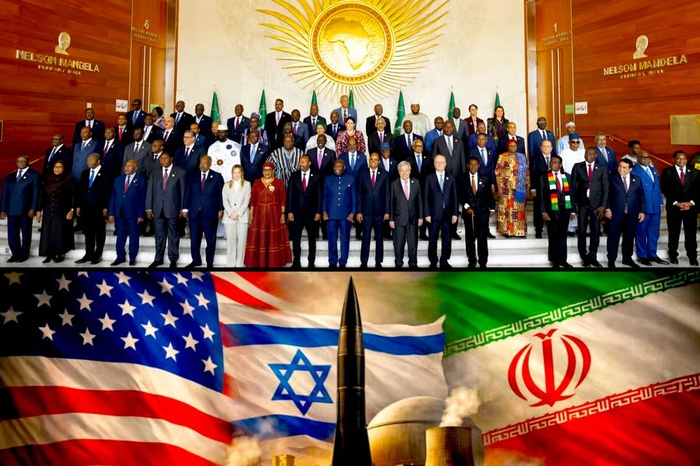
African Governments Split on US-Israel Iran War

Published

on

African governments responded differently to the US-Israel strikes on Iran and Tehran’s retaliation across the Gulf. Horn states condemned Iran, while South Africa & Senegal cited international law & West African countries urged restraint.

African governments are responding unevenly to the confrontation between the United States, Israel and Iran, reflecting economic ties, security alliances and geographic proximity to Middle Eastern trade routes that shape foreign policy decisions across the continent.

The conflict intensified after Washington and Tel Aviv launched Operation Epic Fury and Operation Roaring Lion against Iranian targets. Iran retaliated with missile strikes targeting several Gulf states, including the United Arab Emirates, Saudi Arabia, Qatar, Kuwait, Bahrain, Jordan and Iraq. While the fighting remains centered in the Middle East, political reactions across Africa have exposed divergent strategic calculations.

In the Horn of Africa, governments have largely condemned Iran’s actions while avoiding criticism of the United States or Israel.

Authorities in Somaliland, a self-declared state seeking international recognition, described Iranian strikes on Gulf countries as “unprovoked aggression.” The position reflects Somaliland’s close economic and security ties with the United Arab Emirates, particularly investments in Berbera Port, which form a central part of the territory’s economic strategy.

The region’s diplomatic landscape shifted recently when Israel became the first country to formally recognize Somaliland as a sovereign state. U.S. officials have also indicated that Washington could consider a similar step if strategic cooperation deepens, including port access and potential military facilities.

Neighboring Somalia also condemned Iran’s attacks and expressed solidarity with Saudi Arabia, Qatar, Kuwait, Jordan, Bahrain and Oman, although the statement notably excluded the UAE. Relations between Mogadishu and Abu Dhabi have deteriorated since Israel recognized Somaliland, a move Somali officials believe the UAE quietly supported.

Other Horn states have linked their responses to economic and migration realities. Ethiopian Prime Minister Abiy Ahmed spoke directly with Kuwait’s Crown Prince Sheikh Sabah Khaled Al-Hamad Al-Sabah, condemning what he called an “atrocious attack” on Kuwait’s sovereignty.

Millions of Ethiopian workers are employed in Gulf states, and remittances represent a crucial source of foreign exchange for Ethiopia’s economy.

In Kenya, President William Ruto issued one of the continent’s strongest condemnations of Iranian strikes. Kenya “strongly condemns the strikes” targeting Gulf countries, Ruto said, warning that the regionalization of the conflict could threaten international peace and security.

Analysts say these responses reflect geopolitical calculations rather than purely legal considerations. According to Cheta Nwanze, a risk analyst at SBM Intelligence, governments may be positioning themselves alongside the U.S.-Israeli alliance.

“They are gambling that the US-Israeli alliance would win, and would have more influence going forward,” he said.

Elsewhere on the continent, leaders have framed the crisis through legal and institutional concerns.

South African President Cyril Ramaphosa emphasized that Article 51 of the United Nations Charter permits self-defense only after an armed attack has occurred. Pretoria said anticipatory self-defense is not permitted under international law, language widely interpreted as criticism of U.S.-Israeli military doctrine.

In Senegal, Prime Minister Ousmane Sonko delivered an even sharper critique.

A country, without a resolution or a mandate from the United Nations, can decide to strike other countries… This is extremely serious.

Senegalese Prime Minister Ousmane Sonko

Sonko warned that unilateral military action risks undermining the global order established over the past 50 years.

Many African governments rely on international law as protection against intervention by major powers. Analysts say that erosion of these norms could weaken protections for smaller states.

In West Africa, several governments have chosen carefully balanced statements.

Nigeria’s foreign ministry called for “maximum restraint” and adherence to international law but avoided assigning blame to either Iran or the U.S.-Israeli coalition. Abuja maintains security cooperation with Western partners while preserving economic relations with Gulf states.

Ghana adopted similar language, emphasizing de-escalation and the safety of citizens abroad, while Gambia also urged restraint and protection of civilian infrastructure.

Economic implications remain a concern. Analysts warn that escalation could disrupt global oil markets and shipping routes such as the Strait of Hormuz, which is critical for energy imports.

A report by SBM Intelligence noted that even if the U.S.-Israeli coalition achieves short-term tactical gains, Iran could sustain asymmetric retaliation over time.

Oxford Economics similarly warned that African economies may face higher oil prices and weaker exchange rates.

Security analysts have also flagged potential regional implications, including risks to U.S.-aligned assets in Africa, the future of the Chagos archipelago transfer to Mauritius, and possible escalation involving Houthi strikes against Israeli allies in the Horn of Africa, according to Ryan Cummings, director at Signal Risk.

Continue Reading

Popular

Trump Announces $5 Billion Pledge for Gaza Reconstruction

Published

on

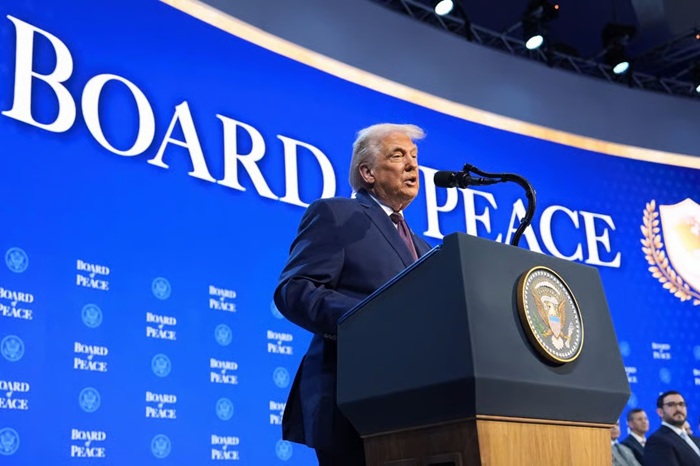
U.S. President Trump announced that members of his newly formed Board of Peace have pledged $5 billion for Gaza’s reconstruction and will provide thousands of personnel for an international stabilization force, with formal commitments set to be unveiled Thursday in Washington.

U.S. President Donald Trump said Sunday that his newly established Board of Peace secured $5 billion in pledges to rebuild war-devastated Gaza and commitments of thousands of personnel for an international stabilization and police mission. The pledges will be formally announced at the board’s inaugural meeting in Washington on Thursday.

$5 Billion in Initial Reconstruction Commitments

In a social media statement, Trump described the Board of Peace as potentially “the most consequential international body in history” and said he was honored to serve as its chairman. He did not specify which member states are contributing funds or personnel.

The board includes more than 20 members, though it remains unclear how many will attend the first session. Israeli Prime Minister Benjamin Netanyahu, who met Trump at the White House last week, is not expected to participate in the gathering.

Indonesia Signals 8,000-Troop Readiness

Indonesia’s military announced Sunday that up to 8,000 troops could be prepared by the end of June for possible deployment to Gaza as part of a humanitarian and peace mission. The statement marks the first firm military commitment secured by the Republican president for the proposed stabilization force.

Under the Oct. 10 U.S.-brokered ceasefire agreement between Israel and Hamas, an armed international stabilization force is envisioned to maintain security and oversee the disarmament of Hamas fighters — a central demand of Israel. So far, few countries have publicly expressed willingness to contribute troops.

A $70 Billion Reconstruction Challenge

Rebuilding Gaza presents a formidable financial and logistical challenge. The United Nations, World Bank and European Union estimate that total reconstruction costs could reach $70 billion. After more than two years of Israeli bombardment, large swaths of the Gaza Strip have been left in ruins.

Although the Oct. 10 ceasefire significantly reduced the heaviest fighting in the more than two-year conflict, Israeli forces have continued periodic airstrikes and frequently open fire near military-controlled zones, according to reports from the territory.

Broader Mandate and Global Implications

Initially perceived as a mechanism focused solely on ending the Israel-Hamas war, the Board of Peace has evolved into what Trump envisions as a broader platform for resolving global crises. The initiative appears to reflect Washington’s effort to reshape elements of the post-World War II international order and, potentially, to sidestep the United Nations framework.

Several key U.S. allies in Europe and elsewhere have declined to join the body, citing concerns that it may function as a parallel structure to the UN Security Council.

Continue Reading

Trending