Connect with us

America

Cuban Doctors, Advisers & Security Forces Depart Venezuela Amid U.S. Pressure

Published

on

Cuban security advisers & doctors have been leaving Venezuela in recent weeks following Maduro’s Capture, Reuter’s exclusive revealed. Sources cite U.S. pressure and leadership changes under Interim President Delcy Rodriguez, highlighting strains in Caracas-Havana ties.

Cuban security advisers and medical personnel have been departing Venezuela in recent weeks, according to 11 sources familiar with the matter, signaling potential strain in one of Latin America’s most durable political and security alliances.

According to a Reuters exclusive, the withdrawals follow the January 3 U.S. military operation that captured Venezuelan president Nicolas Maduro and killed 32 Cubans, as acknowledged by the Cuban government.

While neither Caracas nor Havana has formally confirmed a policy shift, multiple accounts point to personnel reductions inside Venezuela’s security apparatus and presidential protection structure.

Security Architecture Recalibrated

Four sources said Interim President Delcy Rodriguez has entrusted her protection to Venezuelan bodyguards, marking a departure from arrangements under Maduro and Hugo Chavez, both of whom relied on elite Cuban security elements.

A former Venezuelan intelligence official stated that some Cuban advisers embedded within the DGCIM counterintelligence agency had been removed from their posts. Two sources added that Cuban medical workers and security advisers had flown back to Cuba in recent weeks.

One source close to Venezuela’s ruling Socialist Party said the departures occurred on Rodriguez’s orders due to U.S. pressure.

Other sources differed on whether Cuban personnel were being expelled, leaving voluntarily, or summoned home by Havana.

The sidelining of Cubans from the presidential guard and counter-intelligence units has not been previously reported.

Washington’s Pressure Campaign

The evolving situation comes amid intensified U.S. efforts to sever Venezuela-Cuba security cooperation. On January 11, U.S. President Donald Trump wrote on Truth Social: “Cuba lived, for many years, on large amounts of oil and money from Venezuela. In return, Cuba provided ‘Security Services’ … BUT NOT ANYMORE!”

A White House official said Washington maintains “a very good relationship with the leaders of Venezuela,” adding that Rodriguez’s “own self-interest aligns with advancing our key objectives.”

On January 30, Trump signed an executive order declaring a national emergency over Cuba and authorizing tariffs on countries supplying oil to the island.

The order allows additional duties on imports from nations that directly or indirectly provide oil to Cuba. Since mid-December, Washington has blockaded Venezuela from shipping oil to Cuba, according to U.S. officials cited by sources.

Separately, a January 22 Wall Street Journal account said the Trump administration is trying to push for regime change in Cuba by the end of 2026, describing efforts to intensify pressure and encourage negotiations with Cuban insiders.

Medical Missions And Air Links

Prior to Maduro’s removal, thousands of Cuban doctors, nurses, and sports coaches worked in Venezuela under welfare programs initiated in the late 2000s. In exchange, Venezuela supplied Cuba with subsidized oil.

A source familiar with Cuban government thinking said injured Cuban personnel had returned home after the January 3 attack, while others remained active in Venezuela. The same source said many Cuban doctors continue providing care.

Cuba’s state-run media said in early January that suspended commercial flights and Venezuelan airspace closures created a backlog affecting doctors traveling for vacations or mission rotations. Those flights resumed the week after the January 3 U.S. operation, the reports said.

Alliance Optics And Regional Signals

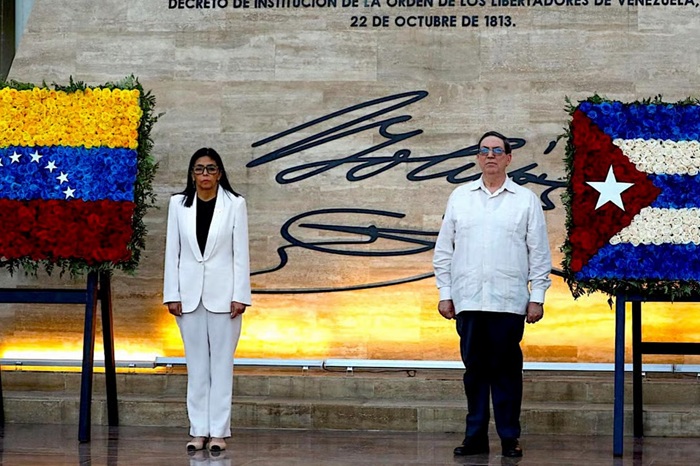
Despite the reported drawdown, public messaging between Caracas and Havana has remained outwardly consistent. On January 8, Rodriguez appeared alongside Cuban Foreign Minister Bruno Rodriguez at a memorial service in Caracas. Later that month, Rodriguez held a phone call with Cuban President Miguel Diaz-Canel, after which both sides emphasized continued unity and “historic relations.”

Frank Mora, former U.S. ambassador to the Organization of American States, said Rodriguez is “treading very carefully,” adding: “She wants to keep the Cubans at a distance … but not entirely throw them under the bus.”

Mexico’s President Claudia Sheinbaum said in February: “We will continue sending humanitarian aid … For now, we will not send fuel. We do not agree with imposing tariffs on countries that sell oil to Cuba.”

Four sources said some Cuban military advisers remain in Venezuela, while a former police officer noted Cuban professors continue teaching at UNES, Venezuela’s security forces university.

Continue Reading
Click to comment

Leave a Reply

Your email address will not be published. Required fields are marked *

America

Inside ‘Regime Change’: Trump Claims He is Above Stalin, Mao, Even Hitler

Published

on

A forthcoming book by NYT reporters reveals new insights into Trump’s presidency, detailing how he evaluates his authority in world-historical terms alongside past dictators and operates with a strict focus on retribution and media optics.

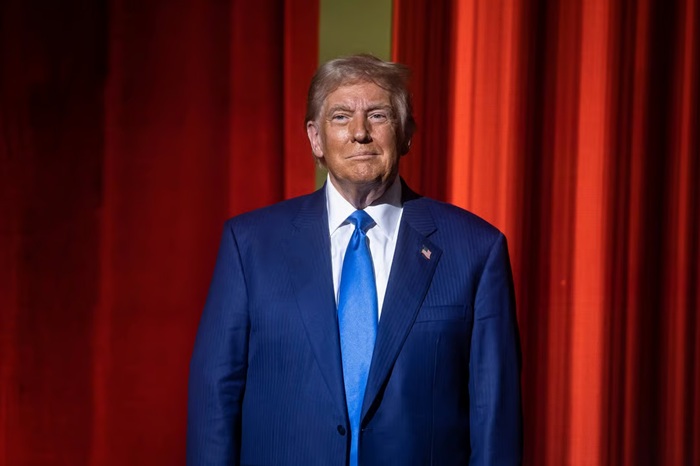
A forthcoming book titled “Regime Change: Inside the Imperial Presidency of Donald Trump,” authored by Maggie Haberman and Jonathan Swan, reveals that Trump has begun evaluating his presidential authority in world-historical terms.

The publication indicates Trump places himself in the lineage of historical conquerors, dictators, and strongmen who reshaped nations through fear and force.

Authors Haberman and Swan noted the evident pleasure and untroubled ease with which the U.S. president accepted a conceptual place alongside figures such as Mao and Hitler.

In interviews, Trump reflected on his power by comparing it to that of historical rulers such as Alexander the Great, Napoleon, Mao, and Stalin.

He argued that he possessed greater global reach because ancient and early modern rulers lacked contemporary transportation capabilities, stating that those past figures “didn’t have airplanes.”

Retribution and ‘Plot Twists’

Trump returned to office in 2025 with a strong desire for retribution against individuals he believed had wronged him.

According to the book, Trump sought to target Chris Krebs, a former official who rejected claims of widespread fraud in the 2020 election.

After aides reminded him of Krebs’s name, Trump ordered the Justice Department to investigate the former official.

The book also highlights how Trump views high-level appointments through the lens of media production and optics.

When Defense Secretary Pete Hegseth’s nomination faced scrutiny, Trump considered replacing him with Ron DeSantis, stating, “We need plot twists.”

Trump ultimately retained Hegseth, who later regularly showed the president graphic footage of drone strikes, which one official referred to as “Hegseth’s snuff films.”

Furthermore, Trump explained his selection of John Ratcliffe as CIA director by stating, “If you were going to cast a guy to play CIA director, that’s who you’d pick.”

Geopolitical Views and Private Interactions

The manuscript details Trump’s transactional and unorthodox approach to foreign policy and global leaders as well.

During a high-level Oval Office meeting, Trump remarked, “I’m not a big fan of Ukraine. Except their women. They keep winning Miss Universe.”

He later described his public confrontation with Ukrainian President Volodymyr Zelensky as “great television” and “better than The Apprentice.”

In private conversations regarding Latin America, Trump told several associates that “Venezuela could be America’s 51st state and that he would appoint a governor to run it.”

His interactions with European allies followed a similar pattern; while discussing plans for a triumphal arch in Washington, Trump called French President Emmanuel Macron to ask whether the Arc de Triomphe was dangerous, questioning, “What do you think, Emmanuel, do people jump off it?”

‘Look at Them Now’

Following the 2024 election, Trump took satisfaction in seeing technology industry leaders who had once opposed him seek his favor.

He described figures such as Mark Zuckerberg and Jeff Bezos as “kissing my ass” and remarked to Elon Musk, “They hated me … and look at them now.”

Domestically, the book reveals the administrative friction caused by external crises.

Senior White House officials held multiple meetings in the Situation Room to manage the political fallout from the Jeffrey Epstein controversy, focusing on its impact on Trump’s supporters and allegations appearing in government documents.

Additionally, the book notes Trump was visibly shaken by the assassination of Charlie Kirk, learning of the event from his son Barron under anxious circumstances that mirrored concerns over Trump’s own security following a 2024 assassination attempt.

Continue Reading

America

“Wake Up”: Vance Reminds Israel It Has No Other Powerful Ally

Published

on

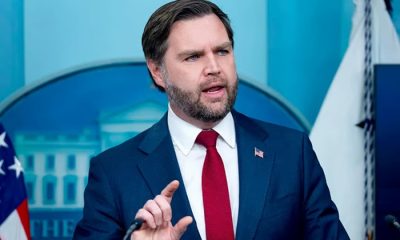
US Vice President JD Vance sharply criticized Netanyahu’s government during a press briefing warning Israel it has no powerful ally other than Trump. He also defended the Iran MOU and told critics of the Iran deal to trust the president who “got us this far.”

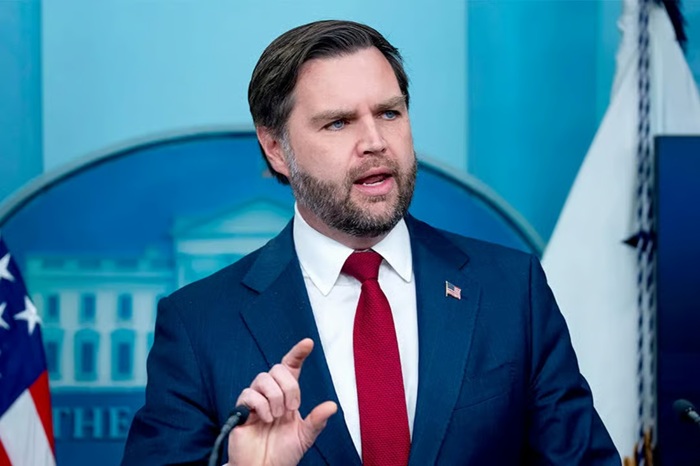
US Vice President JD Vance warned the Israeli government, telling it directly that attacking its only remaining powerful ally is a strategic mistake, and that two-thirds of the weapons protecting Israel over the past 3 months were built and paid for by American hands and American taxpayers.

“The problem for Israel is not Donald J. Trump,” Vance said, “and anybody in Israel who thinks their biggest problem is the President of the United States needs to wake up and smell the reality of the situation that country is in.”

“The Only Powerful Ally Left in the Entire World”

The vice president reminded that the US-Israel relationship in stark terms of dependency.

“Donald J. Trump is the only head of state in the entire world who is sympathetic to the nation of Israel at this moment in time,” he said.

“If I was in the cabinet of the Israeli government, I might not be attacking the only powerful ally that I have anywhere left in the entire world.”

On reports that Netanyahu is “fuming” over US-Iran diplomacy, he said “I saw the Axios report that says Netanyahu is fuming. That’s not reflective of the conversations that I’ve had with him. Maybe he is saying something to somebody else that he is not saying to me”.

To critics of the deal more broadly, Vance told: “Have a little faith in the president’s ability, given that he’s got us this far, to take us the final step.”

How the MOU Came Together

Vance said Iran asked for the text of MOU not to be released until Friday, a request the US accommodated despite wanting immediate publication.

“I didn’t really understand that – I wanted to get the text out immediately,” Vance said.

He said foreign leaders may have been pressuring Iran during the Monday-Tuesday window while Trump was at the G7.

Ultimately, Iran’s president and Trump both signed the document, and the text was released immediately upon signing.

Vance also said “As they dial up their good behavior, we can dial up the economic relief; if they dial down their good behavior, we can turn it off”.

Iran’s Nuclear Commitments and Missile Capability

Vance said Iran has made concrete nuclear commitments under the MOU, including the destruction of its highly enriched uranium stockpile.

On missiles, he acknowledged the program was not eliminated entirely.

“Their ability to launch missiles has been substantially degraded. Is it zero? No. But it’s substantially degraded. We haven’t abandoned that mission. We accomplished it,” he said.

On what stops Iran from rebuilding its nuclear program down the road, Vance pointed to economics.

“First of all, they would have to get a lot of money in order to rebuild their nuclear program,” he said, noting that sanctions would snap back if Iran reversed course.

The $300 Billion Fund and Frozen Assets

When asked who is funding a reported $300 billion fund for Iran, Vance pointed to regional interest rather than US commitment.

“There is a great desire from the Arab world, and from outside the Arab world, to actually get involved in Iran if they behave properly,” he said.

On frozen Iranian assets, Vance was candid about his own uncertainty.

“I’ve heard numbers north of 100 billion dollars. I’ve actually heard numbers north of 200 billion dollars. Most of it is not in United States accounts; most of it’s either in the Gulf, or in Europe, or somewhere else. But I don’t know the exact amount of money – it’s a lot,” he said.

He also pushed back on reports that Qatar had released billions in Iranian assets.

“That’s just not true. It would be impossible for the Qataris to do that without our buy-in,” Vance said.

Vance also addressed the lifting of the Strait of Hormuz blockade, saying: “All we’ve done is lift the blockade in the Strait – that would basically return it to where it was before the conflict.”

He added that US troop levels would return to pre-conflict levels, saying both Washington and Tehran have no interest in maintaining extra aircraft carrier groups in the region.

Continue Reading

America

Trump Wants to Punish Spain & NATO Allies Over Iran War

Published

on

A Pentagon email has revealed the U.S. has outlined options to punish NATO allies for not supporting the war on Iran, including suspending Spain, amid growing European defiance of U.S. policy & a parallel push by EU countries to deepen ties with China.

Washington is weighing punitive measures against NATO partners it views as unwilling to support operations in the Iran war, according to an internal Pentagon policy email.

The memo, circulating at senior Pentagon levels, frames access, basing and overflight rights as “just the absolute baseline for NATO,” according to a U.S. official who talked to Reuters for its exclusive. It proposes suspending “difficult” countries from key alliance roles, with Spain specifically identified due to its refusal to allow bases or airspace to be used for strikes on Iran.

Spain hosts two major U.S. installations – Naval Station Rota and Morón Air Base – making its stance operationally relevant even if suspension would be largely symbolic in military terms.

One option includes suspending Spain from NATO structures, while another suggests reassessing U.S. diplomatic support for British control of the Falkland Islands, a dispute dating back to the 1982 war in which 650 Argentine and 255 British personnel were killed.

The measures aim to reduce what officials describe as a European “sense of entitlement,” signaling frustration with allies that declined to support U.S. naval operations to reopen the Strait of Hormuz after the war began on Feb. 28.

Pentagon Press Secretary Kingsley Wilson said allies “were not there for us,” adding the department would ensure options to make partners “do their part.”

President Donald Trump has echoed this view, asking, “Wouldn’t you if you were me?” when discussing potential U.S. withdrawal from NATO.

He also criticized Spain directly, saying, “Their financial numbers… are absolutely horrendous,” accusing them of contributing little to NATO defense.

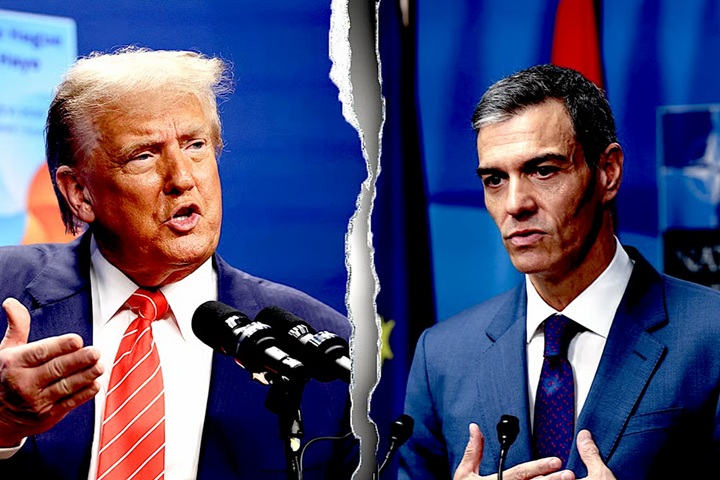
Spain’s Prime Minister Pedro Sánchez rejected the report, stating governments “do not work off emails.”

In parallel, Spain has continued its anti-war stance. They have pushed to suspend the EU-Israel agreement, citing alleged breaches of international law, though Euronews said the effort lacks consensus, with Germany and Italy opposing it.

Meanwhile president Sánchez, speaking in China, said Europe should “strengthen ties with China,” reflecting broader strategic divergence within the alliance.

The dispute comes as NATO, now 76 years old, faces questions about cohesion. U.S. Defense Secretary Pete Hegseth complained Nato wouldn’t be much of an alliance if members hesitate to act, noting Iran’s missiles can reach Europe even if not the United States.

The Iran war, now in its eighth week, has exposed divisions over risk-sharing, military access, and the scope of alliance obligations, with policy options under review but no formal decisions announced.

Continue Reading

Trending