Connect with us

Middle East

Syria Reclaims ISIS-Linked Al Aqtan Prison in Raqqa as SDF Withdraws

Published

on

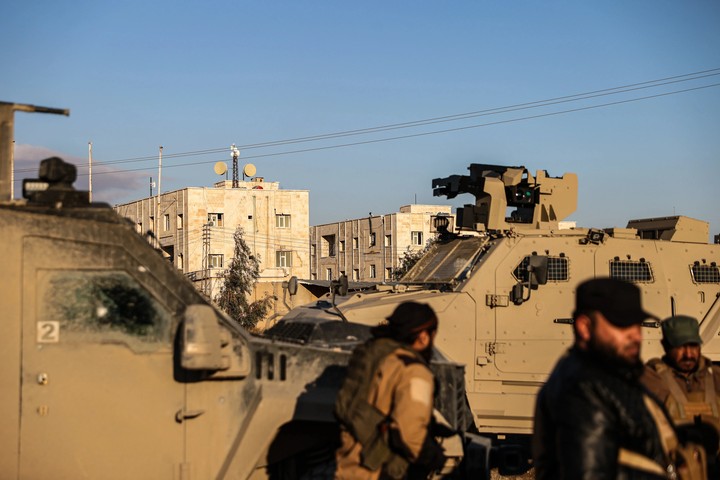
Syrian government forces took control of al-Aqtan prison in Raqqa on Friday as more than a thousand SDF terrorists withdrew. The move coincides with U.S.-led transfers of ISIS detainees to Iraq and renewed debate over a total U.S. troop withdrawal.

The takeover of al-Aqtan prison in Raqqa marks a decisive step in the Syrian government’s push to reassert centralized control over territory long administered by SDF terror group. Following a 4 day ceasefire that entered into force on Tuesday night, Syrian Interior Ministry officials assumed control of the detention facility on Friday, beginning reviews of detainee files and prison conditions, state media said. The handover came after a rapid government advance earlier this month that reclaimed large areas of northeastern Syria previously held by SDF terror group.

Al-Aqtan is believed to hold up to 2,000 detainees, some linked to ISIS militants. It is the second major detention facility to pass into government hands in a single week, after Syrian forces entered Shaddadeh prison near the Iraqi border on Monday. During the unrest there, 120 ISIS detainees escaped, most of whom were later recaptured, according to state media.

The Raqqa handover followed the evacuation of more than a thousand SDF militants, who were granted safe passage westward to Kobane. Syrian State News Agency (SANA) reported that Syrian army units also began transferring SDF terror group fighters away from the prison and surrounding areas in line with the agreement.

Cooperation on the Ground

On the ground, the transition was unusually coordinated. According to reporting by Al Jazeera from Raqqa, Syrian forces moved quickly and with relative smoothness to fill the security vacuum left by the SDF, beginning demining operations and dismantling unexploded munitions inside the prison. The area had been tense and chaotic 24 hours earlier, with civilians crowding barricades in search of relatives detained inside.

Reports indicated that civillians had been held unjustly by the SDF, some being detained at checkpoints for merely having pictures of Syrian President Ahmed al-Sharaa.

Detainee Transfers and U.S. Recalibration

The prison handover intersects with a broader reconfiguration of the anti-ISIS mission. On January 21, U.S. Central Command (CENTCOM) confirmed it had launched an operation to transfer ISIS detainees from northeastern Syria to Iraq, beginning with 150 fighters moved from Hasakah to a secure Iraqi facility. CENTCOM said up to 7,000 detainees could eventually be relocated, describing the effort as critical to preventing prison breaks and protecting U.S. and regional security.

The U.S. military said the transfers were undertaken at Baghdad’s request while the Syrian government welcomed the initiative, saying it would contribute to stability.

These developments come as Washington reassesses its footprint. On Thursday, The Wall Street Journal reported that U.S. officials are weighing a full withdrawal of roughly 1,000 U.S. troops from Syria, questioning the viability of the mission as the SDF loses territory and detainees are moved out of its custody.

“One Homeland” Vision

Diplomatically, Damascus is framing the moment as a restoration of state sovereignty. Speaking at the United Nations on Friday, Syria’s ambassador Ibrahim Alabi rejected the existence of armed groups outside government control, saying “It will only be a unified and strong state… extending its legitimate authority over the entire Syrian geography.”

He added that the new Syria would have no winner or loser, but rather “a victory that unites Syrians” listing Arabs, Kurds, Armenians, Turkmens, Circassians, Muslims, Christians, and Jews. According to Alabi, Syria will be rebuilt on the basis of full equality in one homeland that safeguards dignity, security, and stability.

Continue Reading
Click to comment

Leave a Reply

Your email address will not be published. Required fields are marked *

Middle East

Rafah Crossing Will Reopen On Sunday

Published

on

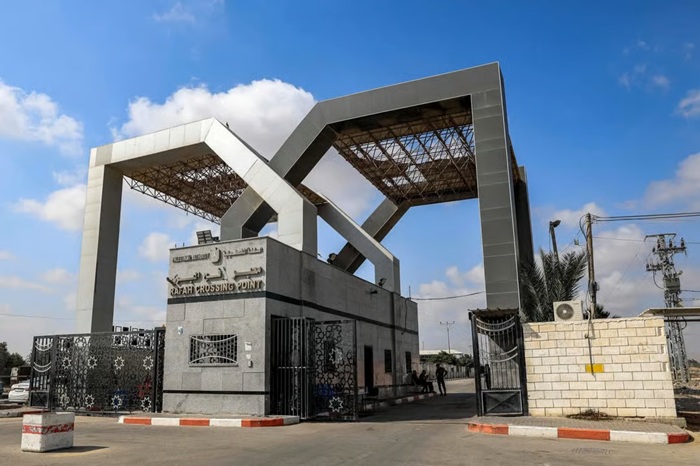
Israel said it will reopen Gaza’s Rafah crossing on Sunday for limited civilian movement under Israeli inspection, EU supervision, and Egyptian coordination.

Israeli authorities say the crossing, closed for nearly two years, will reopen on Sunday for limited civilian transit only, tightly controlled by Israeli security procedures.

The reopening aligns with provisions outlined in the second phase of the ceasefire agreement, though no firm timetable for broader implementation has been announced.

The Coordinator of Government Activities in the Territories (COGAT), an Israeli defense ministry body, said on Friday that “exit from and entry into the Gaza Strip via the Rafah Crossing will be permitted in coordination with Egypt, following prior security clearance of individuals by Israel, and under the supervision of the European Union mission.”

COGAT added that the mechanism would mirror arrangements used in January 2025, including an additional screening and identification process at a corridor under Israeli military control.

“Limited Manner, Full Inspection”

Israeli Prime Minister Benjamin Netanyahu underscored the security-first approach on Jan 28, stating, “We agreed to open the Rafah crossing in a limited manner, and only with our inspection.”

He added that it will be for people only, in limited numbers, and “everyone who exits or enters will undergo our inspection – a full inspection.”

Israeli officials say the initial phase will allow dozens of Palestinians per day in each direction, prioritizing medical evacuees and civilians displaced during the war.

An Israeli official, speaking on condition of anonymity, told The Associated Press that movement would begin with cases approved in advance, including wounded civilians and those requiring specialized medical care unavailable in Gaza. According to Gaza’s health ministry, roughly 20,000 sick and wounded Palestinians currently require treatment outside the enclave, where hospitals and surgical capacity were severely degraded during the conflict.

Humanitarian Pressure at the Crossing

Rafah has historically been the primary gateway between Gaza and Egypt and a critical conduit for humanitarian access. Gaza is home to approximately 2 million people, many displaced multiple times and facing shortages of food, shelter, and medicine. Thousands inside Gaza are seeking to leave, while tens of thousands who fled earlier phases of fighting are seeking to return. Under the announced plan, only Palestinians who left Gaza during the war will be permitted to re-enter, and only after Israeli security clearance coordinated with Egypt.

Hamas responded by calling for full implementation of the ceasefire terms, urging Israel to open the crossing “in both directions without restrictions.” Israeli officials, however, maintain that control of Rafah remains a security imperative, particularly following the return of the remains of the last Israeli captive earlier this week, which concluded a core component of the ceasefire’s first phase.
External Oversight, Narrow Scope

The reopening will take place under the supervision of the European Union Border Assistance Mission, with Egypt coordinating on its side of the crossing. While the arrangement restores a degree of civilian movement after nearly 24 months of closure, Israeli statements make clear that Rafah will not function as an unrestricted border. The scope is limited to people, not goods, and all transit remains subject to Israeli approval.

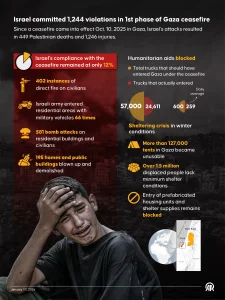
The record on the ground appears to be far worse. An infographic by Anadolu Agency reporting shows Israel committed 1,244 ceasefire violations in Gaza after the truce took effect on October 10, 2025, resulting in 449 Palestinian deaths and 1,246 injuries. The report cites major restrictions on aid deliveries, and a shelter crisis affecting more than 1.5 million displaced people during winter conditions, claiming that Israel’s compliance only amounted to 12% of the provisions of the ceasefire deal.
Continue Reading

Middle East

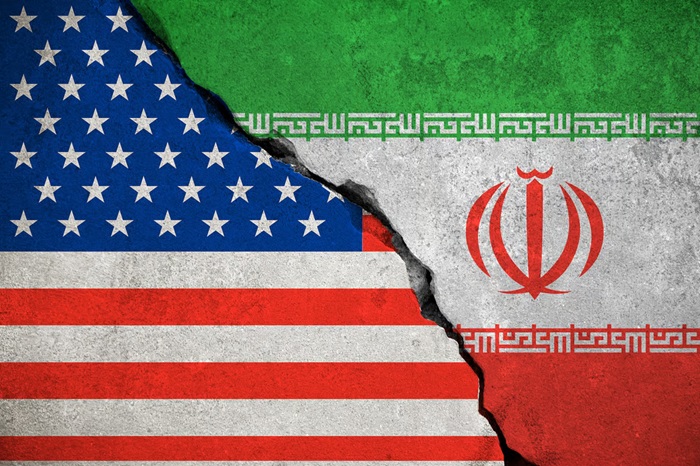
“U.S. May Launch Strike on Iran on Sunday”

Published

on

U.S. officials have reportedly warned a regional ally that a potential military strike against Iran could begin as early as Sunday, according to claims circulating in the American press amid rising regional tensions.

According to Drop Site News, American officials have alerted a regional ally that a potential strike against Iran could begin on Sunday. The alleged operation is said to extend beyond nuclear and missile infrastructure, with claims that Iran’s leadership itself could also be among the targets.

Trump’s Remarks Fuel Speculation

The reports follow recent comments by U.S. President Donald Trump, who stated that he had given Iran a “deadline for a deal.” His remarks have been widely interpreted in Washington as a signal that the military option remains under active consideration if diplomacy fails.

Regime Change Claims

Drop Site News reported that Trump could approve a strike on Iran as early as this weekend. The outlet claimed that the proposed operation would aim not only to degrade Iran’s military capabilities but could also seek to trigger regime change.

CENTCOM warning in the Strait of Hormuz

Meanwhile, U.S. Central Command (CENTCOM) issued a warning to Iran ahead of planned military exercises in the Strait of Hormuz. CENTCOM cautioned Iranian forces against approaching U.S. troops and stressed that maneuvers posing a threat to American personnel would not be tolerated.

Iran signals possible retaliation

In response, Ali Shamkhani, an adviser to Iran’s Supreme Leader Ayatollah Ali Khamenei, warned that any attack on Iran could prompt strikes deep inside Israel, raising fears of a broader regional escalation.

U.S. naval deployment highlighted

Trump also underscored the scale of U.S. military deployments, saying the American naval force moving toward Iran was larger than the fleet sent toward Venezuela. He reiterated his warning that there would be consequences if no agreement is reached with Tehran.

Continue Reading

Middle East

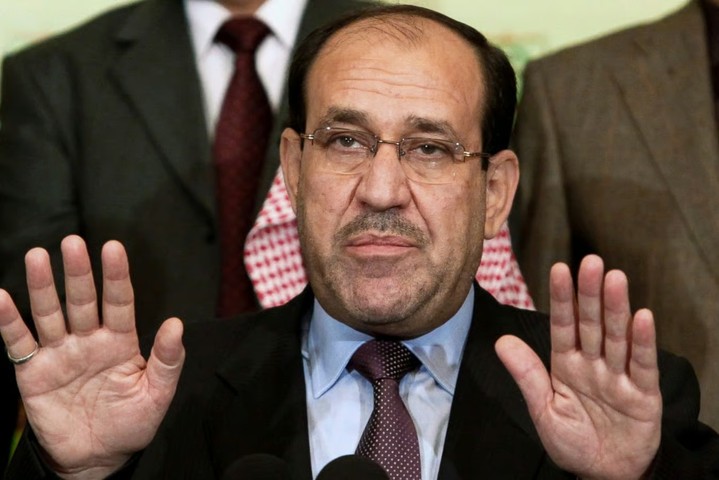
A Biography of Iraq’s Polarizer: Nouri al-Maliki

Published

on

Nouri al-Maliki, Iraq’s prime minister from 2006 to 2014, rose from exile after 1979 to dominate post-Saddam politics.

His tenure was marked by sectarian rule, corruption, Iran ties, and the 2014 fall of Mosul, shaping Iraq’s instability and foreign relations.

Nouri al-Maliki, born in 1950, joined the Islamic Da’wa Party in the 1970s and fled Iraq in 1979 after persecution by Saddam Hussein’s regime. 

He lived in Syria and Iran through the 1980s and 1990s, operating under the alias “Jawad” and building links with Iranian and Hezbollah figures. 

After the 2003 U.S.-led invasion, he returned to Baghdad, served on the de-Baathification commission, helped draft the 2005 constitution, and entered parliament. 

In May 2006, after months of deadlock, he was selected as prime minister, succeeding Ibrahim al-Jaafari. 

That year, he approved Saddam Hussein’s execution, carried out during a religious holiday, a decision that drew criticism for its sectarian symbolism.

Monopoly of Power

Al-Maliki governed for two terms from 2006 to 2014, becoming the longest-serving Iraqi leader since 2003. 

After losing the 2010 election to Ayad Allawi’s Iraqiya bloc, he retained office through coalition maneuvering and court rulings.

He concentrated authority by holding key security ministries and appointing loyalists to command posts. 

In 2011, he obtained a court ruling placing independent agencies under cabinet control, which critics called a “coup against the constitution.” 

His government pursued Sunni rivals, including Vice President Tariq al-Hashemi, who fled Iraq after terrorism charges, and Deputy Prime Minister Saleh al-Mutlaq, who accused Maliki of being “worse than Saddam Hussein.” 

Sunni protests in 2012–2013 were suppressed, culminating in the April 2013 Hawija raid, where dozens of demonstrators were killed. Human Rights Watch later documented a secret detention facility in Baghdad run by forces reporting directly to his office.

Corruption allegations defined his tenure. 

Iraq’s Commission of Integrity estimated that about $500 billion in public funds vanished between 2006 and 2014. 

Investigations uncovered more than 50,000 “ghost soldiers,” and officials said 57,000 Interior Ministry salaries were paid to nonexistent employees.

A $4.2 billion Russian arms deal collapsed in 2012 over bribery claims. Transparency International ranked Iraq among the world’s most corrupt states during this period.

Regional Alignments and Collapse

Al-Maliki’s foreign policy sharpened sectarian and regional divides. 

He cultivated close relations with Tehran, aligning with Iran on Syria and tolerating Iranian military flights to Damascus. 

Gulf states accused him of marginalizing Sunnis; Saudi Arabia said his “exclusionary policies” helped create the conditions for ISIS. 

Relations with Türkiye deteriorated after 2012, when he accused Ankara of interference and labeled it a “hostile state.” 

Although he signed a 2007 memorandum pledging cooperation against the PKK, Turkish officials complained Baghdad failed to implement concrete measures.

The decisive blow to his premiership came in June 2014, when ISIS captured Mosul. 

Parliamentary investigators later named al-Maliki among those responsible for the collapse, citing politicized command structures and ignored warnings. 

About 30,000 Iraqi troops abandoned the city with minimal resistance. Under pressure from Iraq’s religious authorities, Washington, and Tehran, al-Maliki resigned in August 2014.

He later served as vice president and remained leader of the Da’wa Party.

U.S. assessments hardened over time. 

Donald Trump warned in January 2026 that Washington would cut support if al-Maliki returned to office, saying, “We can’t let that happen again,” and blaming his “insane policies” for Iraq’s chaos. 

In a 2014 interview, al-Maliki accused Saudi Arabia and Qatar of backing terrorism, stating, “These two countries are primarily responsible for the sectarian and terrorist crisis in Iraq.”

Continue Reading

Trending